-
Leica Store wrote a new post 17 years, 10 months ago
I wish I could say that I slept more last night. What I can say is that I got a nice early start and a couple cups of Earl Grey to get me going.
My first stop today was at Zeiss. As you may know, we became Zeiss dealers this past year. We had been approached by them after the last Photokina, but frankly there was no depth of product, so we took a rain check. When they had a full line of really nice ZF lenses for Nikon and simultaneously Nikon kept introducing great digital bodies, starting with the D3 and D300… well, we jumped at the opportunity the second time around. I’m glad we chose to carry the product.
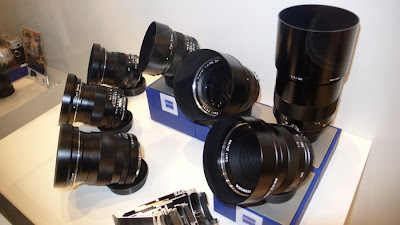
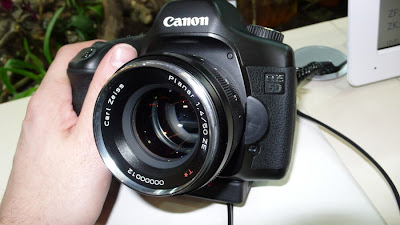
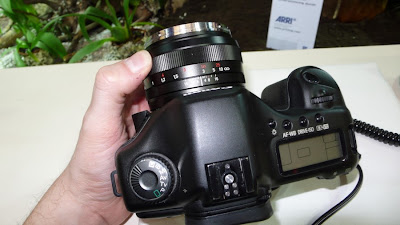
I met with Richard, the National Sales Manager for the US. Super nice guy. He showed me the new ZE lenses, the 50 f/1.4 and the 85 f1.4. I got to try them out on a 5D and I’m really liking them so far. Being electronically coupled with the EF mount is very convenient. Essentially, they act like Canon lenses, but with manual focus. Aperture is set with the rear dial, all shooting modes work without restriction. DOF preview works perfectly. When you manually focus on the 5D, the camera will beep at you and light up the focus point that is in focus. Nice. The styling is quite attractive on the ZE lenses. More tapered and rounded than the ZFs. Also learned they are slightly different optical formulas. The low pass filters used in Canons are quite different than those in Nkons, so the lens design had to be modified to properly focus on the Canon sensor. These two lenses will be available starting in November, then Zeiss will continue to roll out the rest of the lens line by early Spring 2009, matching the full offerings of the ZFs. I can only say that this is great news for Canon shooters and I can see a lot of 5DmkII shooters with these lenses.
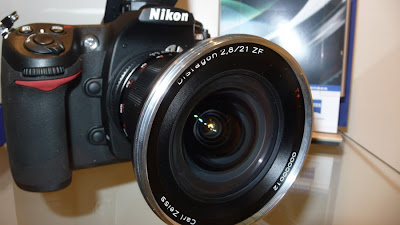
On the ZF side, I tried out the new 21 Distagon. Relatively compact and lightweight versus the pictures online, the 21 can easily fit into any photographer’s bag. It has the same front filter diameter as the 18 ZF, 82mm. This is, of course, one of main reasons for choosing the 18 and/or 21 over the Nikon 14-24 – You can use filters on the front. The other one being portability of the prime lenses versus the massive zoom. This is also a slightly modified version of the famous Contax mount 21 Distagon, as the old one used lead and arsenic in the glass. The new ZF uses eco-glass and had to be tweaked slightly.
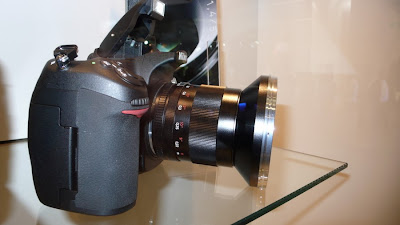
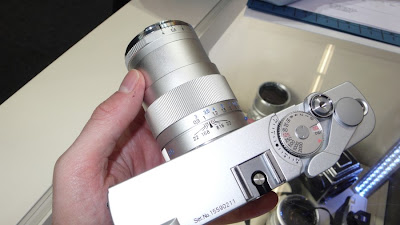
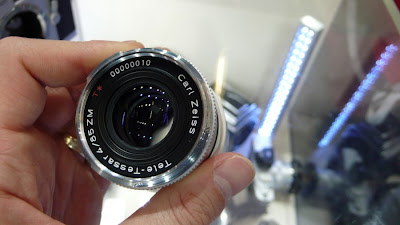
I also handled the new 85 f/4 ZM lens. Smallish and very light. Reminded me of a lightweight 90 Elmarit, sharing the same basic dimensions. About $800 and compact make it a nice option for traveling, taking mostly outdoor shots.
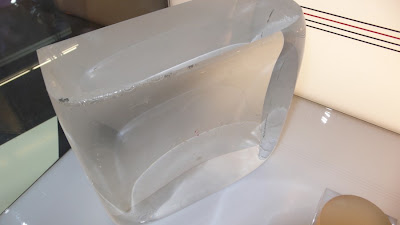
Other interesting things in the booth. There was a display of how the 100 Makro ZF is manufactured, from raw glass to finished product. Starting with the block of raw optical glass, blanks are cut out then ground and polished. They are then coated, cleaned, and the edges are blacked out using enamel paint, applied by hand. This cuts down on internal reflections. Then all the glass elements and mechanical components are assembled into a finished, working lens. Interesting little tour.


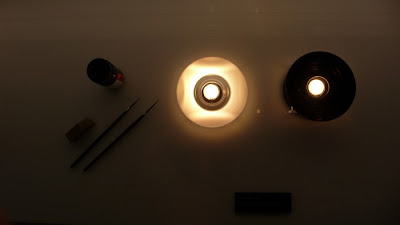
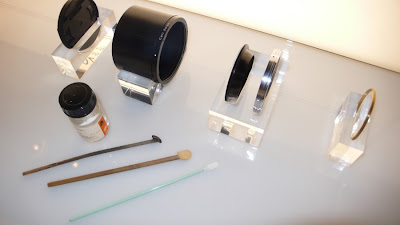
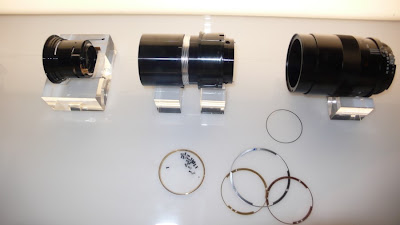
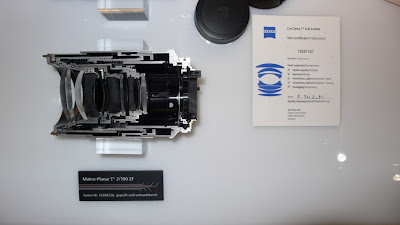
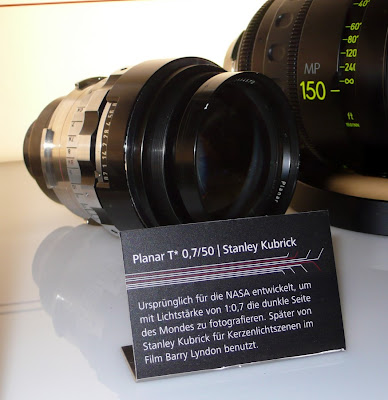
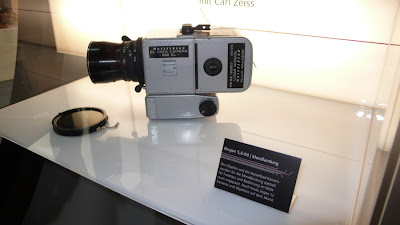
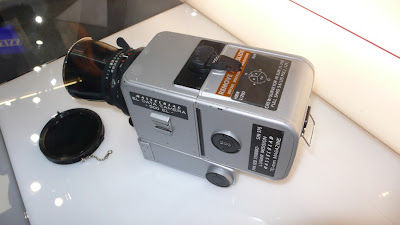
Across from this display were some noteable Zeiss products including the 50 f/0.7 that Stanley Kubrick used to film his candle-lit scenes in Barry Lyndon, a 500EL Hasselblad with 60mm Biogon from the Apollo Lunar missions, and an integrated lens/camera systems used to produce the Google Earth project. And while there wasn’t a 1700mm lens hanging from the rafters like last time, there was a semiconductor imaging lens that cost 3 million Euros in a glass case.

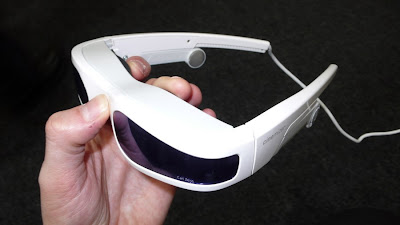
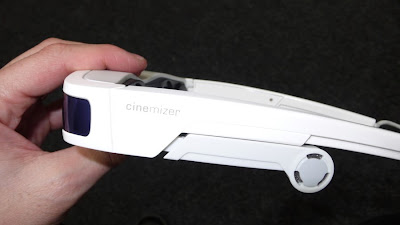
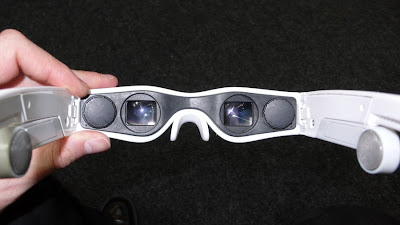
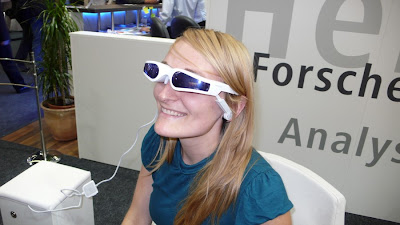
Another product, currently not available in the US is the Zeiss CineMizer. These glasses have ear phones and dual LCD screens for a take anywhere, virtual viewing experience. They work with any video-enabled iPod currently, with plans to have connections for computers in the near future.
Over at the Mamiya booth a little later, I checked out the new(ish) ZDb back which is being touted as a double buffer memory ZD. The back looks pretty much identical to its predecessor, but the ZDb is now more integrated with the AFDIII, allowing you to set custom camera functions from the rear LCD menu system. It is, of course faster to operate with files previewing and zooming quicker. And, you can shoot 20 shots before the back starts to get mad at you.
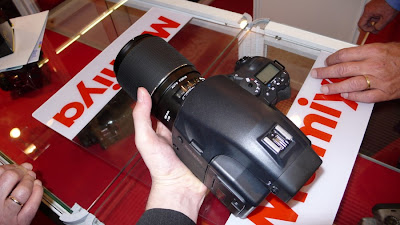
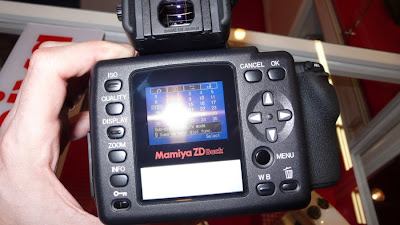

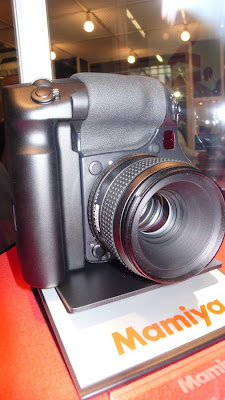
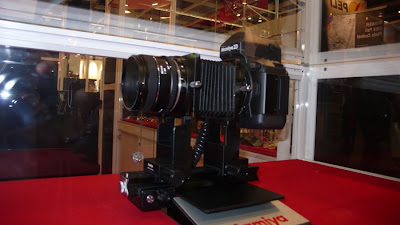
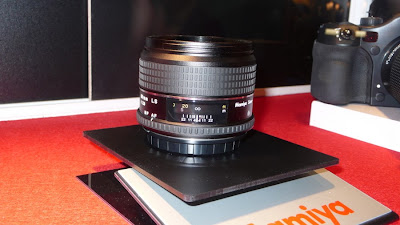
The vertical grip for the AFDIII was only a mock-up and was locked in a case so I didn’t get to feel it in my hand. They did have a few original ZD cameras at the booth. I handled one just to see how it compared to the new Leica S2. Bigger, thicker, and bulkier. But, the ergos of the ZD camera are not bad. If Mamiya updated that camera with a 3” LCD, speedier processing, and faster AF they might just be the first competitor to market in response to the S2. The tilt-shift bellows was also hidden under glass, as was the new 80mm LS leaf shutter lens and the redesigned 45mm f/2.8D. But, the view camera adapter was real. One visitor to the booth mentioned that there was no way to mount the ZD back in a vertical position. Oops. Maybe this was an oversight and will be fixed before shipping. We will see. Other that that it felt well-made, with smooth sliding action and high-quality anodized aluminum finish.


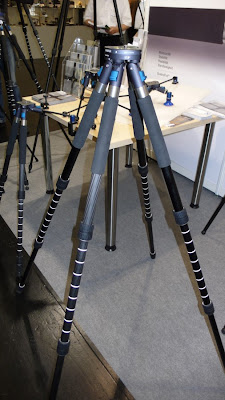
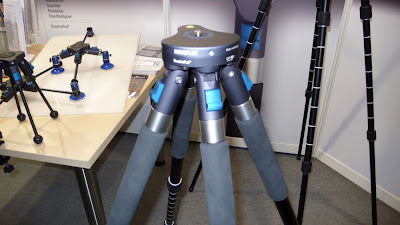
Leaving the Mamiya booth I walked by Novoflex something strange, a four legged tripod, which is aptly named the quadpod. Did they make a better mousetrap, so to speak, or what? Well, let’s just say I won’t be trading in my Gitzo anytime soon. If anyone has ever been to a restaurant where the table wobbles, you may know where I’m headed. Three legs always make positive contact with no wobble as all three points touch equally. Four points require much more fine-tuning until there is no wobble. Their theory is that more legs means more stability, but despite their large size and weight, a small Gtizo 1 series would be more stable. The legs had a lot of flex and the fourth leg had issues. Also, by adding another leg, you increase the size and weight by 30%, making this something you really don’t want to carry. I’m all for technical innovation, but I’m sticking with three legs.
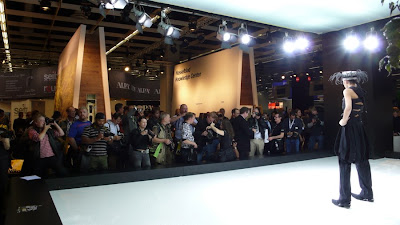
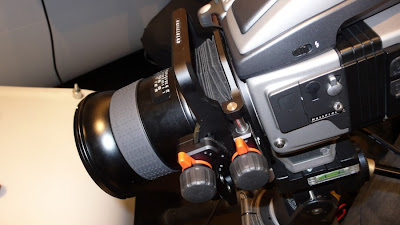
Next on the tour was Hasselblad. They had a really cool shooting setup with a huge light bank overhead with fake trees and snow and Victor magazine-looking models where people could test out the H3D (or use their iPhone cameras). Hassy’s tilt shift adapter, the HTS 1.5, was working. By pressing a button on the H3D handgrip, the LCD will show you how much tilt, shift, and angle you have in real time. The same info is passed in the RAW file to Phocus as well. I must say that this is very cool.

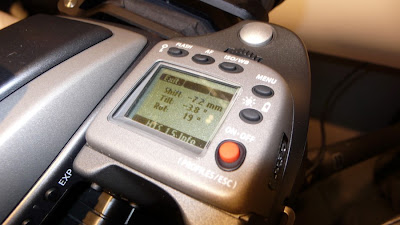
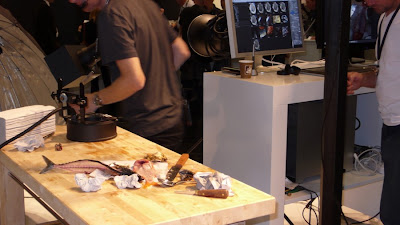
I took a look at the new HCD 35-90mm f/4-5.6 zoom lens. Reading about the tech in this lens is interesting. It is only for use with “full frame 48mm” and the designers knowingly created the lens with increased distortion and vignetting. The new Hassy philosophy seems to be that we’ll just fix it in post, a la digital lens correction. Seems a bit fishy, especially at this price ($6,999 USD). Speaking of fishy… in the pro demo studio area a photographer and food stylist were photographing smelly raw fish. With large LCD suspended from the ceiling for the audience to watch the action top-down it felt more like a cooking show that a photo demonstration. The concept was interesting, but the smell was a bit much.
I headed upstairs to Nikon. There really wasn’t much new for me to see, but I did want to take a look at the D90 and the advanced compact camera, the P6000. The compacts were not a problem. I walked up to the counter, picked it up and played. The D90 is another story. But first the the P6000. It shares very similar menus and settings as the D300/700/3, which is pretty smart actually. Nikon realizes that the market for that camera is as an advanced P&S for existing Nikon DSLR shooters. Having menu and button consistency is good. Full set of manual controls and solid metal body. RAW support and built-in GPS round out the 13.5MP flagship Coolpix.
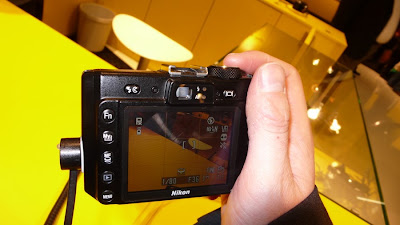
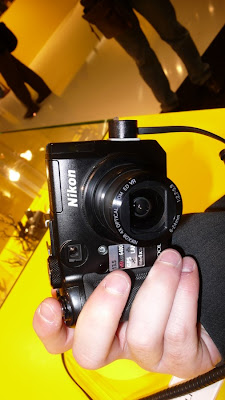
Everyone wanted time with the D90 and there were only three in the booth. So, I tried to get in a faster moving line. It was slower. I saw an opening and went for the more remote third camera location, only to have the D90 taken away by one of the Nikon folks to fix the security tether that had snapped. Back to the line. I did eventually get hands-on. It feels like a big step up from the D80, almost a D300, but a little more compact. The viewfinder and LCD are quite similar. Video mode was decent at 720p but limited to 5 minute clips. The AF doesn’t work during movie mode so you have to manually focus while shooting. Cool feature, though, and I’m sure it will only improve. And. I doubt that the Canon 5DmkII will be the last to emulate the D90.

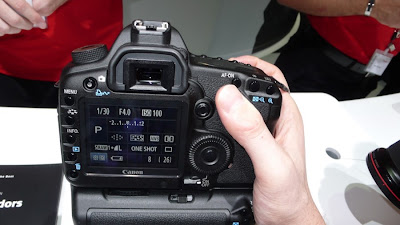
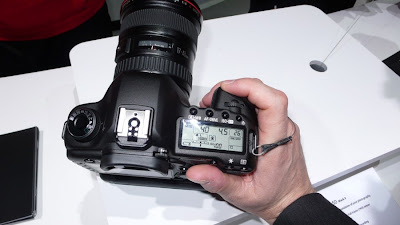
Where to next? Canon, to check out the 5DmkII. If I thought the crowd was big at the Nikon booth to see the D90, I hadn’t tried to see Canon’s highly anticipated 5D successor. No worries. I waited my turn and got to handle the camera of myth and legend. It felt like a 5D. No great surprise there. The LCD looks like any of the recent Nikons. Again not a shocker. I did get to see a sample of Canon’s movie mode implementation, though. They raised the bar with full 1080p HD recording and it looks good. Maybe a little too many compression artifacts for my taste, but very detailed and sharp. Look, dedicated, high-end HD cams will do a better job because that is what they were designed to do. I’m sure the 5DmkII will take excellent pictures because that is what it was designed to do. Time will tell to see how this market convergence works itself out.


-
Leica Store wrote a new post 17 years, 10 months ago
Yesterday's post, the lack of sleep over the last few days and general jet lag finally caught up to me. I had to give in and relent to sleep and taking it easy today. I regret having to sit today on the bench as I […]
-
Leica Store wrote a new post 17 years, 10 months ago
Yesterday's post, the lack of sleep over the last few days and general jet lag finally caught up to me. I had to give in and relent to sleep and taking it easy today. I regret having to sit today on the bench as I have a lot on my agenda and there are a ton of products I want to try out. Tomorrow I’m getting an early start and will be at the show when it opens. But today wasn’t a waste at all. Read on for more.
I did eventually get to the show in the early afternoon and had some meetings at Leica (been having a lot of those recently). After which I ran into Peter Karbe and Justin Stailey. You may recognize Justin from the myriad of video interviews circulating around cyberspace right now. Peter apologized for leaving the MTF charts for the new S lenses at his hotel and promised to bring them tomorrow. If I get permission, I will try to post these.
I asked him about the MTFs on the new M lenses. Sure. He had those handy and asked if I’d like to see them. I thought he’d bring me a slip of paper to look at in the booth, but he said to follow him to the VIP lounge so he could get an espresso. We sat down. He got his espresso. Then, Peter proceeded to enlighten me not only to the new M lenses, but give me an education in optical design. This was unbelievable. Peter Karbe, the head optics designer of Leica spent over an hour with me, one on one, answering any questions I had (which were a lot), letting me in on what happens behind the scenes and his approach to lens design. Few people get an opportunity like this to talk to an individual who quite literally is the foremost expert on optics in the world right now. Anything else that I had planned could wait. This was truly exciting.
I don’t take notes, but maybe I should have started today. The amount of information that was doled out was just mind-boggling.
First, we discussed the new lenses. The 24mm Elmar is quite possibly the best performing 24mm they have ever made. The MTFs are just stellar from wide-open on. Apart from the 2/3s of a stop, this new lens trounces the legendary 24 Elmarit. No one is talking about this lens right now, but I guarantee that when people start shooting with it, they will fall in Leica love. The 21mm Summilux is also outstanding. By 2.8 it also bests its 21 Elmarit brother. The new 50mm Noctilux 0.95 has much less curvature of field, color aberrations and vignetting than the classic Noct. Wide-open, Peter said it should exude the same look and feel as the classic and stopped down to 2.8 the MTF starts to look like the 50 Lux.
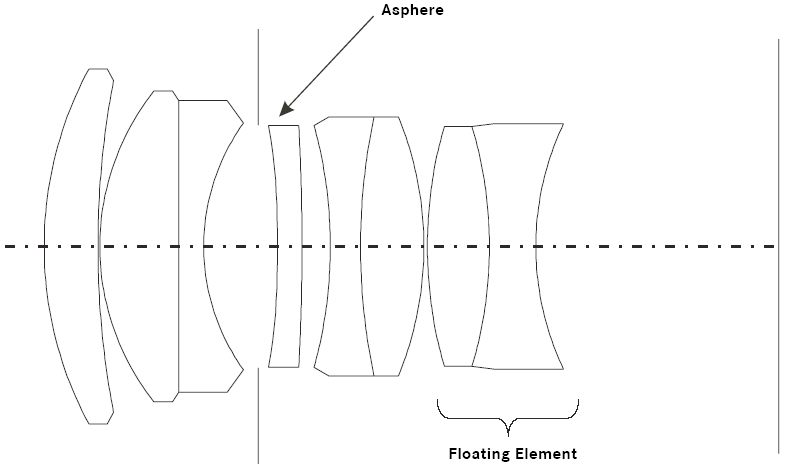
From sitting with Peter you really get the feeling that these lenses are his children and he is a proud parent. Talk of certain lenses puts a small smile on his face and a glint in his eye. Then, he’ll go on about why it is special and unique. For instance, many know of his many years of work on the 50mm Summilux ASPH. He is extremely proud of this lens, pointing to the MTF chart and exclaiming that wide open at f/1.4 it resolves 40lp at above 50%. He went into how he came up with the modified special double Gauss design and how the back half of the lens is identical to the 35mm Summilux ASPH, while the front half is identical to the 50 Summicron. This was the secret to achieving such performance in a fast 50. Then, he said that one Saturday morning over his first cup of coffee in his kitchen he thought about Mandler. Apparently, after Mandler designed the Noctilux, he used the same design to build the 75 Lux. And becuase the 75 Lux wasn't one of Peter's favorite lenses, he decided that he needed to design a new 75 based on the 50 ASPH design. Shortly thereafter, keeping everything the same, except for removing one lens element in the first doublet behind the central ASPH element used to correct for aberrations caused at 1.4, he minted the design for the 75 APO Summicron ASPH. I asked if the design was the same why the 75 was an APO lens and the 50 wasn’t. Here is a bit of a shocker… the 50 lux ASPH is an APO lens, containing an APO correction element. But, he thought the idea of an APO 50 was a bit silly so they never put it on the lens or in any marketing materials.

35 Summilux ASPH

50 Summicron

50 Summilux ASPH

75 APO Summicron ASPH
He really believes in revisiting the past for inspirations on the future. Peter said that he often thinks about what his predecessors from decades ago would do with today’s technology. This was his inspiration with the Summarits. Classic designs with a modern twist. He studies and claims (who would doubt him) that he is familiar with the designs of almost all of the Leica lenses made to date. He has his favorites as well as examples that were not so successful.
According to Peter, the great leaps in lens design were brought about by technological advances. The first was with new types of glass, then with coatings, followed by computer modeling, and now just recently, advances in mechanical design and manufacturing. This is why the S lenses and the new 21 Lux are as lightweight as they are. A lot of attention is now being paid by the design team to the manufacturing process. Karbe has organized small design teams in his fast-growing department to be more efficient and productive. An optics designer is paired with a mechanical designer and a production manager to develop the entire product, not just the optical path. Handling, feel, ease of manufacture, and consistency in quality control are equally important to imaging performance. Also, by using more shared designs and more common components, more lenses can be brought to market faster. The 35 and 50 Summarit. The 75 and the 90 Summarit. The new 21 Lux and 24 Lux are all examples of this. With the 21 and the 24, one designer did both lenses simultaneously as they are fundamentally the same optical formula.
Another interesting thing I learned was that Leica started using computer-aided modeling back in the 1960’s before anyone else. Since that time, they have had their own proprietary software (kept up to date, of course) based on calculations made at Leica over the last 100 years. He says this is one of Leica’s real advantages that no one can copy. The foundation of knowledge and expertise is handed down from each generation of lens designers to the next. The Leitz Glass Works has also been invaluable in learning about new formulations and the handling of exotic glass elements. These latest exotic glasses require a great deal of care in handling. Much like a piece of raw steel, this glass reacts adversely and rapidly with gasses in the air. They use a wet to wet to wet process in Solms, whereby the glass moves through the grinding, polishing and coating steps in one go, not spaced or binned. This is crucial to maintain the performance of these expensive elements which can cost more per ounce than pure silver.
We talked more about how the type of glass for certain lens elements are chosen and how, based on his experience, he just knows what effect this will have on aberrations. We discussed the trade-offs lens designers have to make and how MTF only tells part of the story. I can also read an MTF chart much better now, as he explained this in depth as well. And, we drifted to the future and possible new designs and challenges faced with having lenses for three different product lines.
After his second cup of espresso I told Peter that since I wasn’t taking notes I might only be able to recall 30% of what he told me. Of course, at just 30% I think I know at least three times what I did about Leica optics design. What a great opportunity. How often do you get to pick the brain of someone at his level? I realize that I am fortunate to have had this opportunity. Later, when I told Justin about my private lesson, he smiled at me and said that it doesn’t happen very often. Very cool.
-
Leica Store wrote a new post 17 years, 10 months ago

Well, where else do you think I’d spend my first day at the show? After last night’s marathon of typing, I decided to sleep in. No worries, as I had plenty of time at the Leica booth and no where else to be today.

The booth design this year is nice and a little fancier and larger than in 2006. As I came down the escalator into Hall 2.1, I saw a legion of Leica employees armed and ready with the new M products, defending their posts at the front of the stand. I saw Peter Karbe and said hello. As many may know, Peter is the head optics designer of Leica, personally responsible for the slew of excellent glass in the last few years. He worked on the 50mm f/1.4 ASPH for ten years to perfect it…in his spare time. Totally brilliant optics designer. We spoke briefly about the new S lenses and wanted to show me the MTF charts for them. He didn’t have them with him, but I am hoping to see them later on in the week. He said that they are perfectly flat lines all the way up to the top, from one side to the other. Apparently, Peter believes these lenses might be the best Leica has ever produced. Now that is saying something.

After our brief chat, I made my way over to the AFRika VIP area. AFRika is the internal code name of the S2, standing for Auto Focus Reflex Kamera. So, trusty VIP Access badge in hand I made my way into the VIP lounge. The S2 room was packed, so I was told to just have a coffee and relax for a while. Well, I don’t drink coffee and I was way too excited to relax. So, I made the most of my time in the back area and played with the M8.2, Noctilux, 21 Summilux and 24 Elmar.
The new lenses aren’t recognized by the new firmware. So, there is no focal length displayed in playback. There will be an update around the time the lenses ship in November. All of the new wide angle lenses have screw-on metal hoods. Perhaps this is a sign of things to come. First the WATE, then the Summarits, now the new exotics. Users have been complaining about the plastic clip-on hoods for a while and Leica listened.
The new Noct there was a working lens, just not finished yet. I won’t post any shots from it as it is too early to judge anything by them. The good news is focusing is much smoother and the focus throw is a lot shorter. The pull-out hood protrudes just a few millimeters further than the IR filter and I’m not sure if it is that effective. Looks nice, though.


The 24 Elmar is nice and small. I’d compare it to a 28 Cron in size. Shot wide open, the lens is dangerously sharp. I think I underestimated this little guy. Small, lightweight and somewhat affordable, this lens might even find its way into my bag someday.


There was no 24 Lux to play with back in the lounge, so I made do with a 21 Lux. As I mentioned in my post from the launch event, the 21 balances extremely well on the M8. The mechanics of the lens are super smooth and focusing is easy. This lens is certainly usable wide open. I took a few shots and they are spot on. Really nice look to them. Crisp and contrasty with smooth nuance. Definitely Leica. The filter arrangement makes a lot more sense now that I’ve dissected one. The hood just unscrews and the filter (sans threading) just drops into the hood. Screw it back on and it’s done. So, series 7 for the 24 and series 8 for the 21.


While waiting, I had a nice conversation with the editors of LFI. Great guys and very knowledgeable about Leica. If you don’t already subscribe to their magazine, you should.
After patiently waiting, I couldn’t hold out any longer. I made my way to the S2 room. There were several Leica reps there each with an S2 and two lenses, the standard 70 Summarit and the 180 APO-Elmar. I am pleased to report that the S2 works very well, even in the prototype stage. It autofocuses accurately and quickly, shoots with little-to-no-shutter-delay, handles nicely, and displays pictures on the LCD. The playback zoom is instantaneous. No waiting like on the M8. Menus are intuitive and quick once you get the walkthrough. I would like a direction pad like on Nikon, but once used to the S2 review system you get pretty quick with scrolling around. The camera balances nicely in the hand, especially with the 70mm mounted. The vertical grip is very comfortable as well. Wow. Where to start?


The viewfinder is big and bright with plenty of eye relief. It isn’t as large as the viewfinder of the Mamiya 645 or Sinar Hy6, but larger than a D3 or 1DsIII. There is but one AF point in the center of the frame. This honestly doesn’t bother me, as I usually focus and recompose anyway. The lenses all have a slip differential so you can switch to manual focus by turning the focus ring, like on Nikon AF-S lenses, just with much better feel. The lenses feel like quality. They are lighter and smaller than comparable Hasselblad H lenses, yet made of aluminum and not plastic. Manual focusing was insanely easy, with great tactile feedback and nice ground glass focusing screen. Sorry, no split image or microprism for all you R fans out there. Trust me, you can easily tell when you are in focus and when you’re not.


The design of the camera has been a point of contention out there in forum land. It does fit nicely in the hand with the front and rear finger and thumb notches. The prototype cameras are covered in a soft-touch smooth rubber, but the final production cameras will have a finish closer the R9 with a texture to it. The 3” screen is large and the menu access buttons are easy to get to, but not overly easy to accidentally press. The top right button is dedicated to EV lock in shooting mode as it sits pretty close to your thumb when shooting. This is customizable to be AF-on, AF lock, EV lock, or AF/EV lock. Press the top left button to activate the screen. Four quadrants come up with various settings at a glance. The soft keys are displayed as well, allowing you to access Camera, Image and Setup menus, as well as image playback (in the upper right position). The upper left, lower left, and bottom right are user customizable for use as quick access keys in shooting mode. So you can access EV comp, ISO, WB, advance mode, etc. with one button press and arrange them how you prefer.


Perhaps I should stop for a moment and take notice that this camera and its firmware is pretty well thought out, certainly not what I expected to see this early on in the development cycle. Aside from the lack of finishing touches on the body like covering and nicer memory card door, it feels like a real camera, not something engineers cobbled together in a workshop to show off in a dog and pony show. To say that the reps showing off the S2 were proud of all the work they did in house would be an understatement. No nervous shuffling around or waiting for a camera to break. They were all smiles and looking really confident that they had hit a grand slam for the home team (do they have baseball in Germany).
The thumb wheel on the back of the thumbrest also depresses, acting as an OK or Enter key. So spin the wheel to your menu item and press in to activate the sub menu, scroll, press in again, then press the shutter to start shooting again. Fast and intuitive. Not one handed as you need your right thumb to activate the screen, but almost everything else is. The CS/FPS/Off switch on the back turns the camera on and off, as well as letting the photographer select focal plane shutter or leaf shutter without digging through menus. Pretty smart to keep this analog, actually. The shutter speed dial controls both shutter mechanisms. I asked what would happen if you had the focal plane shutter set for 1/4000th and switched to CS mode. The camera will automatically set the leaf shutter to the highest possible speed and display it in the viewfinder and on the OLED screen on top. No problem. To change shooting modes, just press the wheel and turn to your desired setting: P, A or M. Where is S? Turn the shutter off of A and your in S mode. If you want to change aperture, just spin the thumb wheel. Leica really did a great job making the camera super simple and intuitive with the least amount of clutter.

The camera can take CF and SD cards as we already know, but I did find out that it can operate like the Nikon D3. Mirror output to both cards, write to CF or SD based on selection, or write the DNG to one card and the JPG to the other. The card door will be much stronger and more robust than what was shown here. Of course, SDHC and UDMA are fully supported. The S2 has a 1GB buffer, which clears pretty fast using the Maestro DSP and UDMA cards. Other storage options include external and a future WiFi capacity. The tethered setup uses high-speed USB with a unique cable. It is not the mini USB, but rather a round metal connector with a safety lock. My Leica fellow plugged the cable in and dangled the camera and lens over the floor held up by the USB connector! I nearly had a heart attack and he had a good laugh. Apparently, they had been pulling that one all day. Then he showed me a neat trick. By opening the PC Sync/HDMI cover and pressing a super secret button with a pen tip the left strap lug comes out of the camera and a yet-to-be-designed WiFi adapter will plug in to enable wireless tethering. Sweet. Another example of a totally clean and seamless design. The HDMI cable allows both 1080p and 1920×1200 outputs for image review on external LCD monitor at high res while still enabling CF/SD storage. Great for commercial shooting where straight tethering is a slowdown and you need to have a large real-time image display in studio.


The vertical grip is also a beautiful design. Instead of being like every other grip in the market which requires you to turn a wheel to attach and detach, the S2 grip has a single slide on the back. Put your thumb on and slide to the left, put the grip on the bottom of the camera and release. The vertical grip is now solidly locked to the camera. Easy, fast, and secure. A second battery fits in the side of the grip.


The main battery fits in the bottom of the hand grip. It has no door; just push the safety button, turn the lever and the battery pops out in one go. It is gasketed and sealed, just like every other seam on the S2. The battery is smaller than an EN-EL4 Nikon battery but larger than an M8 battery. Expect about 500 shots on one battery, 1000 with the vertical grip. The standard charger will charge two batteries simultaneously. Another nice touch for pros on the go.


The ISO range will start at 100 and go to either 1600 or 3200. The high ISO performance is supposed to be superior to any other MFD system. The prototypes only shot at 100 ISO, so I can’t report on the results yet.
The shutter feel was nice. Pretty quick on focus and responsive when you press the shutter. The mirror blackout is quite short for medium format and the internal vibration feels more like a 35mm FF DSLR than a 645 camera. There is no loud clunk with a dark viewfinder. Actually, I think the S2 was quieter than my R9. The mirror is large as is the ground glass, but there is nice dampening in the camera.
Metering has been carried over from the R9, with multi-zone, center weighted and spot built-in. TTL flash is compatible with SCA 3502 shoe mount flashes. There is also a new pro Leica flash that will be available shortly after the camera. I’m going to go out on a limb here and assume that this will be one of the new Metz flashes with built-in digital TTL for Leica. This is just another example of Leica’s commitment to an entire system, not just a body and one lens.
The rear LCD was clear and bright. There are actually two settings for the screen: image brightness and backlight brightness, which I think might be a first. There is also an ambient light sensor that will automatically adjust screen illumination. From what I can tell by holding the camera up to the halogen track lighting, the screen doesn’t wash out and should be 100% visible in daylight, which should come as a nice change for anyone not using a DMR already. Upon my trying this, Jurgen, the Leica rep (in charge of Quality Assurance, btw), commented that the screen has anit-glare coating on it. They just keep racking up the points.
And to prove that the images actually exist, I was shown DNGs in Lightroom from the S2 that were shot today in the demo room. Everything works perfectly in LR from WB to exposure to sharpening. We zoomed in 1:1 and I will say that it is certainly medium format quality, even at this early stage. Loads of detail and great color (even in our trade show lighting).


I don’t know if this is getting repetitive but I was incredibly impressed with Leica’s effort and their ability to deliver the goods. Jurgen told me that he just got the final prototypes on Friday before Photokina to start QA. This process usually takes weeks. They got it done in days. And no hiccups. Amazingly the S2 just worked when all the pieces were assembled. I have to think this is more than luck. The engineering minds at Leica are unmatched. Now, with Andreas Kaufmann at the helm, the engineers are getting the proper resources and support that has been lacking for some time at Leica.
Some fellow who came by to check out the S2 had a Nikon D700 with 24-70 f/2.8 zoom. I kindly asked if he would mind setting his camera down next to the new Leica. It didn’t take too much convincing as he whipped out his compact digital as well and snapped away right beside me.


Maike finally kicked me out of the demo room. Well, not really. But she did joke with me that she would put me to work tomorrow to demo the camera, as I knew as much about the S2 as the booth staff. Before leaving I got the hold and photograph the KAF-37500 sensor next to a full-frame 35mm chip, as well as the Maestro DSP chip.


Outside in the main booth, I took a look at the new Pradovit-D 1200. They set up a viewing area with slide shows playing. Standing with my ear to the running projector I couldn’t hear anything except silence. The magnesium alloy casing was warm to the touch as the outside housing acts like giant heat sync. Motion was smooth; images were just 3D with pop and sparkle. The clarity and vibrancy were outstanding, as was the nuance in the highlights. With a contrast ratio of 2500:1 black was pure black. The Pradovit is truly class leading. And, it is really compact. I put my Moto RAZR phone next to it for scale.


Keep in mind that this projector is exclusive to Leica. They worked with a company in Norway (which is where the projector is made) to design it to Leica specs. The Philips lamp has an adjustable color temp and there is a six panel RGBRGB color wheel to eliminate rainbow effects in moving images, as this effectively doubles the refresh frequency. The lens is Leica designed and is a big piece of glass, but required to display the 1920×1200 resolution sharply and distortion-free.
At the M product counter I got to finally try the 24 Summilux. Same width as a 35 Lux and just a tad longer. Very reasonable size. Deciding between the 24 Lux and 24 Elmar is going to be a tough choice. Also tried the new viewfinders. Small, distortion-free and bright. What’s more to say?


Next stop was the compact digital cameras. I finally got to shoot with the D-Lux 4. That is one fast camera. The shooting speed and lack of lag is phenomenal. The screen is large and bright with good sharpness and accurate color. The camera as I mentioned yesterday is a little thicker and denser than the D-Lux 3, but it does use a larger sensor. The accessories were unfortunately behind glass that had no door, so I wasn’t able to try them out. I have a “real” meeting with our rep Roland on Thursday, so I may get a chance then. Also, tried the C-Lux 3. Small, light and easy. I shot a little HD video and the quality looked good (at least on the LCD). When I get more in-depth, I’ll post an update.


Lastly, I checked out the Future of Memories display. The Ur-Leica came out of the vault and was on display with a guard watching it from two feet away from morning to night. Also there was the S1 digital camera from 1996, a few other system products and an architectural model of Leitzpark. This will house the new factory and visitor center, to be completed by 2010.


At 6:00 PM the trade show closes, but we stuck around as the Leica party was just getting started. Tonight was a dealer/employee party at the booth. The Kolsch was flowing and the food was non stop. Dr. Kaufmann gave a short speech, then mingled among the crowd. I got a chance to speak with him about some of the new product. I had met Kaufmann at the LHSA meeting in Rochester back in October of last year. He is so affable and approachable. Everyone at Leica truly respects and admires Kaufmann. He has charisma and charm to spare, not to mention a clear plan and the financial wherewithal to make it happen. I do believe that he is the best thing that could have happened to Leica.

Finally around 9:30 I left with the Leica folks and headed back to the hotel. Perhaps it is the Kolsch, but I am even more excited than I thought I’d be by the direction Leica is taking. Everything is clicking into place. My conversation with Maike about a new reflex two years ago. Kaufmann’s keynote at the LHSA meeting. Hints and teasers from our USA contacts. The plan makes sense. Some might complain about the choices they have made, but if you put all the information together and take a wide view, I think that the decisions were logical and necessary to the continued health and prosperity of the company.
Leica has worked extremely hard to get to this point and I think they deserve all the success in the world.
-
Leica Store wrote a new post 17 years, 10 months ago
-
Leica Store wrote a new post 17 years, 10 months ago
I’ve been looking forward to the Leica VIP launch event for some time now. The cryptic invitations, the tight-lipped Leica reps, the air of secrecy, the Internet rumors. Something big was in the w […]
-
Leica Store wrote a new post 17 years, 11 months ago
The doors to Photokina open in two weeks from today. The rumor mills are running full tilt. The forums are ablaze with pontification and prognostication. I'm getting phone calls and people walking in the store all asking for juicy tidbits and insight on upcoming gear. This photography stuff is serious business, folks.
I must admit that as a gearhead and tech nerd myself, I find myself getting a bit wound up as well. I'm counting down the days to the show. I'm planning my route at the show and dreaming about the tech goodness that awaits me in Germany. Hands-on play time is fun time.
I attended the last Photokina show in 2006 and was totally blown away by the sheer scale of the thing. Over 160,000 people decided to join me, yet the show was so large and spaced out that it never felt crowded. Last time I went for 3 days. This time, I'm there from opening day on the 23rd straight through the last day on the 29th. This should mean less rushing and more info gathering at each booth, with plenty of time to wander the uncharted smaller booths in search of cool stuff.
I will, of course, be bringing you all the info and my take on it each and every night after the show closes. If there are any requests to scope out certain products, please let me know in advance so I can plan accordingly.
Keep checking back for updates as Photokina approaches.