-

David Farkas wrote a new post 9 years, 6 months ago
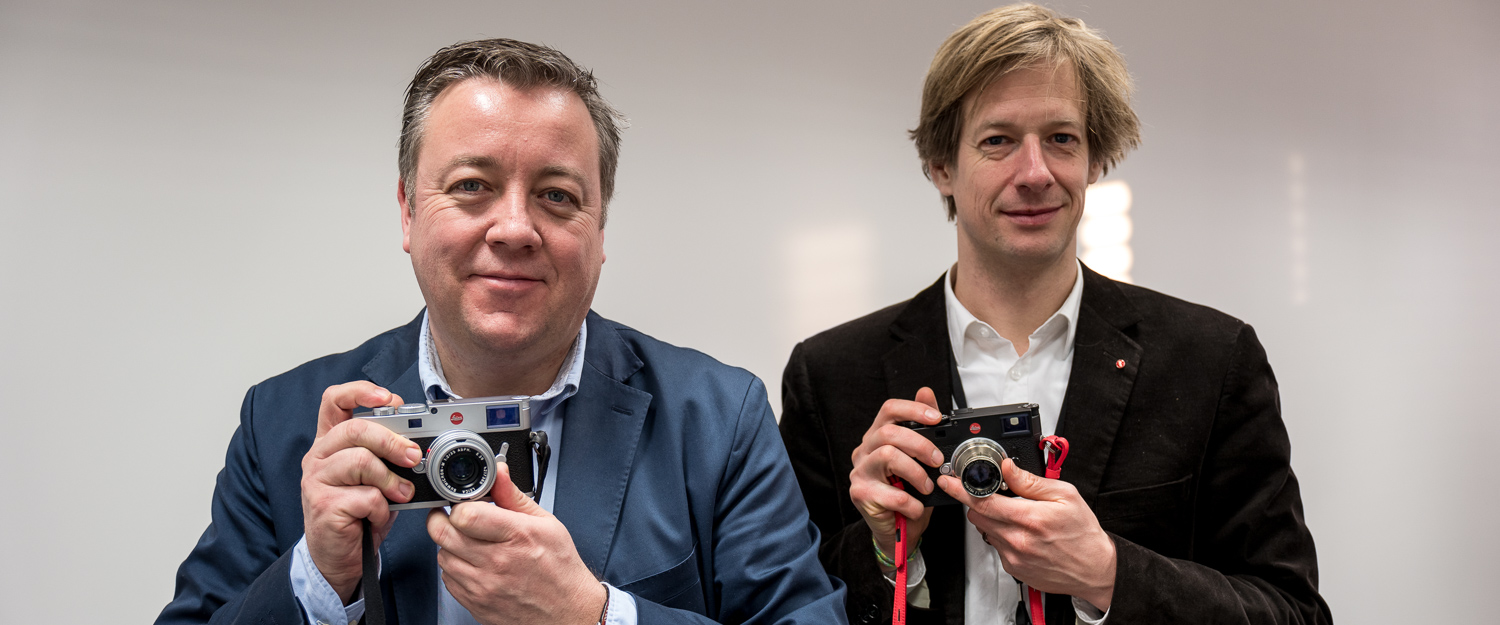
While I was in Germany for the Celebration of Photography Event a.k.a The M10 Launch, I had a chance to sit down for a chat with Jesko von Oeyhausen, product manager for the Leica M10, and Stefan Daniel, Global […]
-

Luis Castañeda posted an update 9 years, 6 months ago
Something is wrong with the page. It prevents me from uploading new images. Please fix it! Thank you.
-

Renê de Paula's profile was updated 9 years, 6 months ago
-
David Farkas wrote a new post 9 years, 6 months ago
Back in December I received an interesting invitation from Leica. My presence was requested at Leica’s corporate headquarters in Wetzlar, Germany to attend a Celebration of Photography, honoring legendary p […]

-
wonderful event and superbly reported… as usual!
Albert
-
-

Josh Lehrer wrote a new post 9 years, 6 months ago
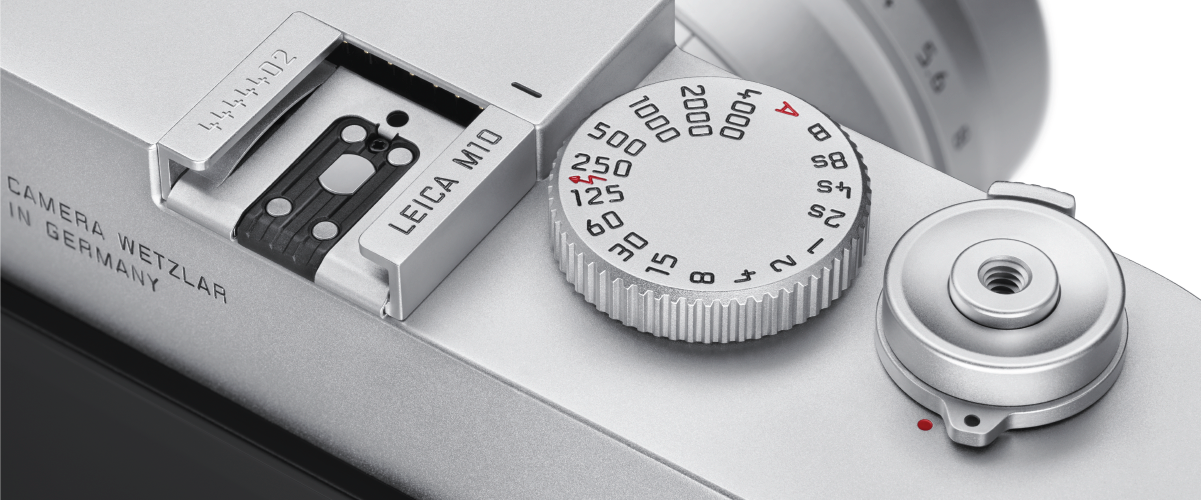
Today, Leica has released its long-awaited successor to the incredibly popular (and revolutionary in its own right) M (Typ 240) series of digital rangefinders: the Leica M10. Building on over 60 years of M […]
-

Good work Josh,
My review of all the reviews suggests this iteration of the M is getting universal acclaim.
My favorite part is that it is available now, not in 12 months. I like the ISO dial. All these little changes appear to really add to the appeal.
Jack -
Thanks Josh, well written and succinct. Always exciting to hear of a new M.
-
Beautifully written and a very exciting advance…
Albert
-
-
-
Jason Nicholson became a registered member 9 years, 6 months ago
-
David Farkas wrote a new post 9 years, 6 months ago
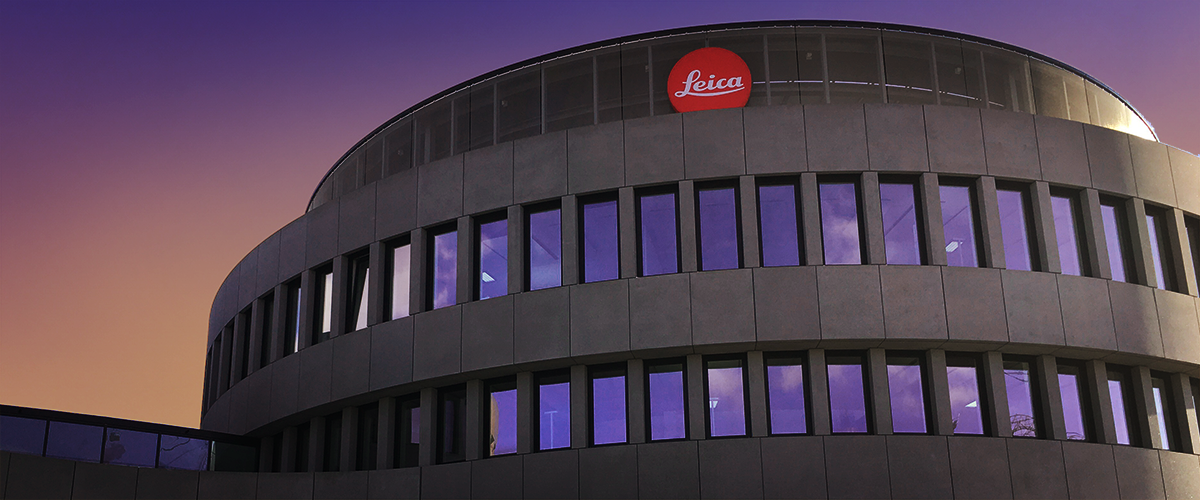
Keep it tuned to Red Dot Forum for full event coverage from Leica's headquarters at Leitz Park in Wetzlar, Germany. I arrived earlier today and am excited to attend tomorrow night's “A Celebration of Photography” […]
-
aleyumo started the topic Leia SL Firmware v2.2 in the forum General Leica Discussion 9 years, 6 months ago
Hi, everybody,
I downloaded the v2.2 at the very beginning of January 2017. And I was much surprised when I saw on my iMac that the file downloaded was the size of 118.3 MB instead of 112.77 MB as declared on the Leica site. Then I was even more surprised when I found out that v2.2 and v2.0 are absolutely identical in sizes up to Byte: v2.2 has…[Read more] -
aleyumo started the topic Leia SL Firmware v2.2 in the forum General Leica Discussion 9 years, 6 months ago
Hi, everybody,
I downloaded the v2.2 at the very beginning of January 2017. And I was much surprised when I saw on my iMac that the file downloaded was the size of 118.3 MB instead of 112.77 MB as declared on the Leica site. Then I was even more surprised when I found out that v2.2 and v2.0 are absolutely identical in sizes up to Byte: v2.2 has…[Read more] -
aleyumo started the topic Leica SL Firmware V2.2 in the forum Leica SL (Typ 601) 9 years, 6 months ago
Hi, everybody,
I downloaded the v2.2 at the very beginning of January 2017. And I was much surprised when I saw on my iMac that the file downloaded was the size of 118.3 MB instead of 112.77 MB as declared on the Leica site. Then I was even more surprised when I found out that v2.2 and v2.0 are absolutely identical in sizes up to Byte: v2.2 has…[Read more] -
aleyumo started the topic Leica SL Firmware V2.2 in the forum Leica SL (Typ 601) 9 years, 6 months ago
Hi, everybody,
I downloaded the v2.2 at the very beginning of January 2017. And I was much surprised when I saw on my iMac that the file downloaded was the size of 118.3 MB instead of 112.77 MB as declared on the Leica site. Then I was even more surprised when I found out that v2.2 and v2.0 are absolutely identical in sizes up to Byte: v2.2 has…[Read more] -
Luis Castañeda posted an update 9 years, 6 months ago
Rusted Metal -
Josh Lehrer wrote a new post 9 years, 6 months ago
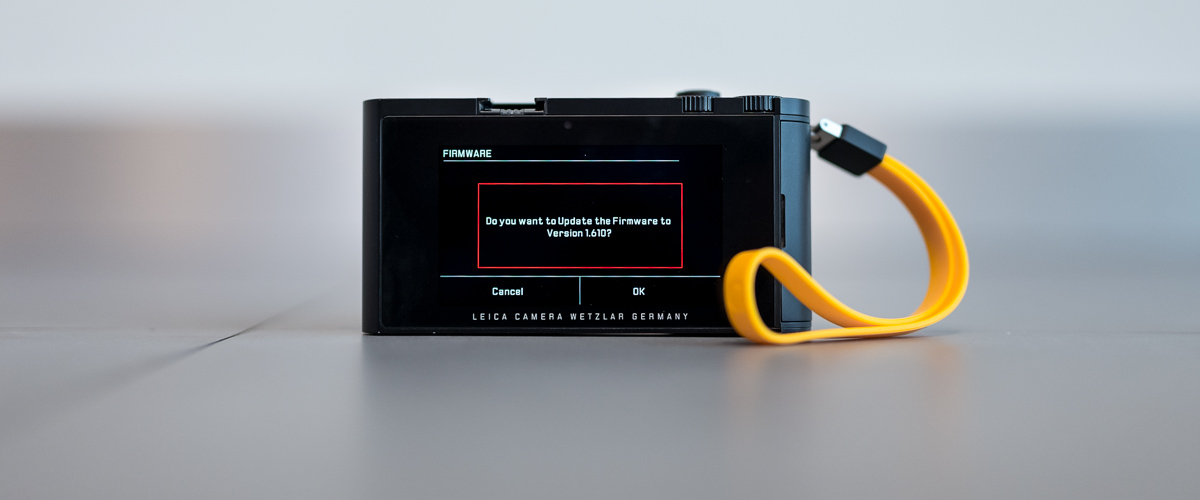
Today, Leica has released firmware updates for both the T (Typ 701) and TL digital cameras. The firmware is designed to fix a bug that causes the camera to freeze up when the Leica APO-Macro-Elmarit-TL 60mm f/2.8 […]
-
Luis Castañeda posted an update 9 years, 6 months ago
Mayan Boy Playing -
Renê de Paula changed their profile picture 9 years, 6 months ago
-
Renê de Paula posted an update 9 years, 6 months ago
Making of “Joia” (with Leica S 2) https://vimeo.com/56262124
-

Tom Biondo changed their profile picture 9 years, 7 months ago
-
Tom Biondo posted an update 9 years, 7 months ago
Typ 109 on macro setting. A piece of cake. -
Luis Mora wrote a new post 9 years, 7 months ago
Ever since Leica announced that they were reissuing the 28mm Summaron-M, I could’t wait to get my hands on one. I love classic Leica glass. The feel of the images. The vintage styling on the front of my M. The c […]
-
Thanks! The video was all recorded with the SL. Most of the footage was shot with the 35mm Summilux-TL, the beginning tracking shots were with the 23mm Summicron-TL, and the close-up beauty shots were with the 24-90 SL.
-
So David, who was the video shooter? Nice work.
-
Jack,
Thanks! I shot and edited the video.
-
-
Bernard,
Yes, this is planned for the future for sure. There is a lot of uncertainty surrounding best practices for video. So many variables.
I will certainly inquire about the ACES workflow, and work to educate myself more on this evolving standard.
Thanks for the feedback.
-
Scott,
There is an audio adapter for the SL to accept 3.5mm miniphone input and also provides a 3.5mm headphone jack for monitoring.
For capturing video, I use a Video Devices PIX-E5H 5″ recording monitor which takes the clean feed off the sensor over HDMI. This allows me to record at 10-bit 422 rather than 8-bit 420 to the SD card. There are other advantages besides the improvement in image quality, but this is a big one. The PIX-E uses the Apple ProRes 422 codec so Final Cut X workflow would be great. I just prefer the Adobe CC ecosystem and work on both Mac and PC, so cross-platform compatibility is important for me.
For audio, I use the Sennheiser AVX wireless mic system. Handles loud environments with ease. The system is about as close to plug-and-play as you can get. For audio recording, I use the PIX-LR audio interface adapter for the PIX-E5. It attaches on the bottom and allows the use of two XLR inputs. The audio sounds amazing, thanks to the implementation of the legendary Audio Devices analog pre-amps and analog limiters.
I'm hoping to publish and article, a video guide or both on best practices for SL video shooting and post-production workflow.
-
Loved the lenses. The video is extremely well done. Luis you sounded like narrator on a NG special, great.
-
Scott
This video was shot in L-Log, but all of my Photokina reporting was done without shooting in Log. Log gives you more ability to adjust your look later and gives more flexibility in the files.
I apply a LUT in Premiere Pro CC in the Lumetri Color controls. For past videos, I've created my own 3D LUT in Davinci Resolve by using a Datacolor SpyderChecker. For this video of Luis in Little Havana, I decided to try something else, so instead used a stock ARRI Alexa LUT that comes pre-loaded into Premiere. The result was a nice “Miami” look. The only downside was losing some of my highlight detail, but the overall look is really nice. Much of color grading is subjective.
Whether shooting in Log and applying a LUT or recording straight with no Log, I still color correct (grade) all my clips so that they have a color continuity through the whole project. I do this through the use of adjustment layers in Premiere Pro, again with Lumetri color controls.
I've never used Final Cut, so can't speak to how this would work under that workflow.
-
-
Luis Castañeda added a Photo 9 years, 7 months ago
- Load More








David,
An incredibly through interview.
You touched on some items that I had not gleaned from other reviews.
Glad you asked about the eventual mono.
Thank you.
Very nice interview, with lots of information. I hope this answers many people's questions about EVF, touch screen, video etc. I'm glad that although they are listening to their customers, they are trying to keep the M close to the original philosophy as much as possible.
Fred,
For many M users, the M10 is the penultimate digital M, the one they've been waiting and dreaming of since the M8. Leica took user feedback into account when designing the M10. The top request was for a thinner body, with the same dimensions as a film M, and they delivered. Second most requested was an improvement in low light capability. The M10 shoots cleanly at ISO 10,000 with great color, where the M240 topped out at ISO 3200. For most users, lower noise, better color and increased dynamic range trump pure pixel count.
The M10 also has a significantly improved optical viewfinder, a direct ISO dial, reduction in UI clutter, improved LV functionality, faster processing speed and frame rate. All around, the M10 is a natural evolution from the M240. It has a slightly smaller battery, but also more power efficient processing. On the M240, I carried two extra batteries for a full day of heavy shooting. I do the same with the M10.
The omission of video wasn't due to heat. If this was the case, Live View would have been eliminated, as reading out for LV puts the same demands on the sensor and heat dissipation mechanisms. Video was taken out because the vast majority of M users didn't want it there. They complained vehemently of video ruining the pure M experience on the M240, and such an incredibly small percentage of M users ever used it. The concept of the M10 was to get back to basics, the essentials. Not marketing schpiel, but rather a company-wide mantra. Every product manager strives to this standard.
I'm not saying that some users didn't appreciate video, or tethering via the multifunction grip, but Leica responded to the 90%+ of users who flat-out rejected these features as un-M-like. For those who want to tether or shoot pro level 4K video, and have the option to use M lenses, Leica offers the exceptional SL. This is the idea. M10 for the purists. SL for those requiring a professional feature set.
I'd recommend checking out my full review on the M10 here. It's a fantastic camera to shoot with and the image quality is phenomenal. And, yes, I'm ok with 24MP, both on the M10 and SL. A 6um pixel size allows for stopping down to f/11 before hitting diffraction, and I have a stack of 24×36 inch prints that look incredible from nose-in-print distance. If the need arises, you can certainly print bigger and maintain gallery quality output, but again, most M shooters don't want or need to print this large. Will Leica ever increase the pixel count? Maybe, but only if there they can do so with no sacrifice in image quality, DR, low light ability or edge-to-edge performance.
Go out and shoot with the M10 and you'll see that the M is far from dead. Quite the contrary, actually.