

@david-farkas
active 2 years ago-

David Farkas wrote a new post, Photokina 2014: Video interview with Stefan Daniel, Leica Director of Product Management 11 years, 3 months ago
Stefan Daniel, Leica's Director of Product Management walked me through most of the major products introduced at Photokina. Of course, with so many new cameras and lenses, we couldn't go into too much detail on […]
-
David Farkas replied to the topic How is everyone liking the new site design? in the forum Annoucements and Site Matters 11 years, 3 months ago
Doug, if you click on the time/date in the Last Post column, you will be taken directly to the latest reply.
As far as old attachments that were migrated over, yes, some the sizing got a little strange. But, moving forward all smaller res preview images will all be the same size.
-
David Farkas wrote a new post, Photokina 2014: Day 2 – Everything you need to know about the Leica S (Typ 007) 11 years, 3 months ago
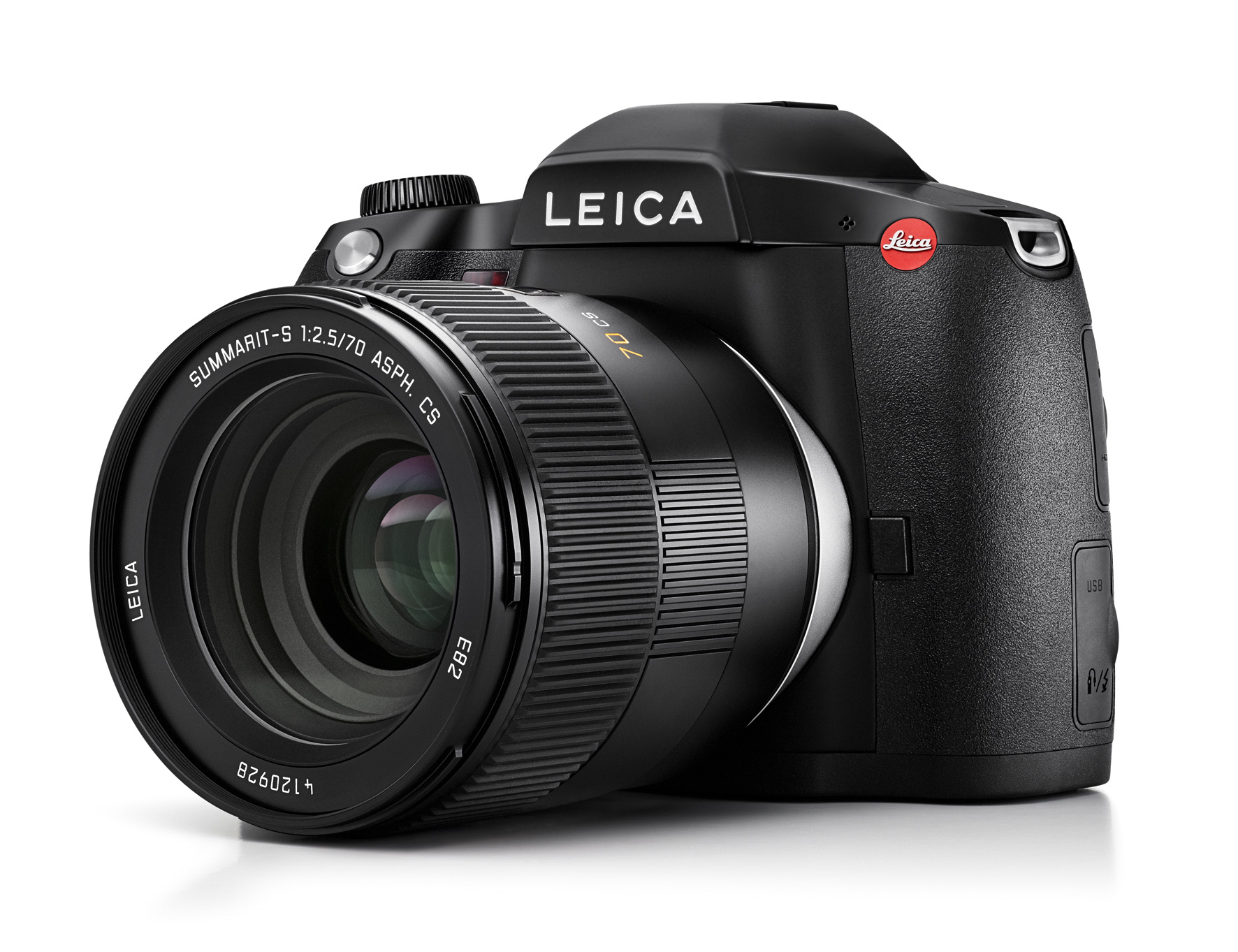
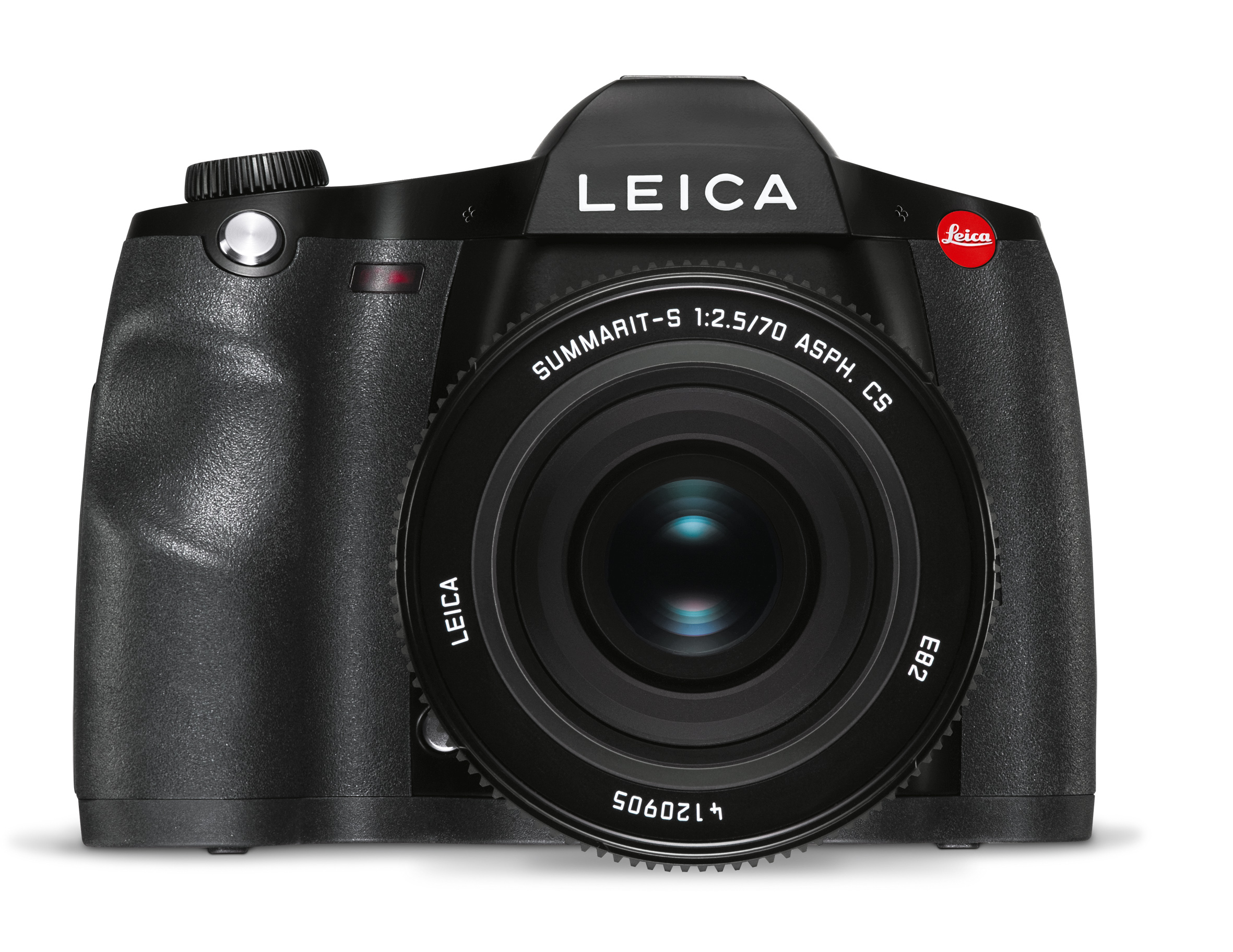
With my focus on the M yesterday, I wanted to dedicate my second day at the show to the new Leica S (Typ 007). As the third generation in the S family (I’m not counting the old S1 as it’s a totally different animal), Leica stepped up their game pretty significantly with the S 007. The new S ticks a lot of boxes on users’ wish lists. I got a chance to sit down with Stephan Schulz, Director of Professional Photo Products, and Toni Felsner, Project Manager of the S System to go over all of the changes on the new S.
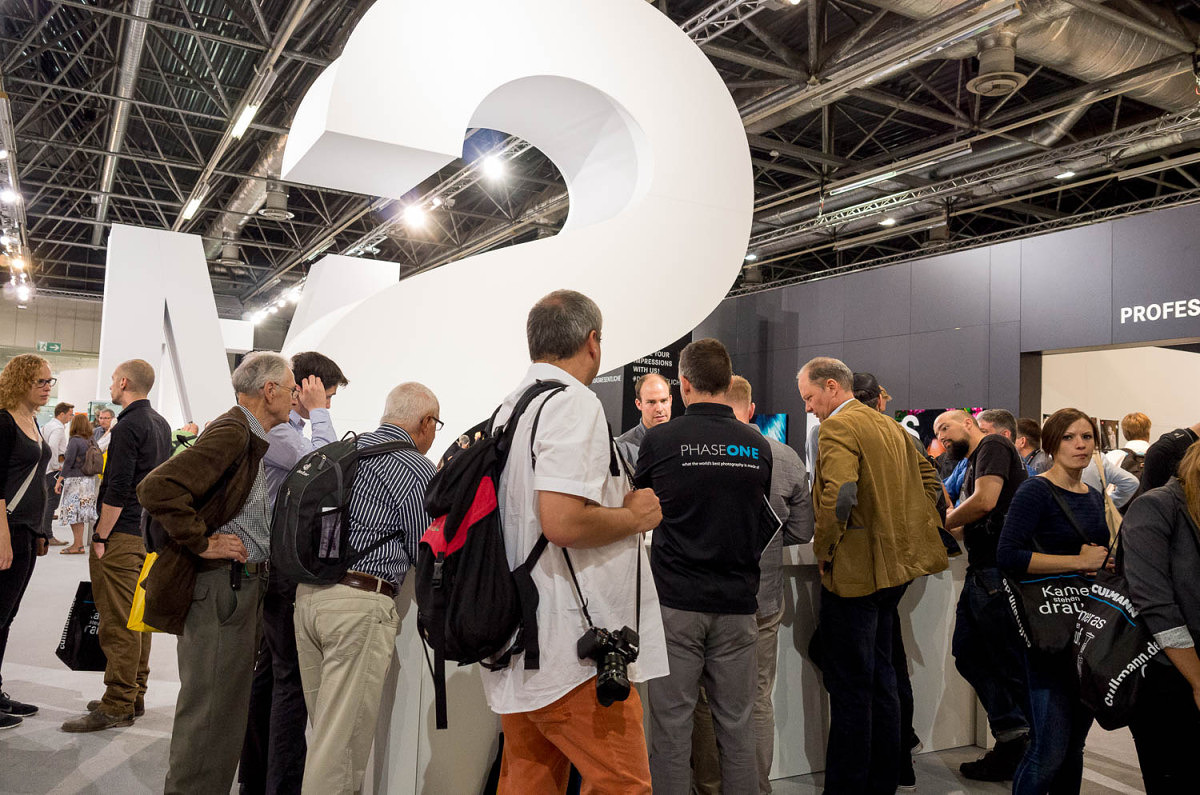
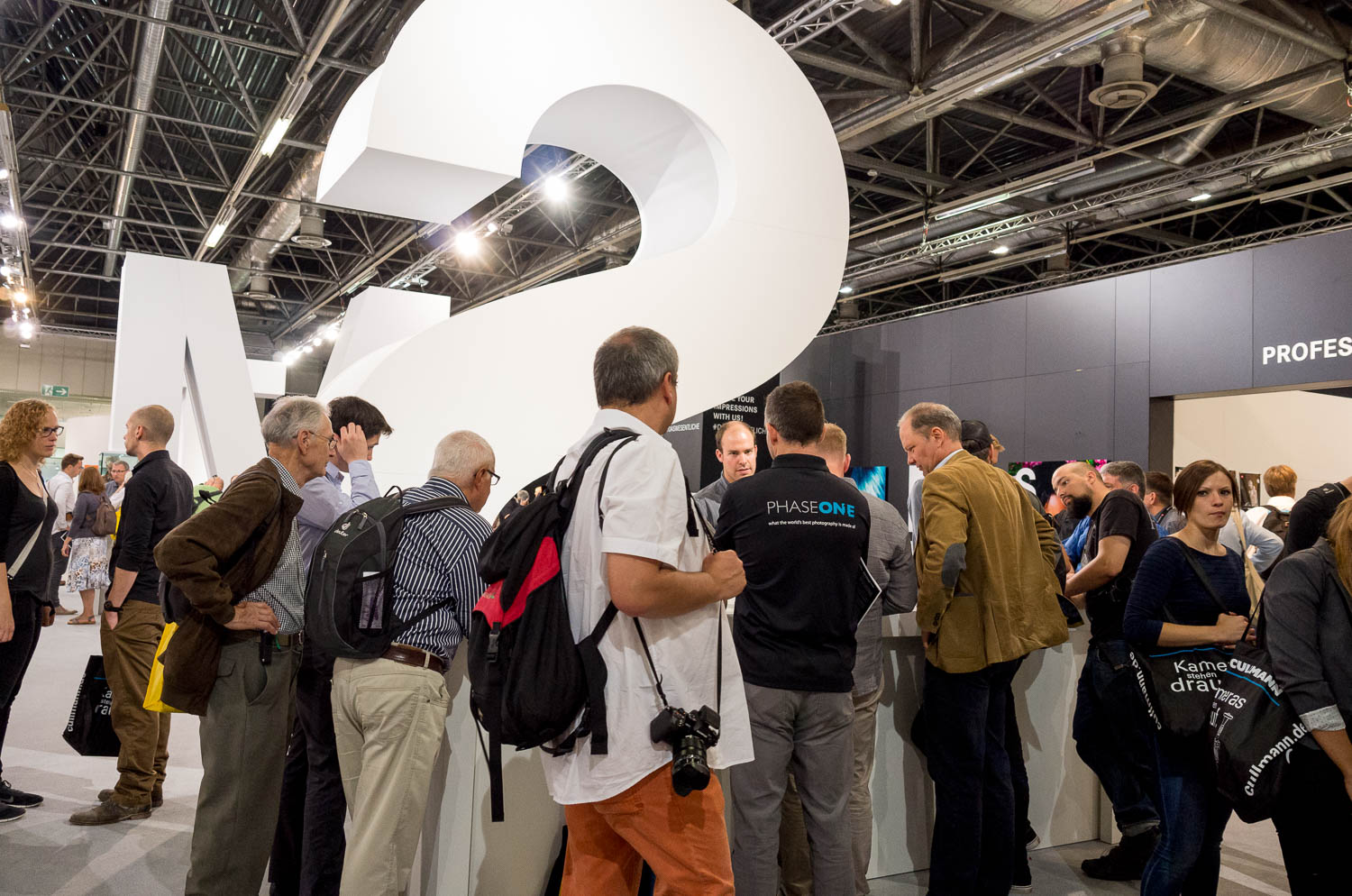
Lots of interest at the S stand, even from Phase One…
The S 007 isn’t the first…or second or even third…medium format digital camera to transition from a CCD to a CMOS sensor. Hasselblad, Phase One and Pentax all got there first earlier this year by using the 44x33mm 50MP Sony sensor. But, like one of my favorite sayings goes, “The early bird may get the worm, but the second mouse gets the cheese.” The Leica S is now the fastest MFD system in the world, boasting a frame rate of 3.5 FPS, which is blazingly fast thanks to the new Maestro II image processor under the hood and the rapid-fire, lightweight shutter making light work of exposing the new CMOSIS-produced CMOS sensor at the heart of the S.
The camera also is the first to shoot 4K video and use the full width of the sensor to produce 1080p video. It’s got 802.11n Wi-Fi, built-in GPS, UHS-I dual card support, HDMI out, much faster autofocus and focus tracking, USB 3.0, a new and quite large daylight-viewable transflective top display, 60fps live view with focus peaking, DOF calculations clearly indicated, a whole host of video features and incredibly fast image processing.
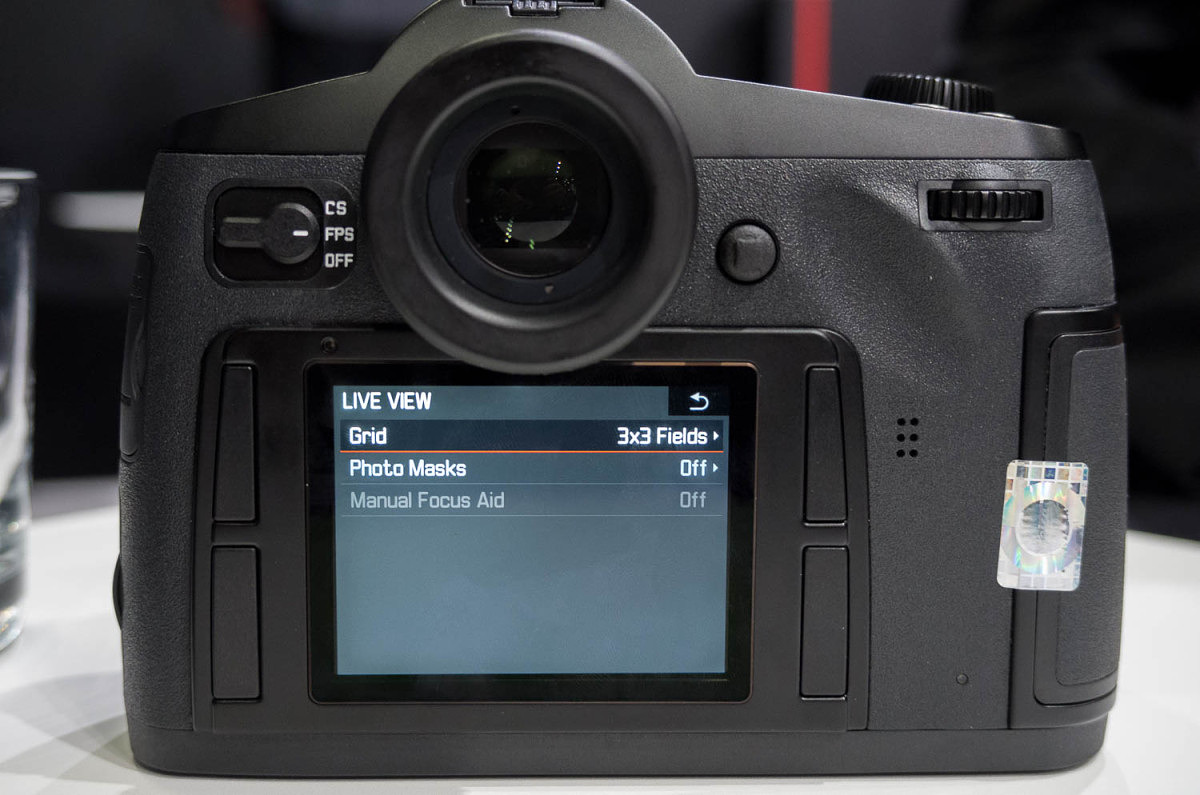
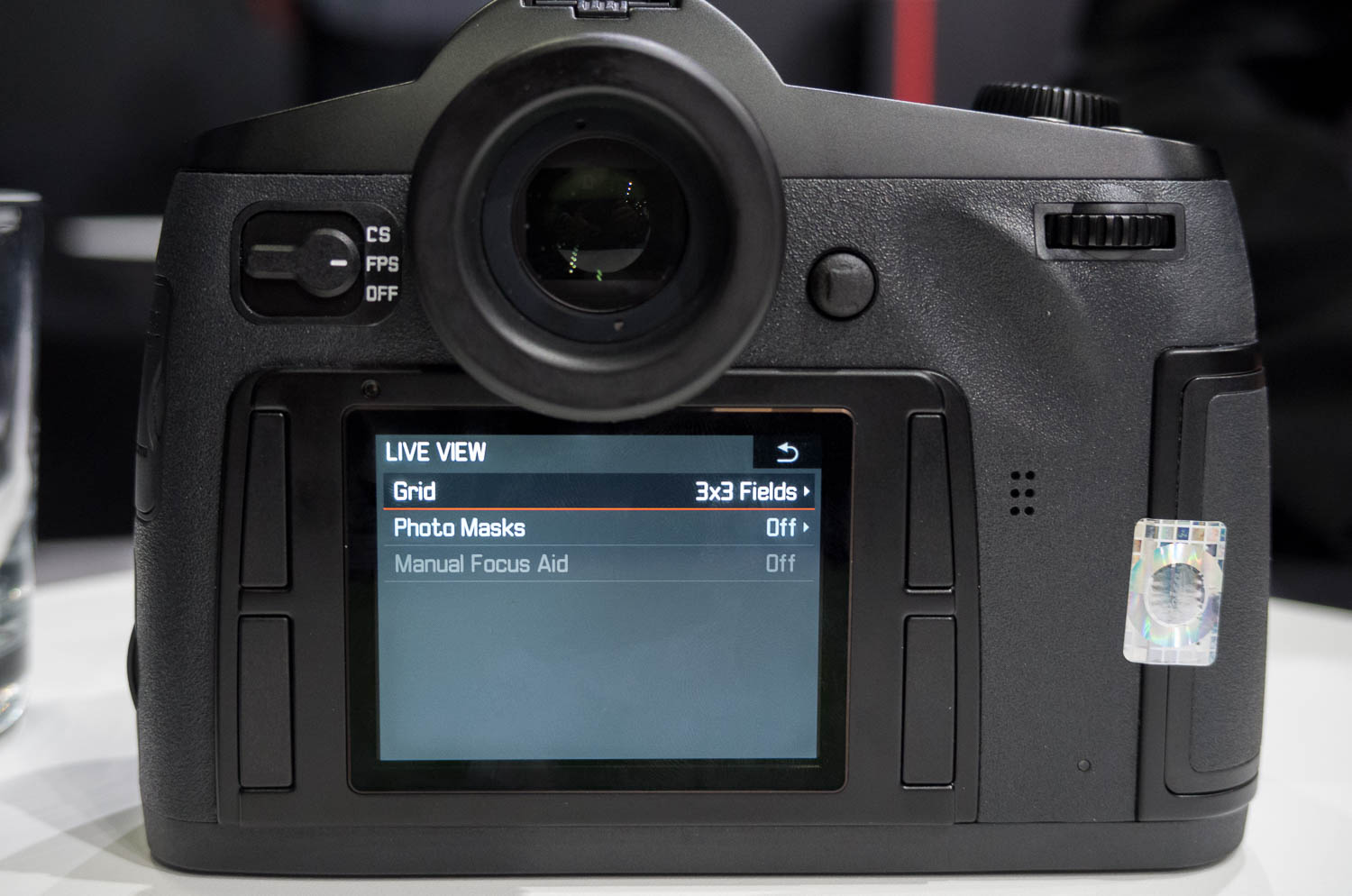
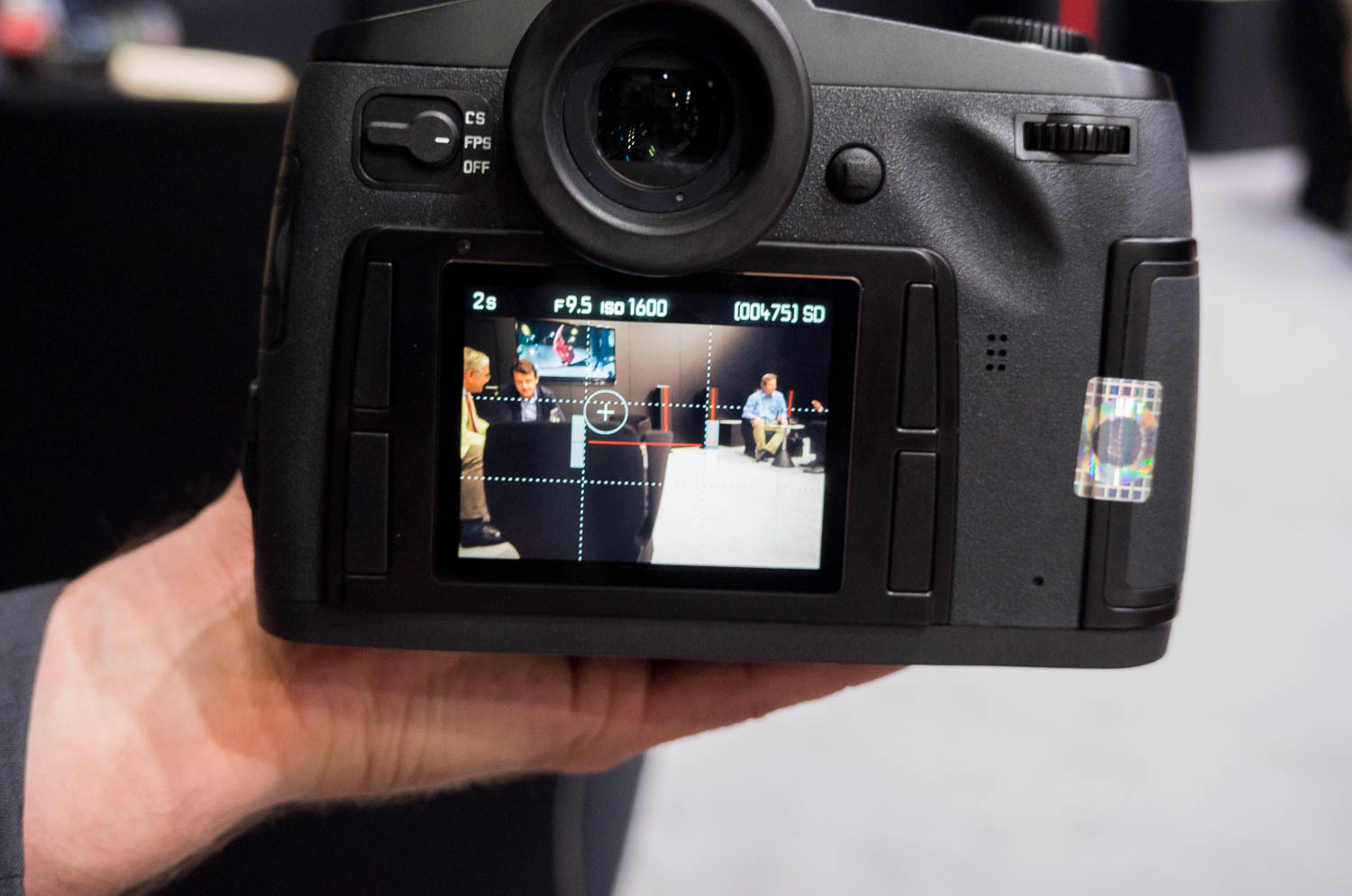
Live view controls
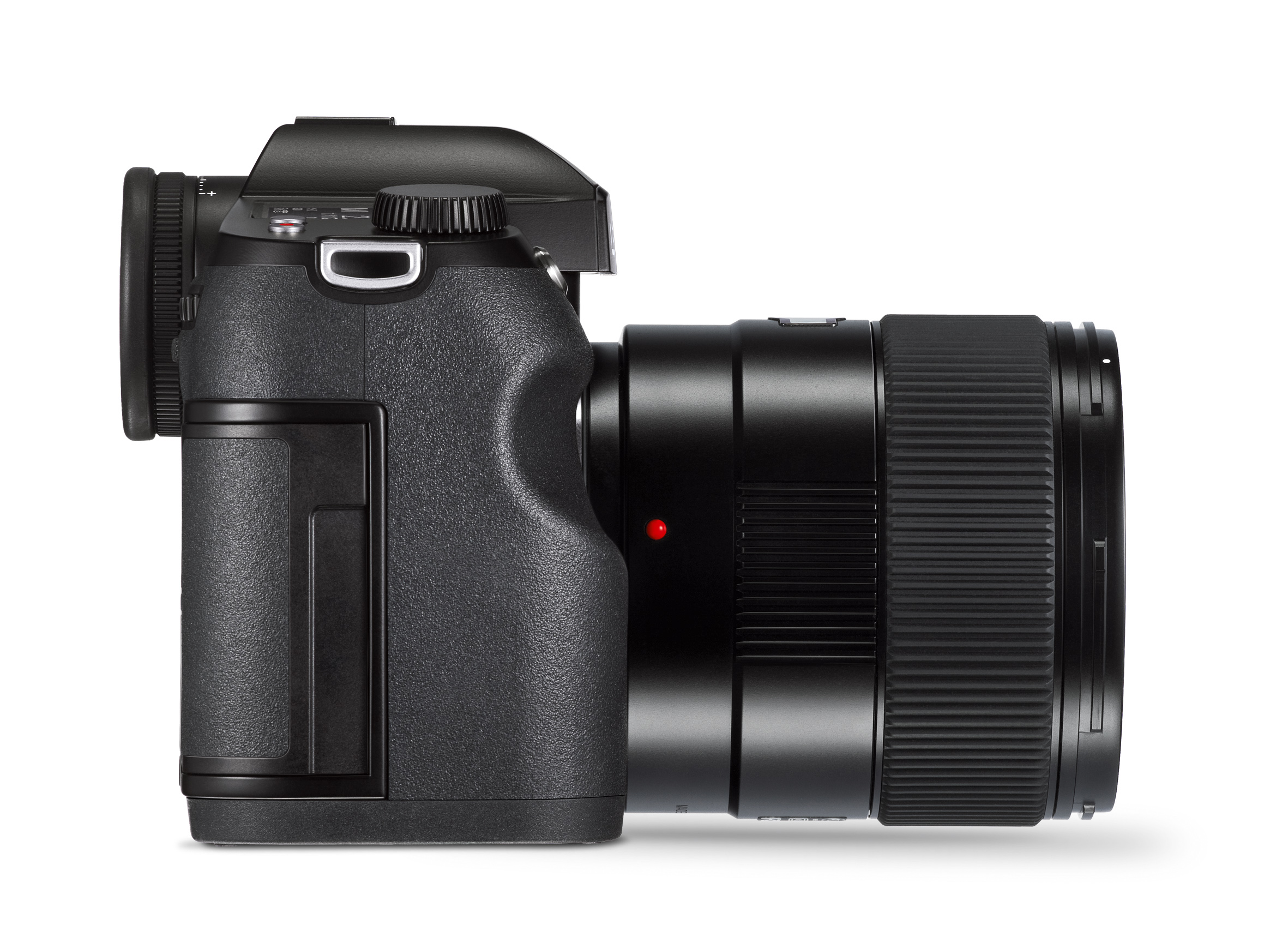
Handling the camera is not too different than the S (Typ 006) that I have used extensively. The size and shape are familiar, which is to say, still one of the most comfortable and ergonomic camera bodies I’ve ever used. The camera is built like a rubber-encased tank and has seen upgrades in the durability category in addition to all the under-the-hood changes. The entire lens mount, and not just the mounting ring, is now solid stainless steel. So are the strap lugs. The mount now has a polished sheen of indestructability. The new faster, quieter shutter is now rated at 150,000 actuations, up from the already respectable 100,000 on the S (Typ 006).
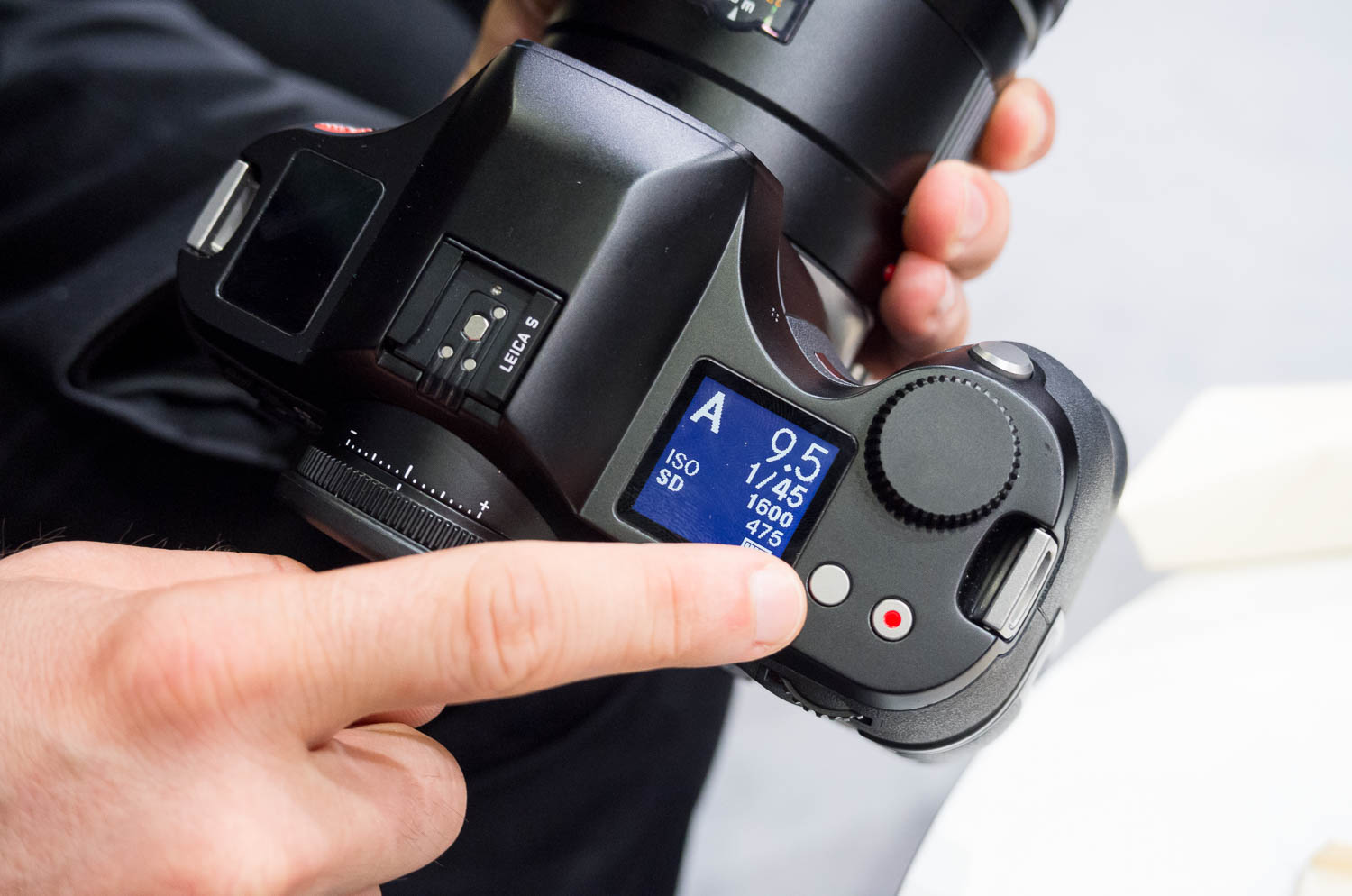
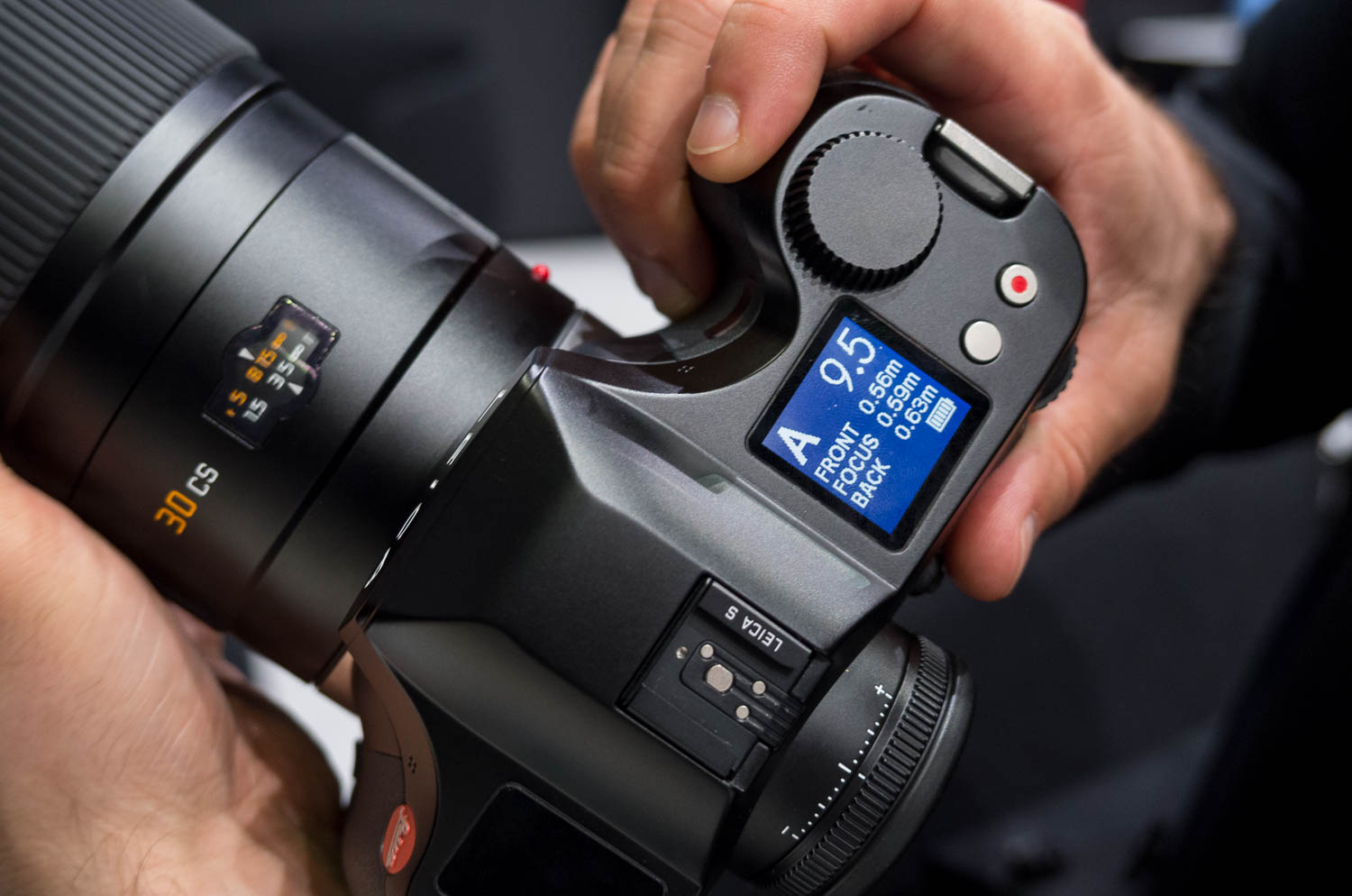
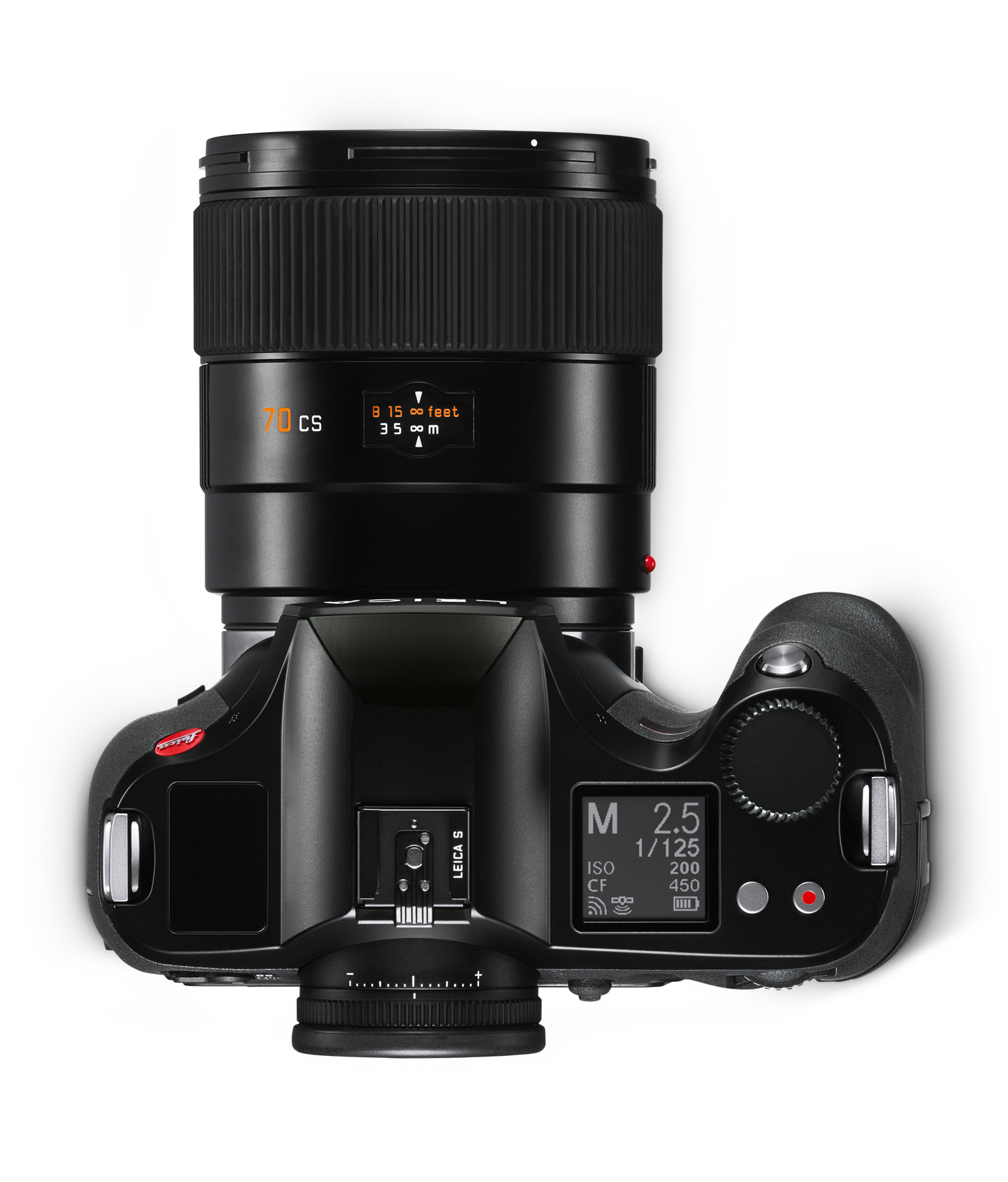
While the bulk of the body remains the same, the entire top plate is brand new. The round knob-like GPS nub of the S (Typ 006) is replaced by a black gloss rounded rectangle that sits flush with the top of the camera. At first glance, it looks like a second status screen and seemed somewhat out of place, but it does fit the design quite well after some getting used to. The top status color OLED of the S (Typ 006) is now traded out for a handsome transflective monochrome LCD that is at least double the size. Information is clear and crisp with white lettering against a deep blue background, and the transflective screen, while still having a built-in backlight, actually increases in readability under bright light. The screen is reminiscent of those used in car dashboard displays.
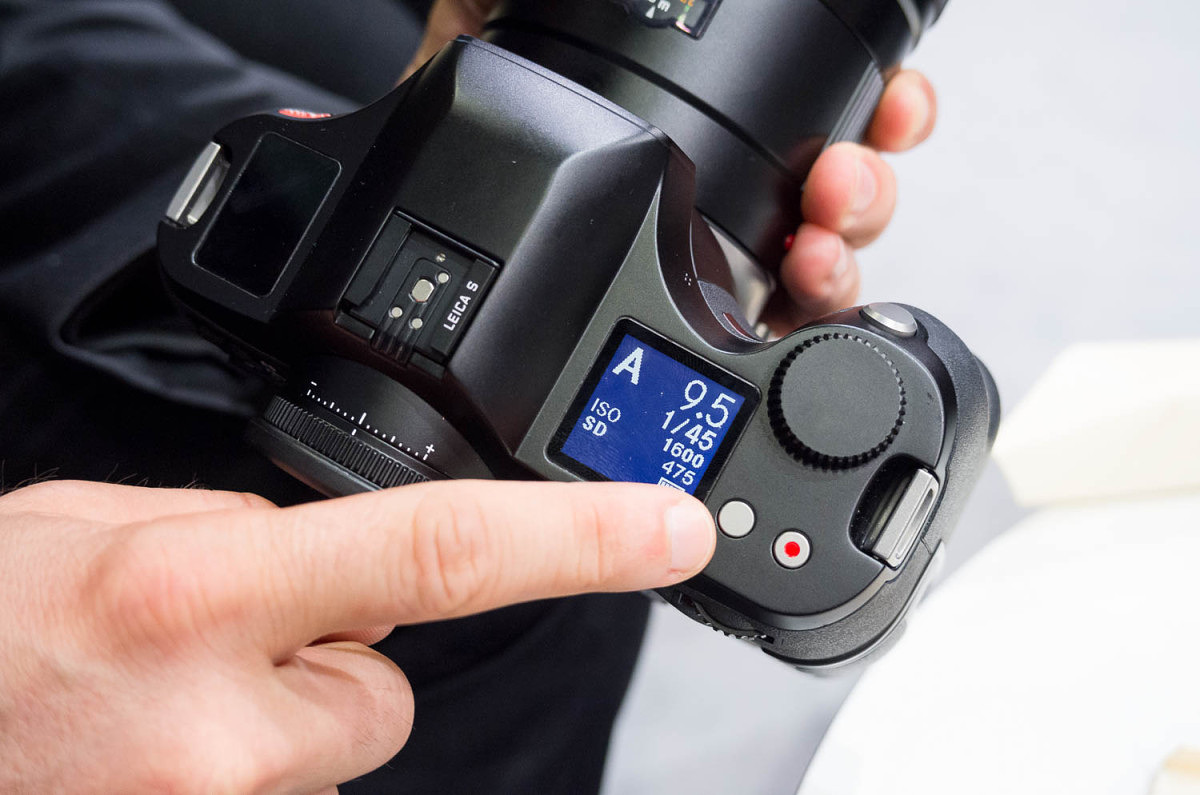
New top transflective LCD
The shutter speed dial is now updated as well. No speed markings grace the dial any longer. The dial is smaller in diameter, has been moved forward towards the front edge and is much easier to turn. The concept is to have multiple functions for this control element and to be easy to turn by your forefinger while gripping the camera. Both were achieved here as I found it easy to use and comfortable to access while shooting. In playback mode, the top dial now controls zoom, with the rear thumb dial taking care of scrolling. This makes playback and review of images much quicker and more intuitive.
The last changes to the top plate are two steel buttons that sit to the right of the large top LCD and behind the top dial. The one with the red dot on it is to activate video recording and the other unmarked button is to turn on live view.
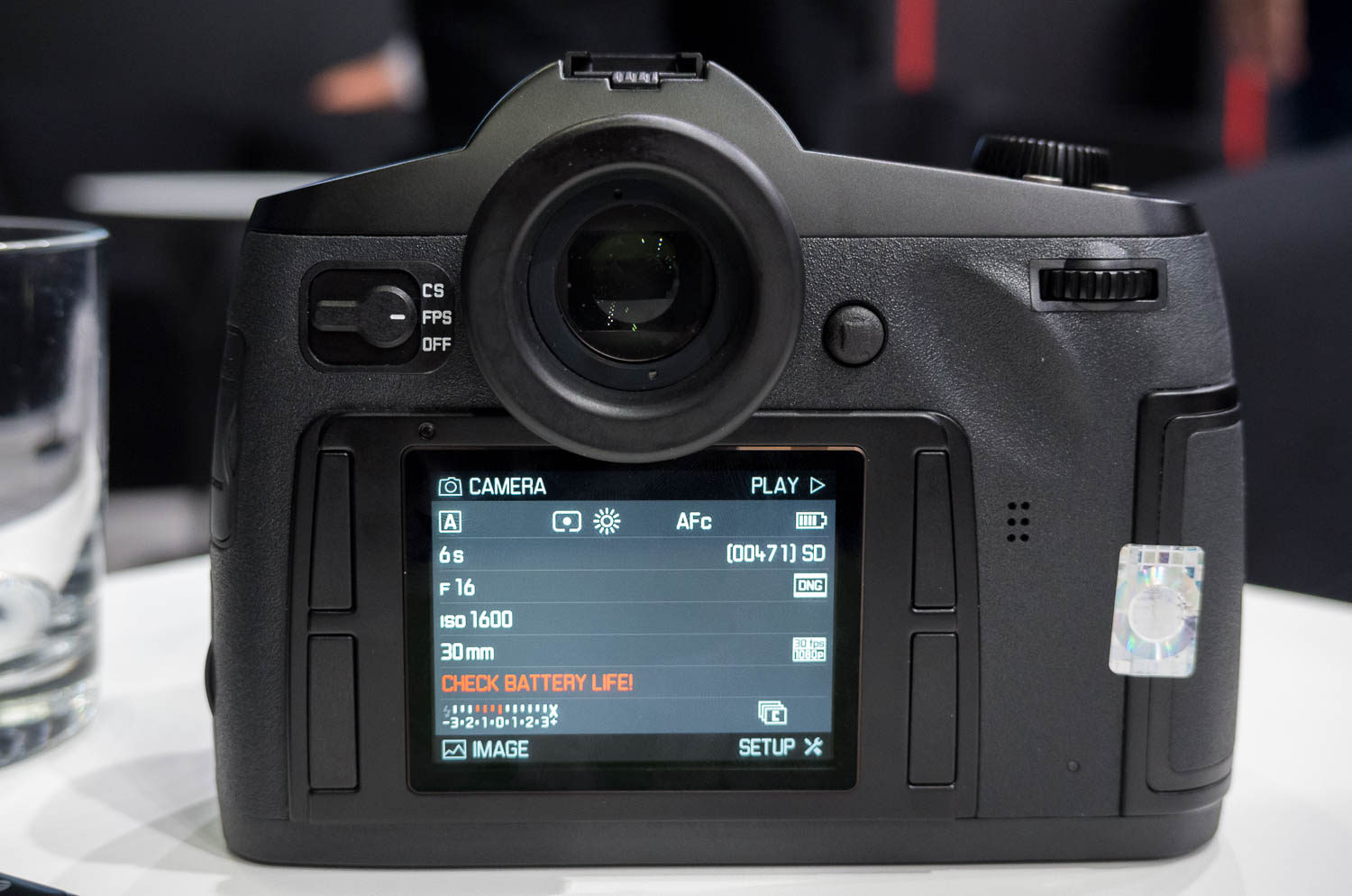
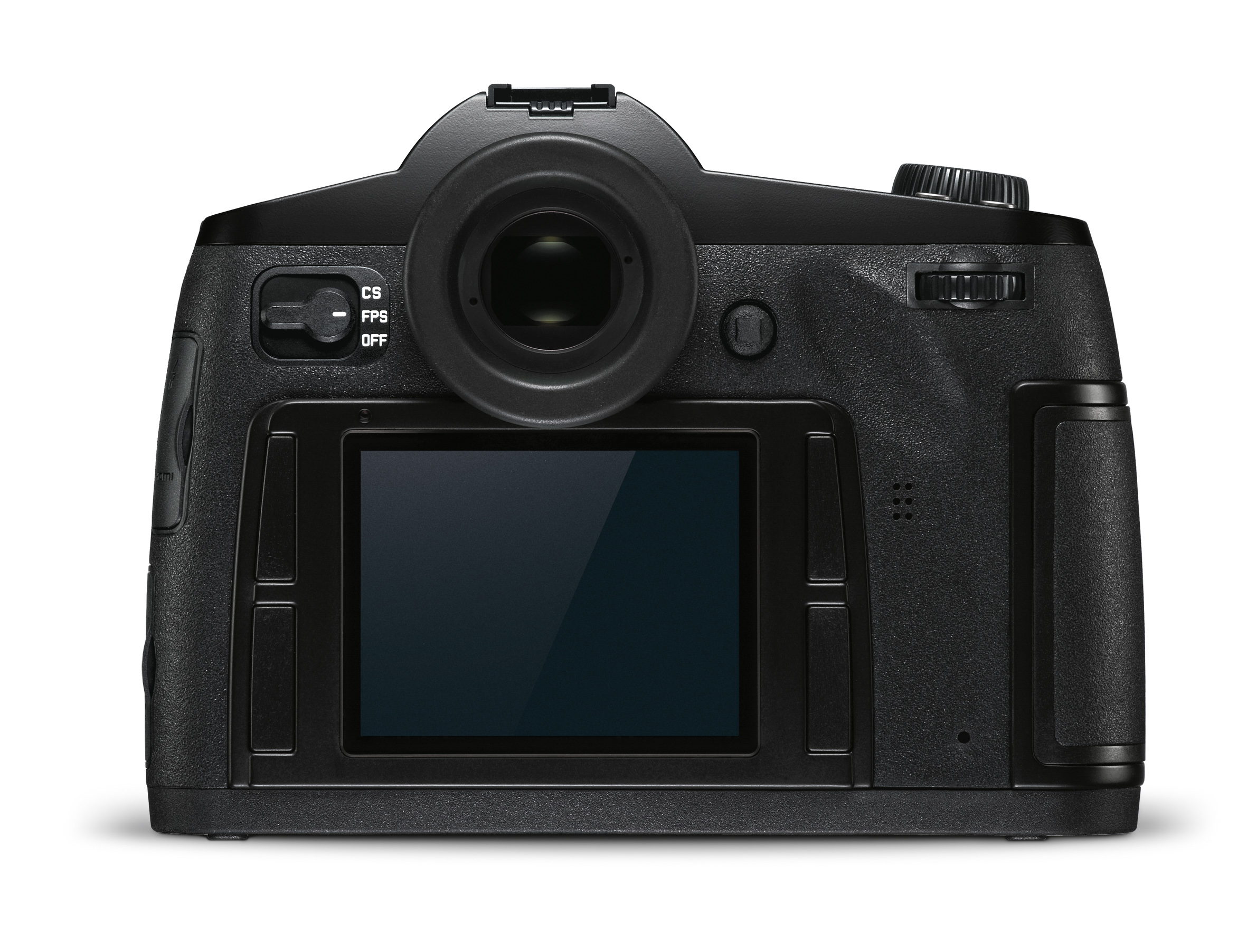
While not readily apparent from looking at the back of the camera, the onscreen GUI has gotten a nice facelift. Leica designers have traded rounded, dark gray selections to a more modern flat design, more similar to what you might see in iOS 7 or Windows 8. The look is clean and readable and functionally perhaps just a little easier to navigate given the improved menu organization. You also can update firmware within the menu without having to power cycle the camera and hold any buttons for x amount of seconds.

New status screen
The battery has gotten its own update. Visibly indistinguishable from its predecessor, the new battery boasts an increase in capacity in order to run the live view and video features of the S 007. The really great news for existing S2 and S 006 owners is that the battery is backwards compatible, meaning you can use it to get even longer battery life. It can be used in the Multifunction Grip, which is unchanged, as well as being charged using the same Pro Charger. Just don’t mix the old and the new battery in the grip. The warning I received about this reminded me a part in the movie Ghostbusters of when Egon warns his comrades about not crossing the streams, so we’ll leave it at that.
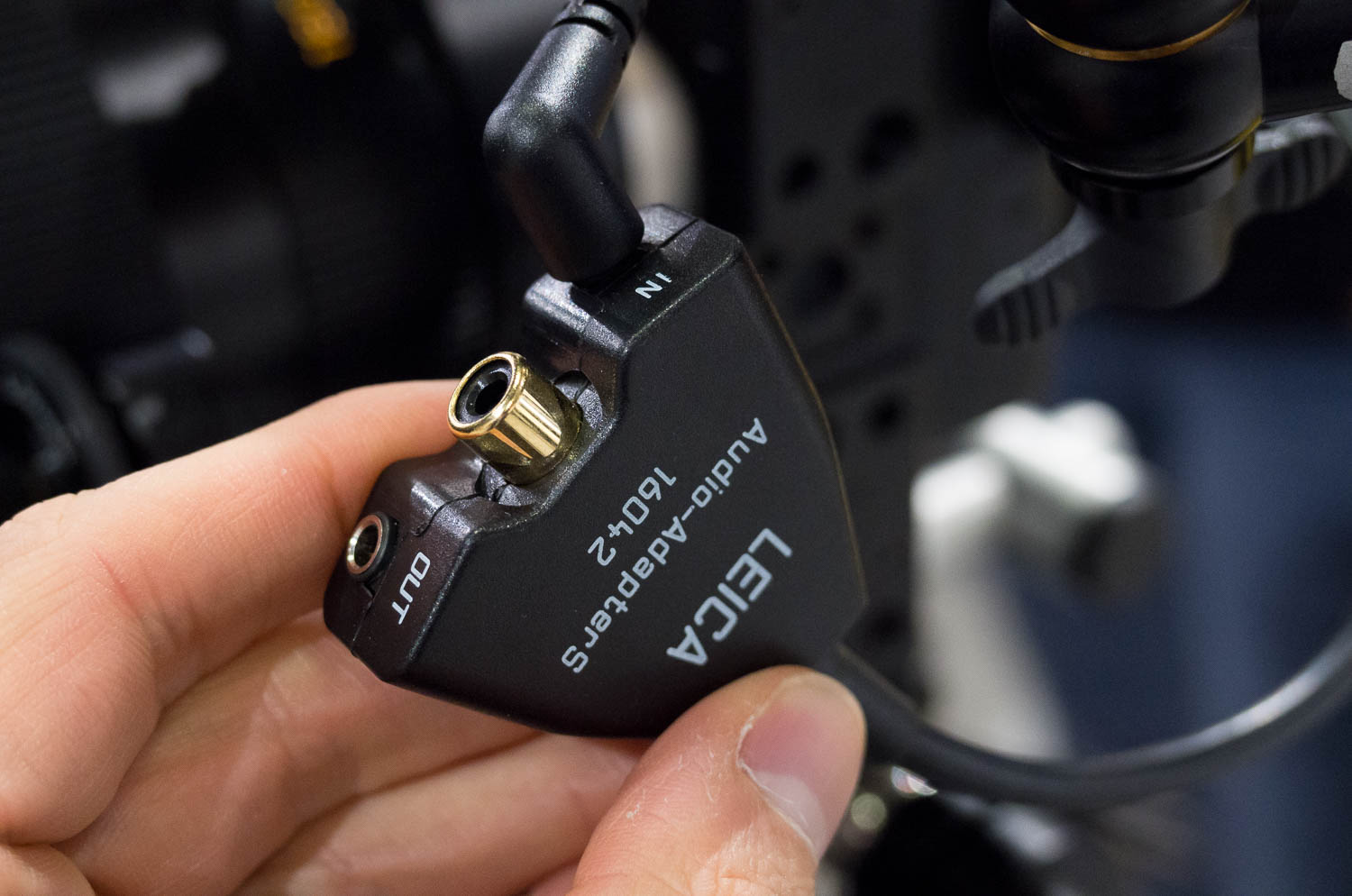
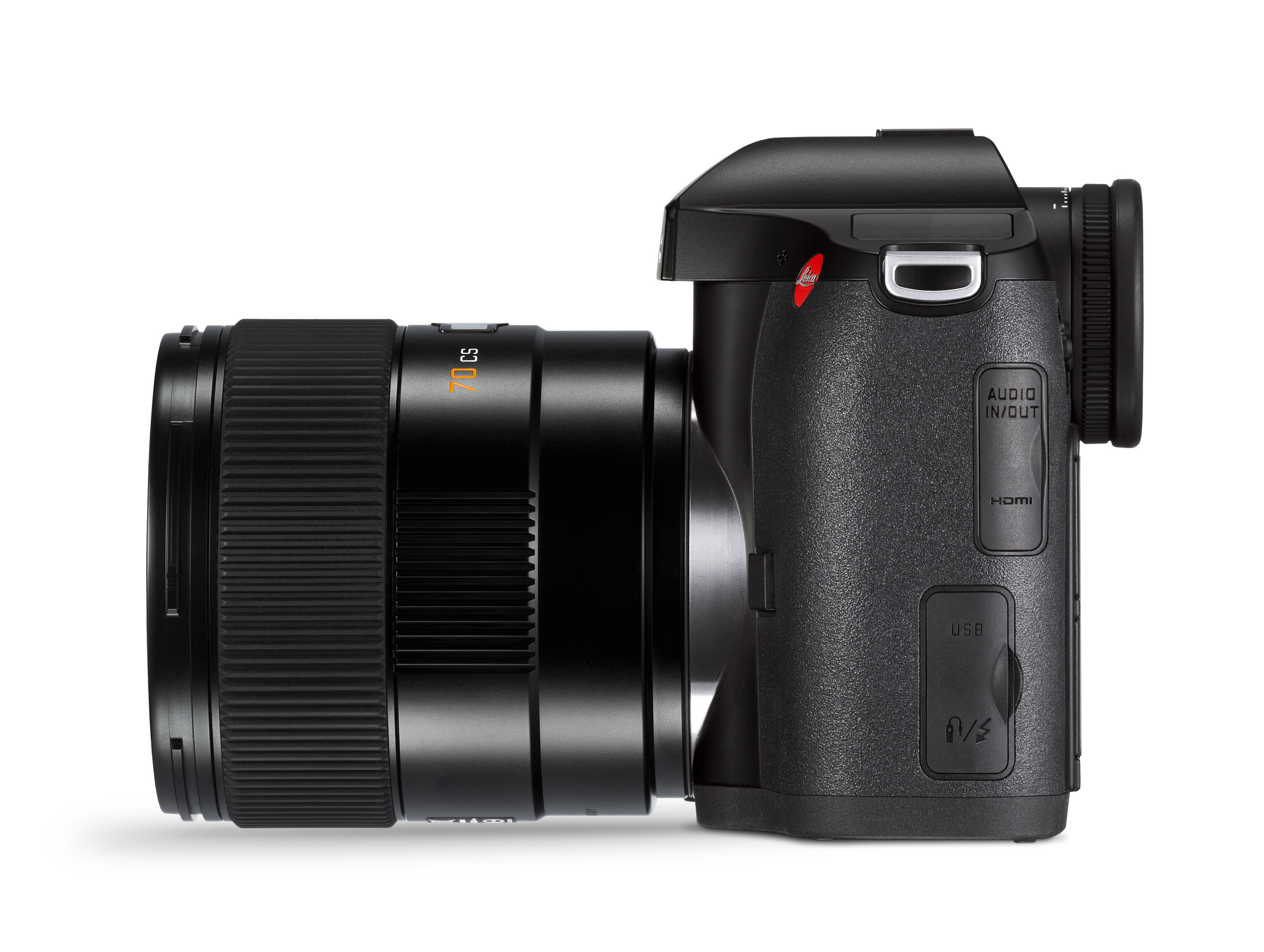
Included with the camera is a new piece of hardware, called the Leica Audio Adapter-S. This small dongle attaches to a locking LEMO port on the side of the camera and has three ports, two 3.5mm audio jacks, one for microphone in, the other for audio out, as well as an RCA connector for importing timecode from an external generator.
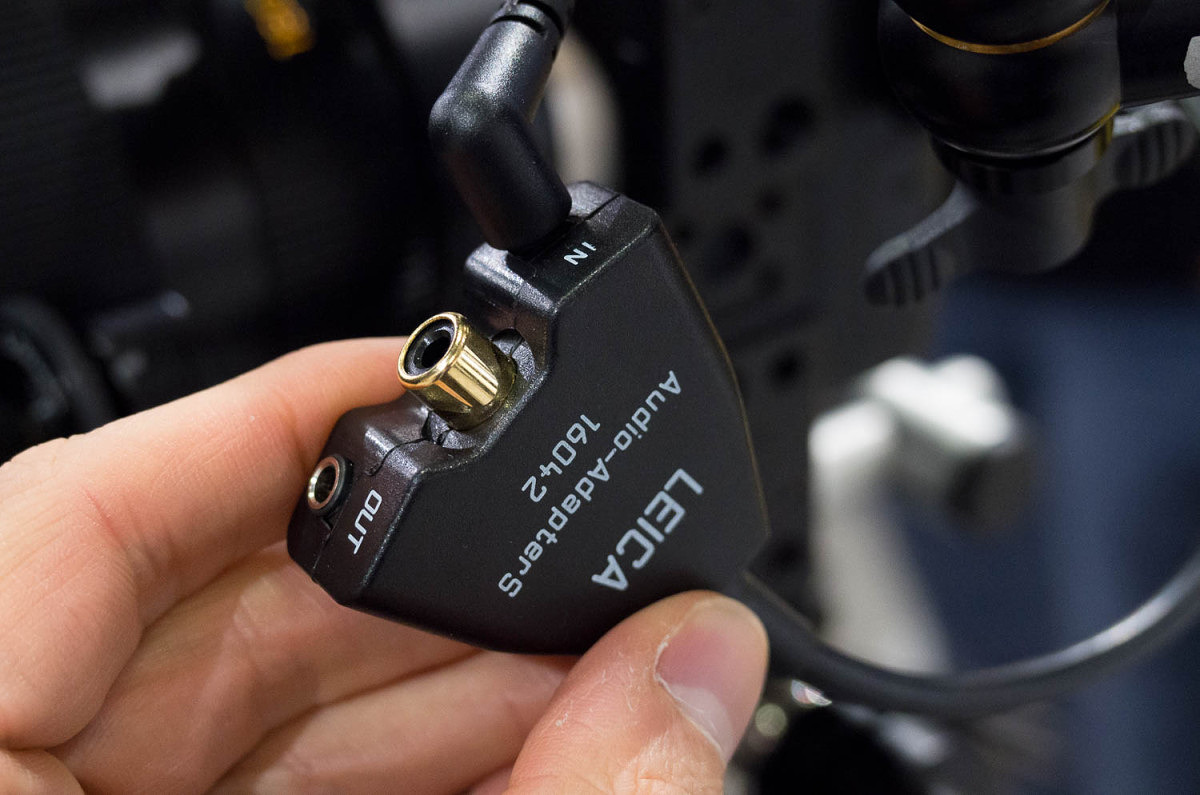
Audio Adapter S with audio and timecode connections
A lot of focus has been given to providing professional video features in the new S. As I already mentioned, the camera can shoot Digital Cinema 4K and 1080p FullHD. The 4K is actually wider than that used on televisions and computer monitors, measuring 4096 x 2160 pixels. The 4K video is captured at 1:1 on the sensor, meaning that each pixel on the sensor yields one pixel on the final video. So, to this end, the 4K capture area is a cropped section on the larger sensor. While I was pretty excited about the prospect of 4K on such a large sensor, from a quality perspective, this approach is a better one. In 1080p FullHD mode the entire area of the sensor, cropped to 16:9, is used. I imagine video guys everywhere drooling over the prospect of shooting on such a large sensor through the incredible range of S glass. Video can be recorded to either a local CF or SD card, or simultaneously to a computer or recorder via the HDMI port. Output from the HDMI port is limited to 1080p only, as Leica is using HDMI v1.3 which cannot carry 4K signals. The video feed is clean, stripped of any overlays or other information, allowing it to be recorded and ported as necessary. Quality of video should prove to be excellent, whether recorded to card or over HDMI. 4:2:2 sampling is used for best color fidelity and Leica engineers are targeting a bit rate of 50 Mb/s.
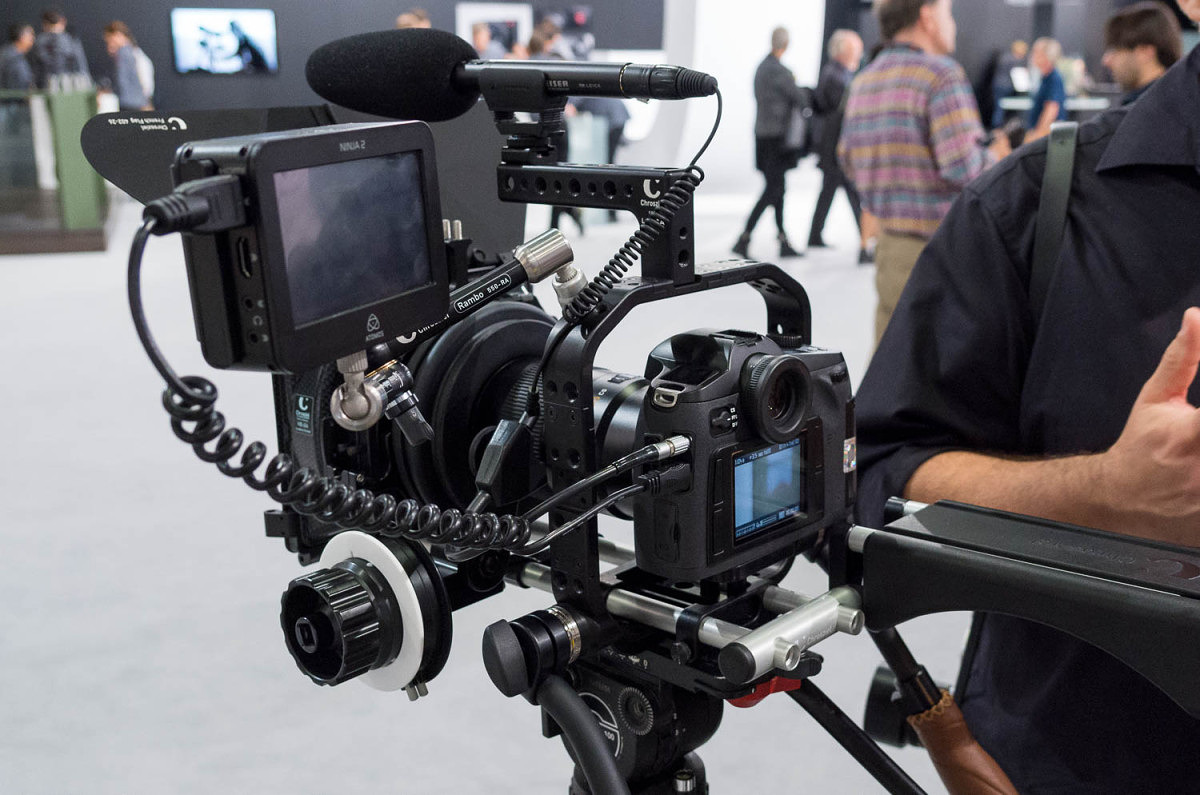
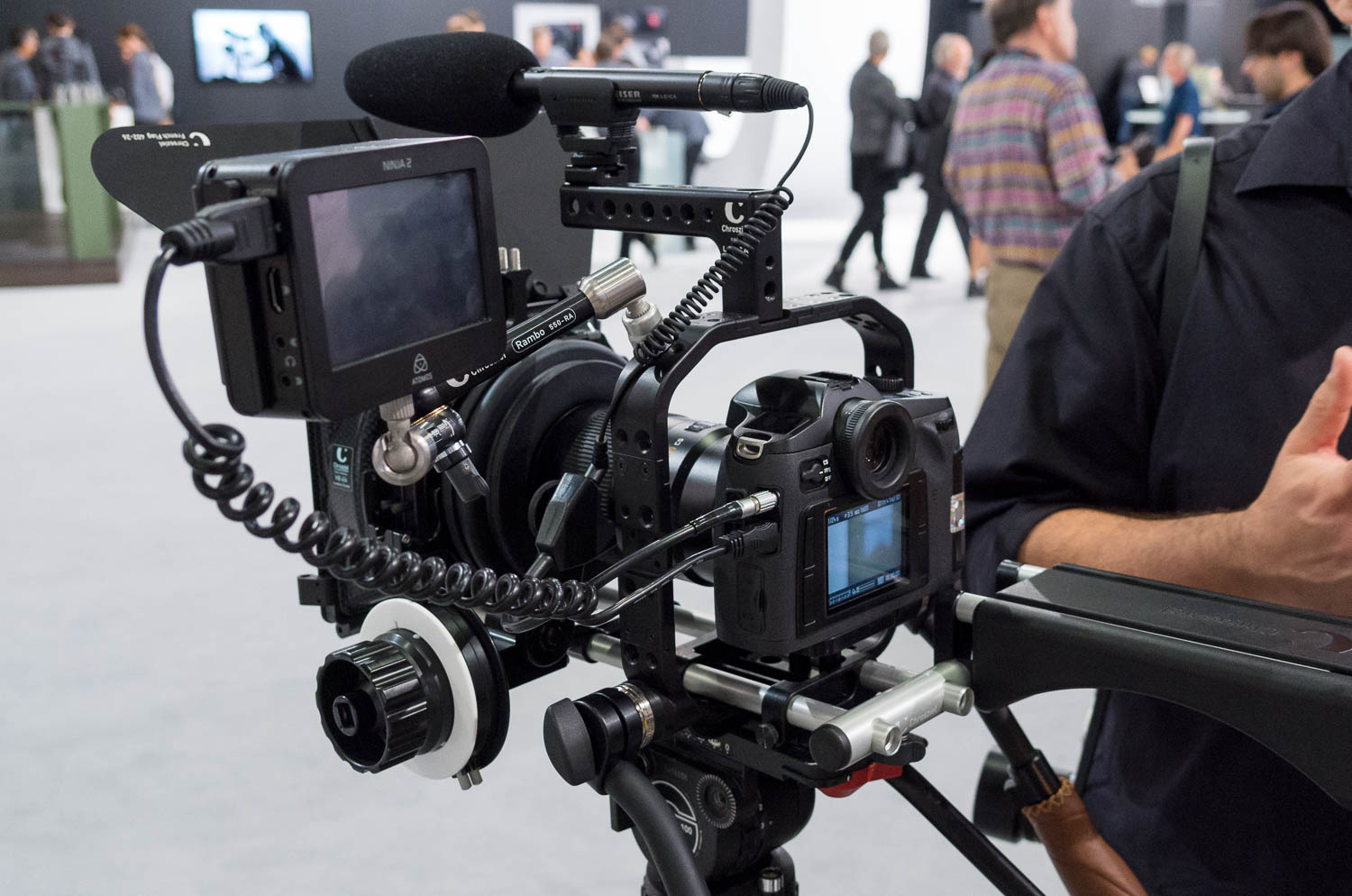
Full video rig
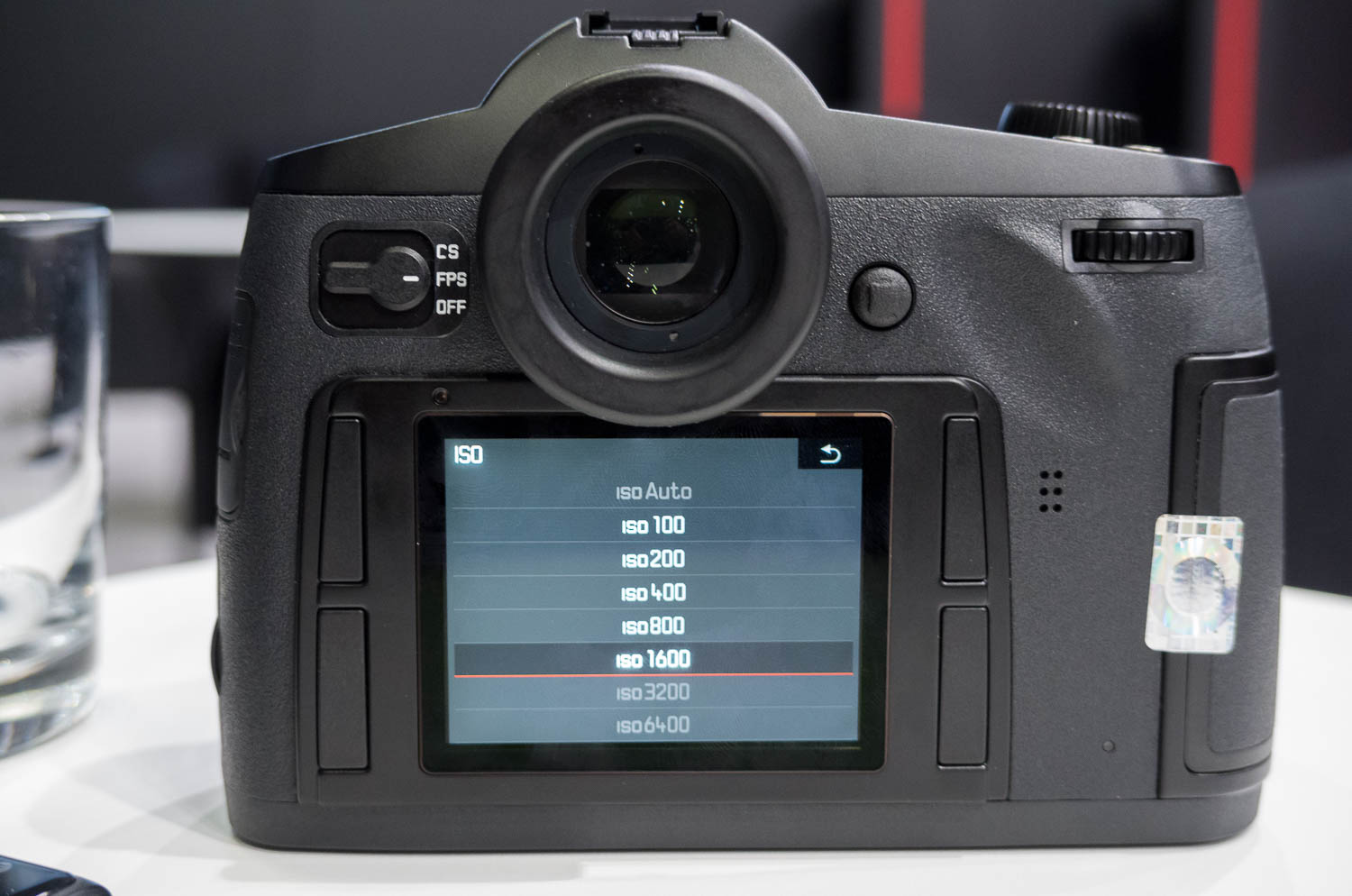
Besides video features, the two main focuses of the S product team has been to overcome two of the challenges historically found in medium format digital systems, namely speed and low light performance. The S has seemed to come out on top on both accounts. At 3.5 fps, the S shoots roughly three times faster than a Hasselblad or Phase One camera. This frame rate is possible with the new shutter and with the upgrade to the Maestro II. The first Maestro processor, care of chip maker Fujitsu, was already quite capable, chugging through 160MP/s. It powered the S2, the S 006 and most recently the M (Typ 240). While a specific speed isn’t being disclosed right now, the second generation ASIC chip is on the order of 2.5-3x faster than its predecessor. Along with support for Wi-Fi, USB 3.0, live view, 4K video and a blazingly-fast frame rate, the new processor also boasts improved image performance and enhanced in-camera RAW noise reduction. This goes to address the second goal, low light performance. Even though the sensor architecture is roughly the same as the one used in the M 240, these improved algorithms and image processing will result in even less noise at equivalent ISOs to the M. We are talking about very good and usable full res ISO 6400! The S is no longer relegated to being used in full light or being confined to a tripod. Coupled with the 30-90mm Vario lens, this beast could easily serve as a general purpose shooter, with similar handling and capabilities to that of a pro 35mm DSLR, but offering the advantages of medium format with a sensor area 60% larger.
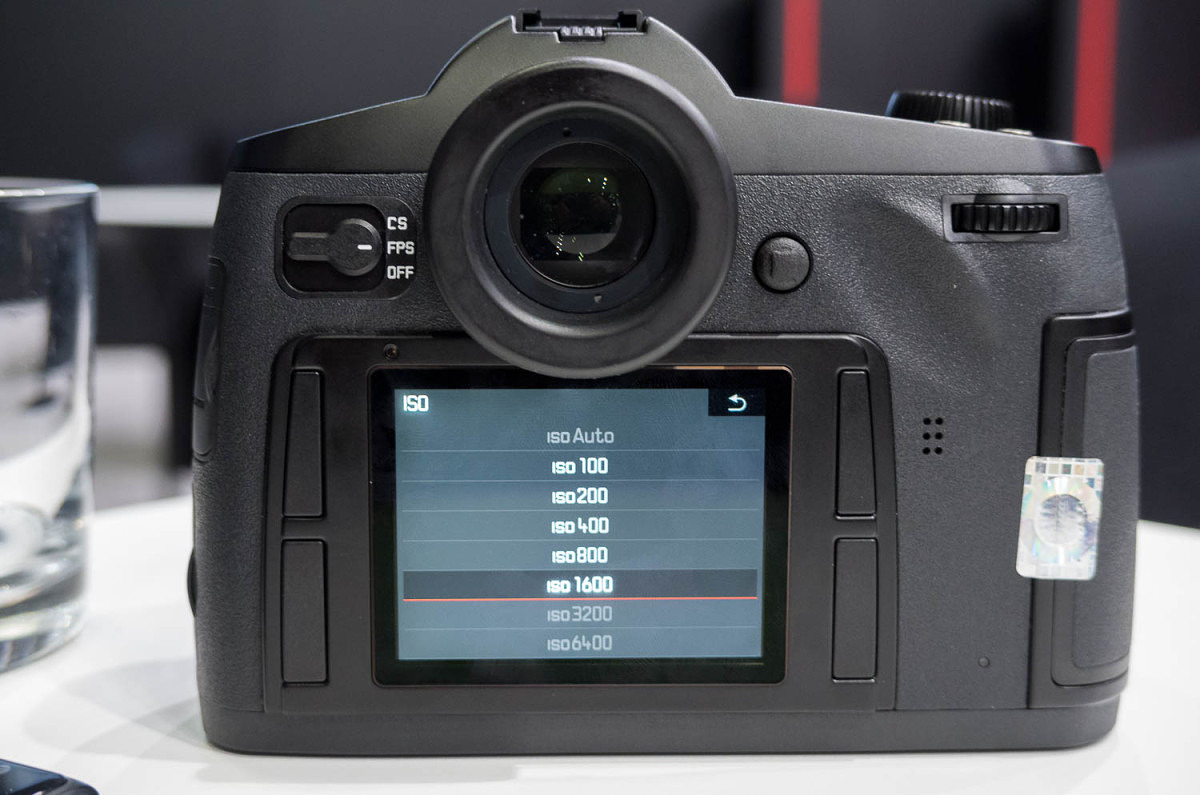
High ISO range? Yes, please.
Along the same lines of speed comes an entirely redesigned AF system. While still featuring a single cross-type sensor in the center of the frame rather than a few closely spaced points, the already good AF speed and accuracy is now improved by a full 50% increase in both. This is not a small incremental bump, but rather feels totally different. I tried it out and even the previously mediocre AFc tracking mode is really good now. I’m told that it can easily track a subject walking or jogging toward the camera, even in the close range. And, you don’t even need to buy a new S 007 to take advantage of the speed increase.
Here’s how it works. In the old system, the AF sensor when activated would tell the motor to start moving towards the target distance. When it reached that point, the AF sensor would measure again, then start the motor again to adjust for precision, and repeat as necessary until 100% perfect. But this starting and stopping proves to be a little inefficient.
In the new system, the AF module stays active during the entire travel of the lens, constantly measuring and providing real-time instructions to the focus motor. Also new is the ability to finely vary the speed of the motor, slowing down and starting up gradually to minimize any jerkiness and increase movement efficiency. Apparently, the hardware to control motor speed through pulse width modulation and maintain AF measurements throughout the range have been there since the S 006, just not the software. So the new firmware just released for the S 006 upgrades the AF to the new standard. Unfortunately, given the hardware differences, the S2 cannot take advantage of this. Leica’s been doing a fantastic job providing ongoing support and expanding functionality for existing customers.
Also included as part of that AF package is a faster time to shoot. In AFs mode, when you press the shutter, the mirror actually starts to move before the lens motor has fully stopped. The system knows where the point of focus will be and will continue to finalize focus while the mechanical exposure sequence starts. This leads to a feeling of much more responsiveness.
Another huge item is live view functionality. With a 60 fps refresh rate off the sensor, live view looks amazing. Clear, bright and fluid. Unlike the M 240 or the T, which only allow for zooming in to the center of the image, the S 007 allows you to pan anywhere in the image at 100% view. And, you can use a spot cursor to use contrast detect AF anywhere in the image which in live view. There is also focus peaking and the focus spot can be combined with the spot meter to meter anywhere in the frame as well. Very nice implementation.
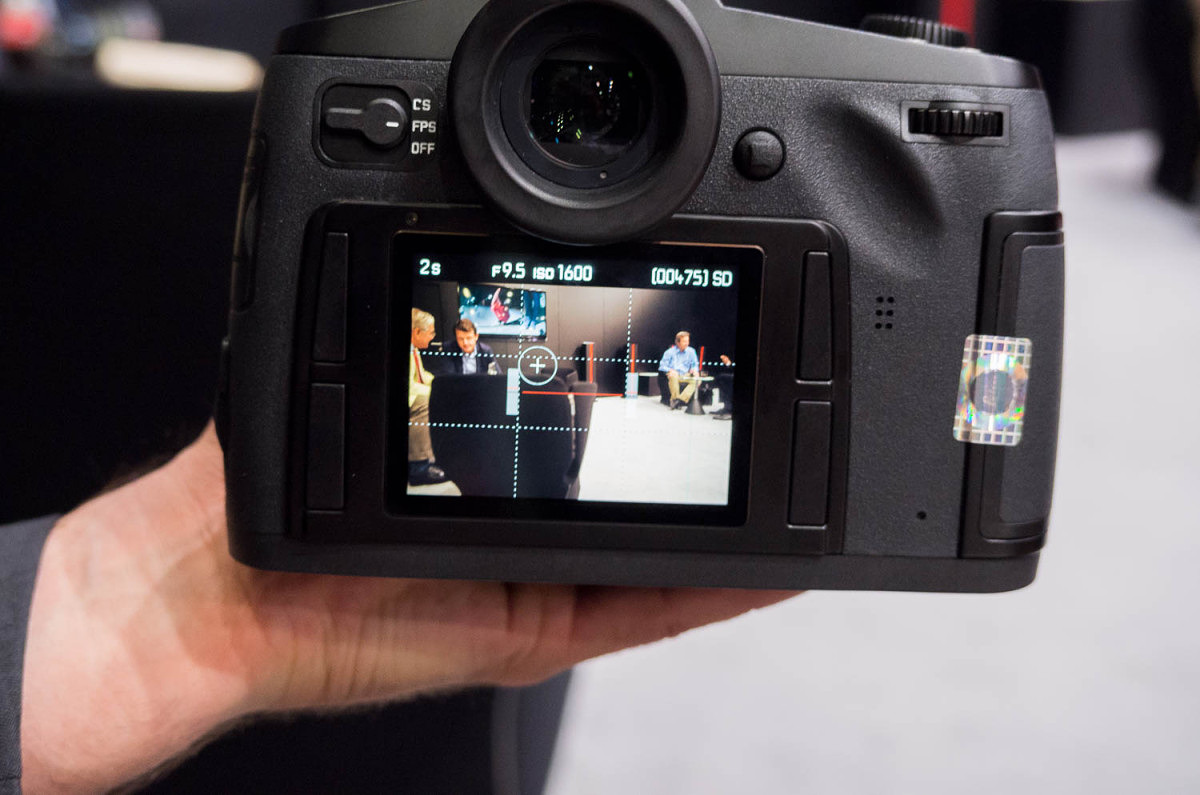
Spot AF and spot metering in live view
Like the T, the S can now use the Leica Shuttle app for iPhone or iPad to remotely control the camera and stream a live feed from the sensor. If you have a weak connection, the frame rate will drop, but the camera will still communicate. All image controls as well as relevant menu items can be accessed remotely and high-res JPGs can be streamed while shooting, all while the camera records to the internal memory or to a tethered connection over USB. Great feature for both the commercial studio as well as in the field for landscape applications. And, just like the T app, you’ll be able to browse and evaluate all the images on the card.
Some of my long-term wish items have been granted. In speaking with the Toni, he said that there were some “David Farkas wish items” on the new camera. One of my long-term wishes for landscape photography was to have the ability to determine hyperfocal distance. The S offers such a full system integration between lens aperture, precise focus distance and the camera that I reasoned it should be possible to calculate and display a DOF range. I’m happy to say that this is now a standard feature on the S 007. Whenever you are in manual focus mode or when performing a manual focus override in AF, three numbers show on the top display: the focus setting, front focus and back focus. So, to get hyperfocal, just turn the lens until the back value reads at infinity. Done and done. Love it.
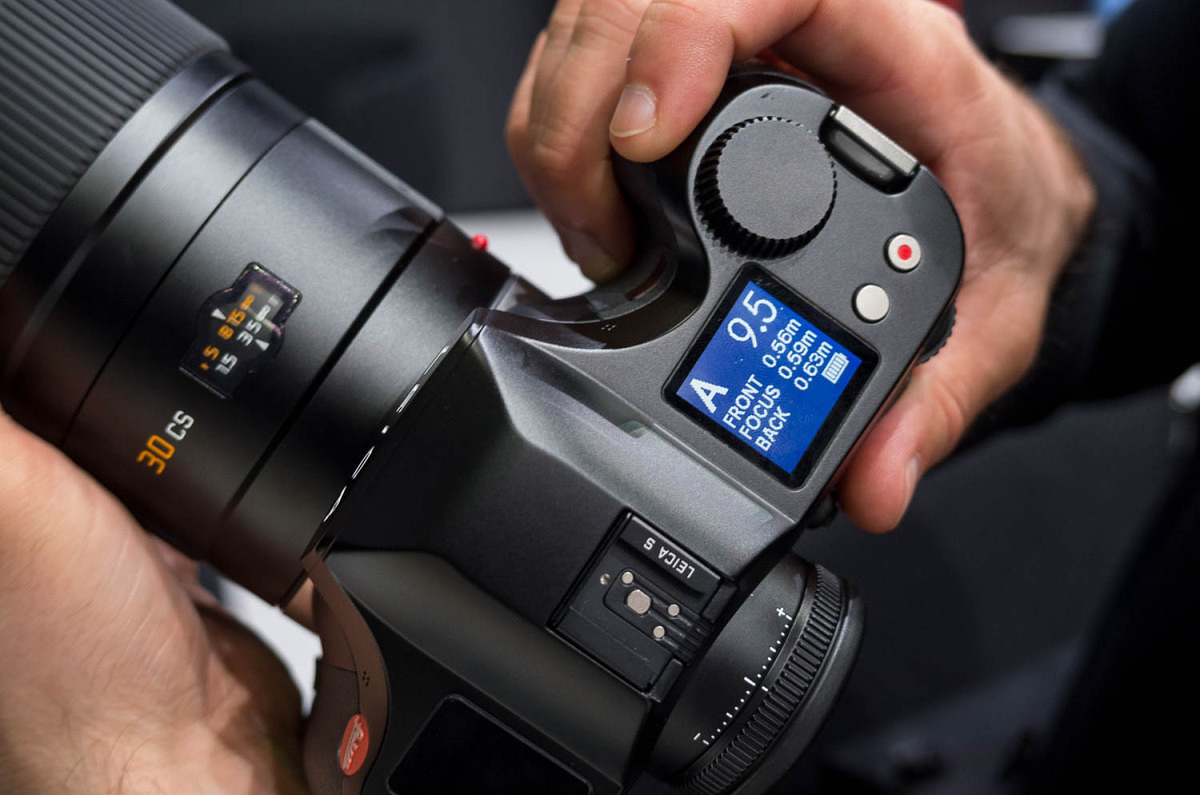
Distance readings for DOF
Another item that I’ve requested is the ability to write DNG to both the CF and SD cards at the same time. Not only does the camera do this with ease, but in Backup mode as it’s called now, the S will also write DNG+JPG to both cards or store DNG files on card while shooting tethered. This last point is great. If the S2 or the S 006 got disconnected during a tethered shooting session, the camera would be fine, but the images in the buffer and in transit would be lost. Now, the S 007 in the same situation would just continue shooting to the internal card storage.
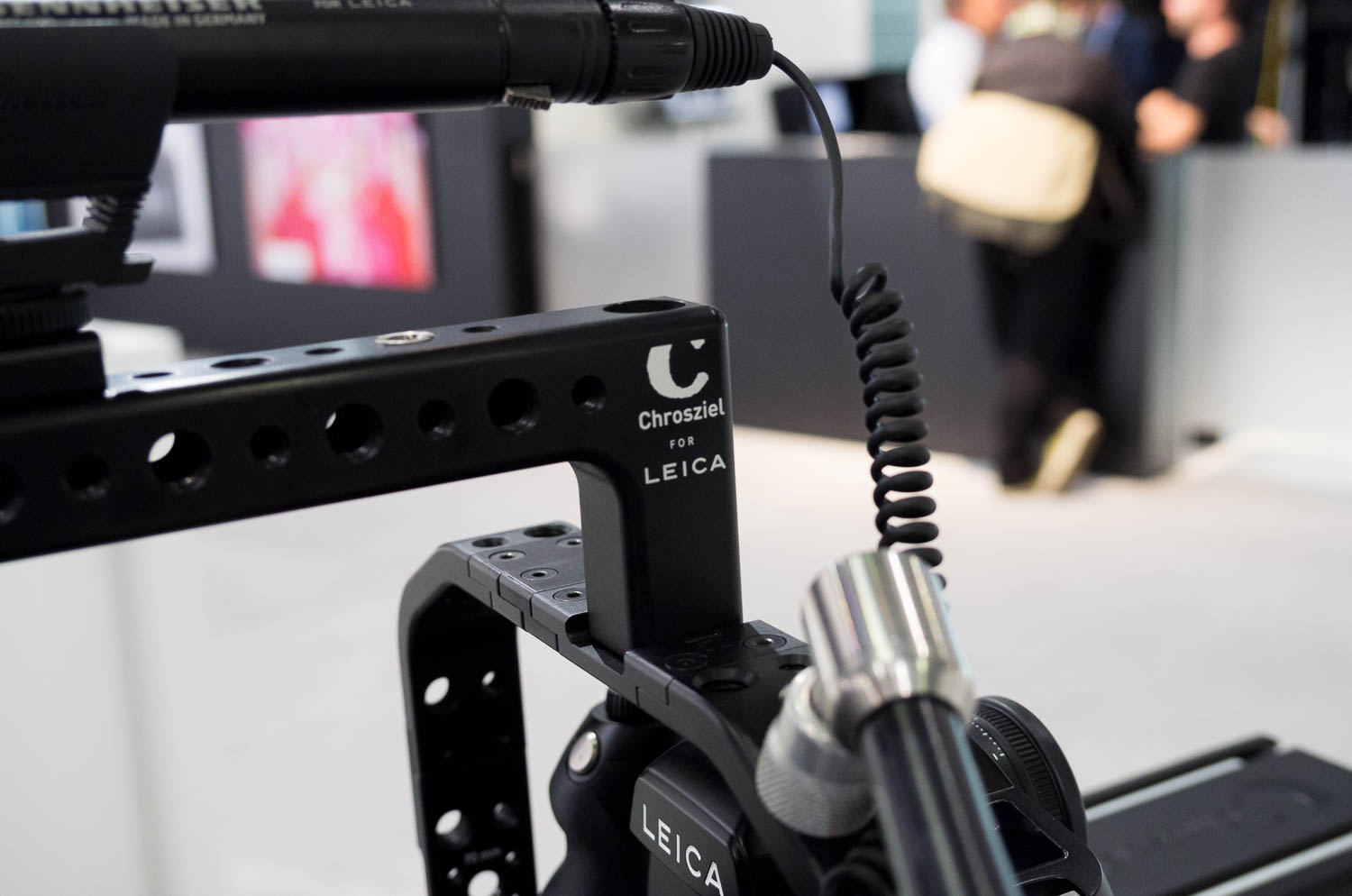
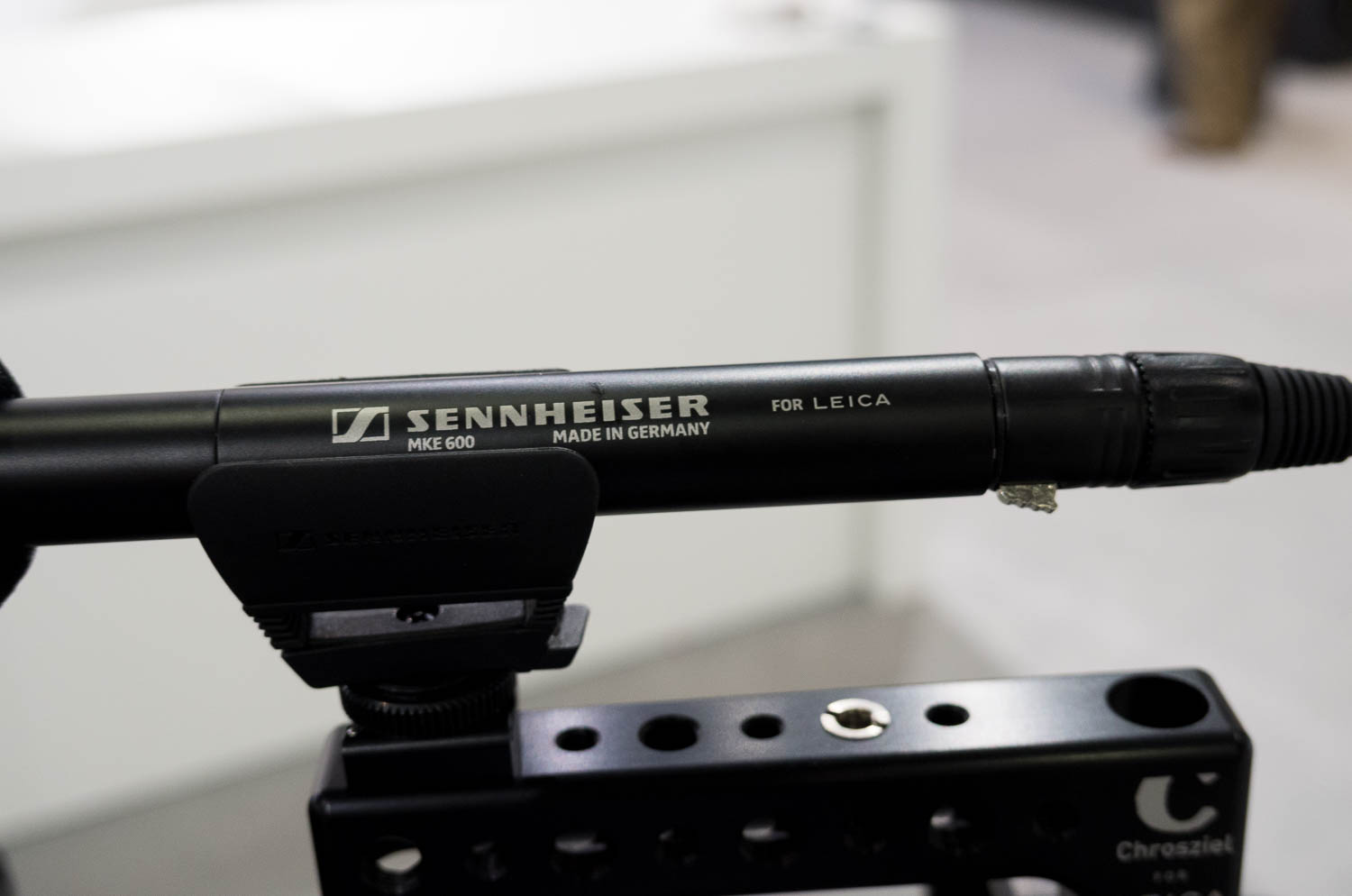
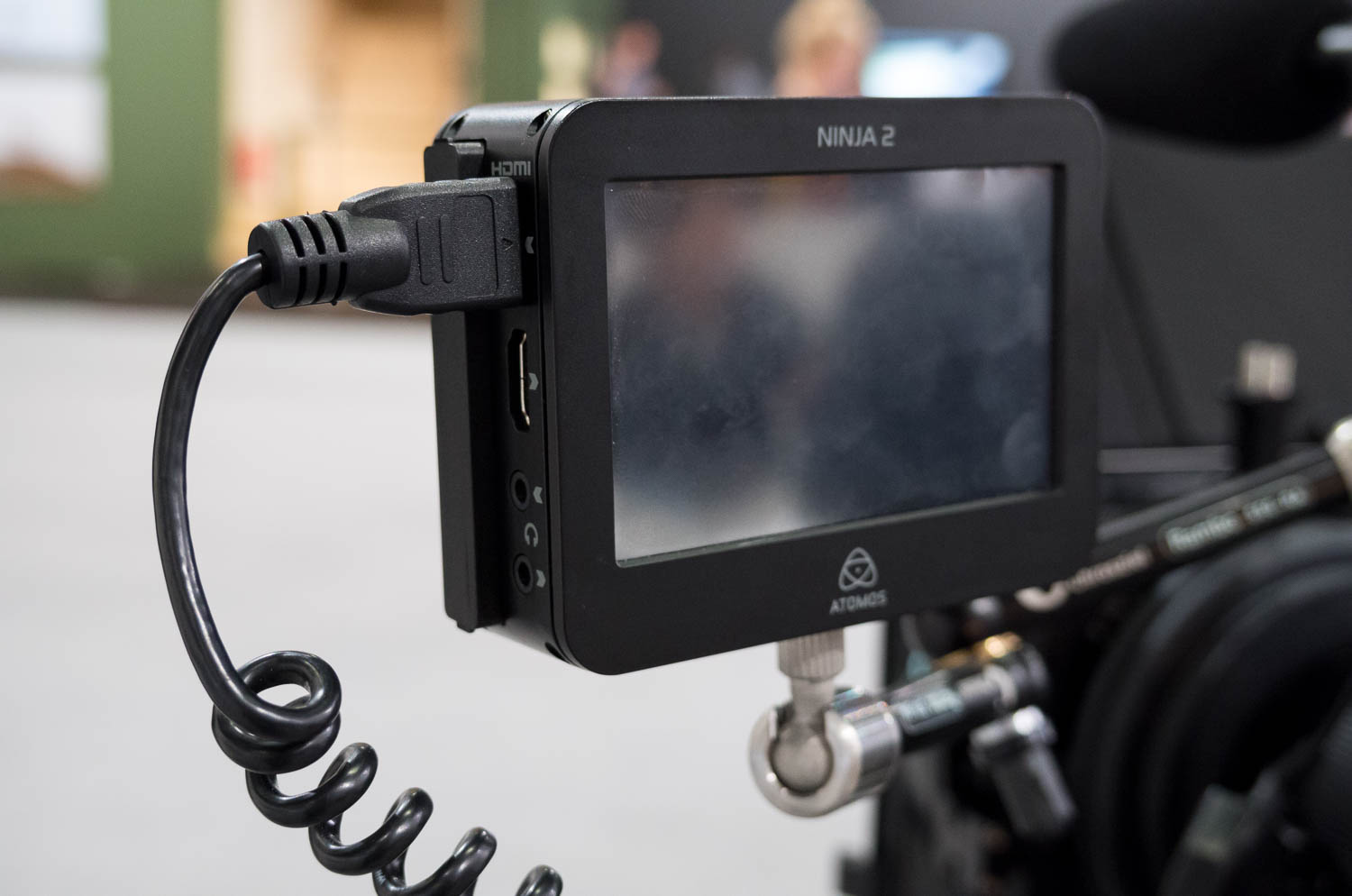
Leica is also teaming up with some experienced video accessory companies to create a full shooting package around the S. Rigs, matte boxes and follow focus controls from Chrosziel, microphones from Sennheiser and digital capture from Atomos are all in the works. In fact, Atomos is planning a firmware update that will allow the S to be controlled by the recorder’s touch screen when connected via HDMI.
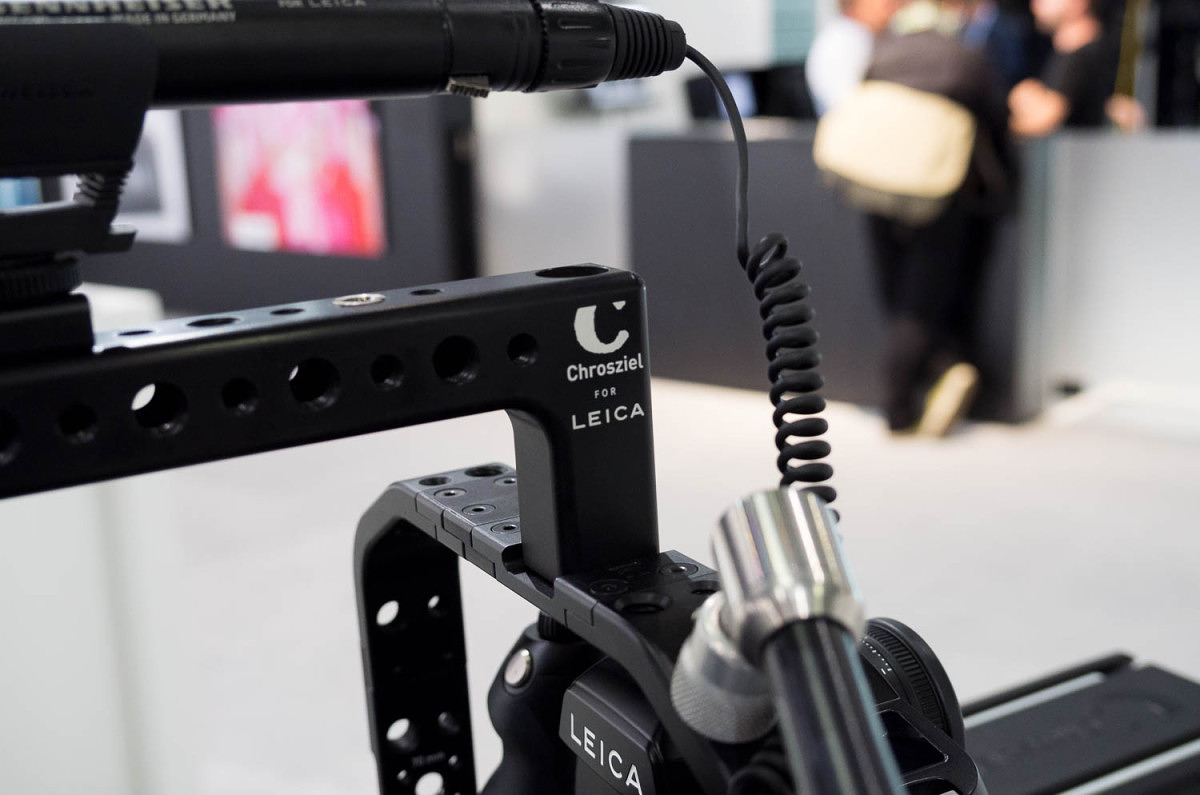
Chrosziel rig… for Leica!
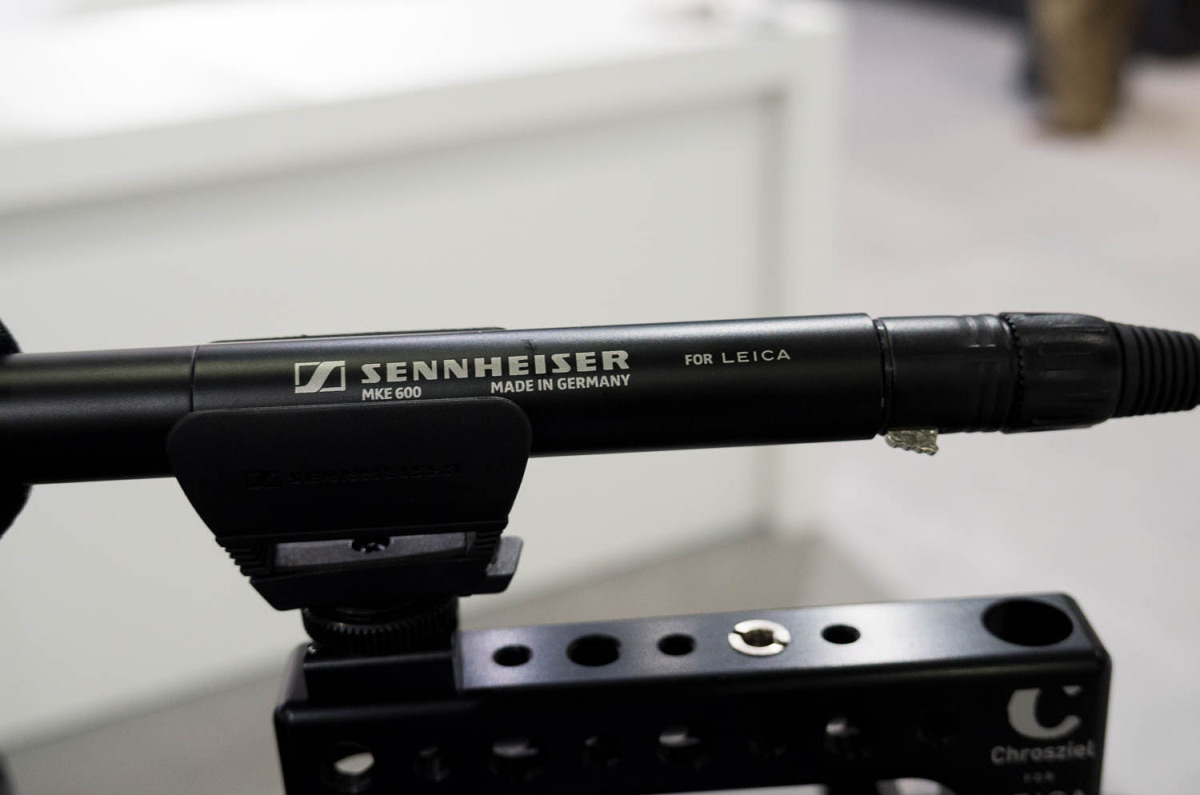
Sennheiser mic…. for Leica!
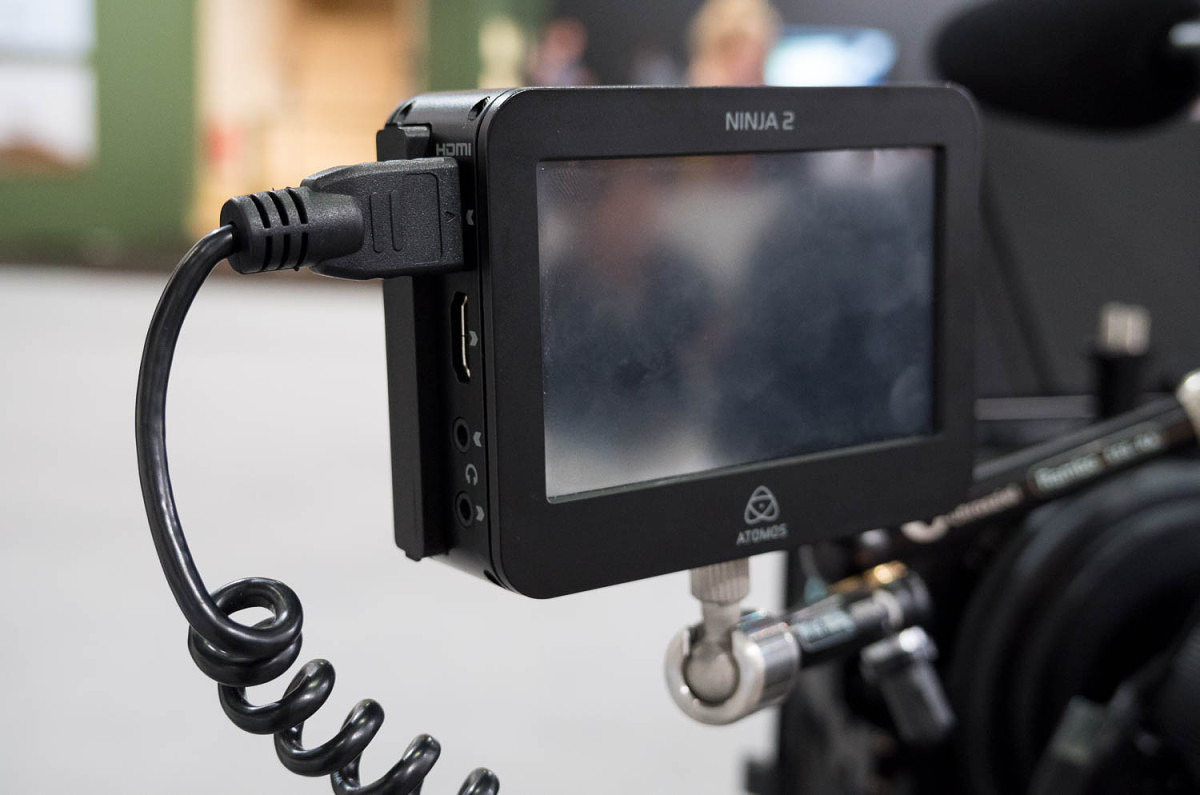
Atomos Ninja hooked up to S with HDMI cable
All-in-all, the S (Typ 007) seems to really deliver. Some might be disappointed by Leica’s decision not to bump the resolution slightly to 50MP, but to reiterate Stephan’s point, Leica is focused on delivering practical, real-world quality and usability.
To add a tenth lens to the system, Leica is also imminently releasing the gorgeous 100mm Summicron-S ASPH. This is now the fastest medium format lens produced and will equal the depth of field of an f/1.6 on 35mm full frame. It focuses down to 0.7 m and according to Peter Karbe, head of optics at Leica, it is an amazing optic, delivering almost perfect performance wide-open at every distance. He seemed especially proud of this new lens design and has made it clear to me in the past that the S lenses are the showpieces of Leica optical design.
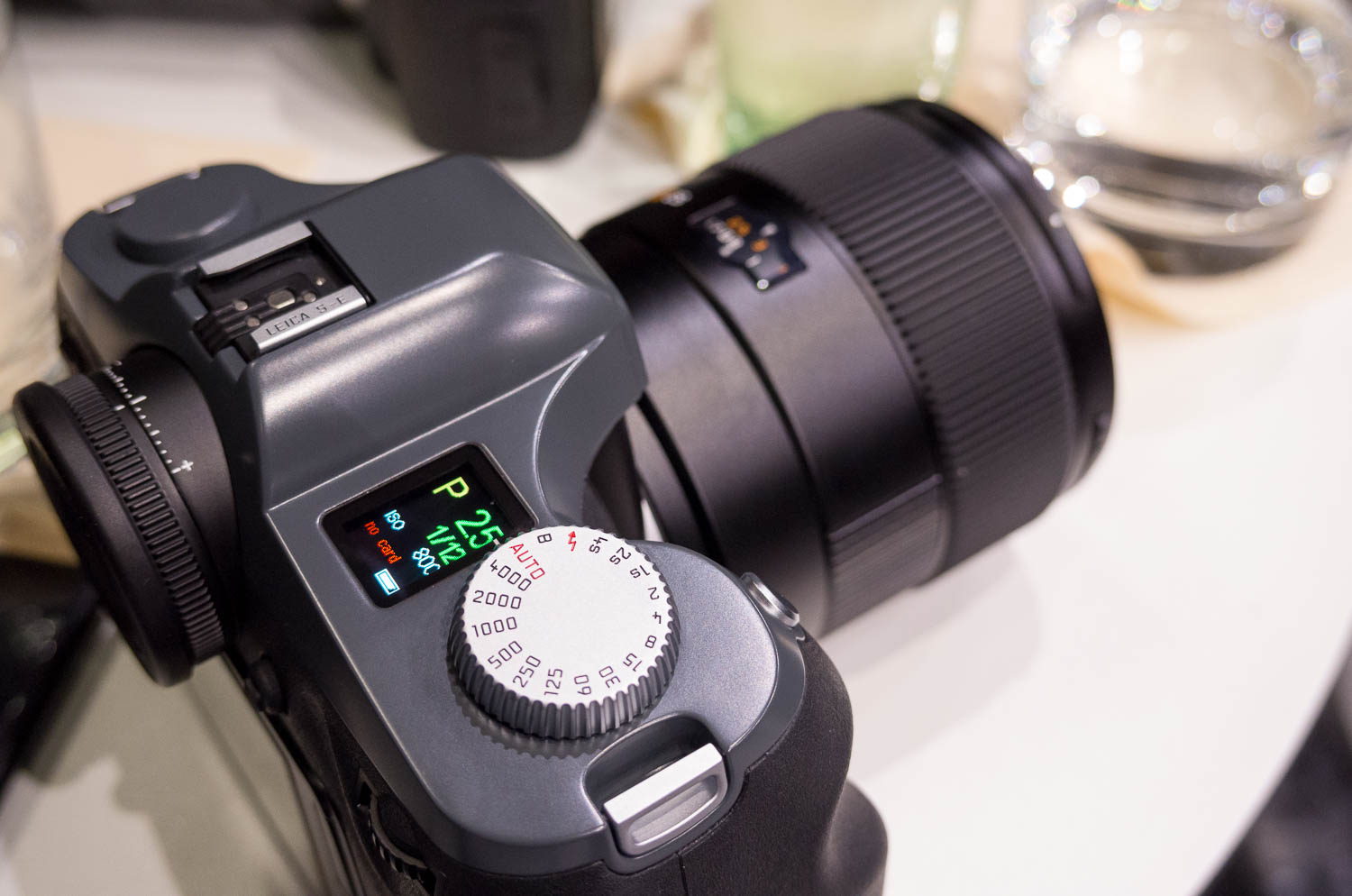
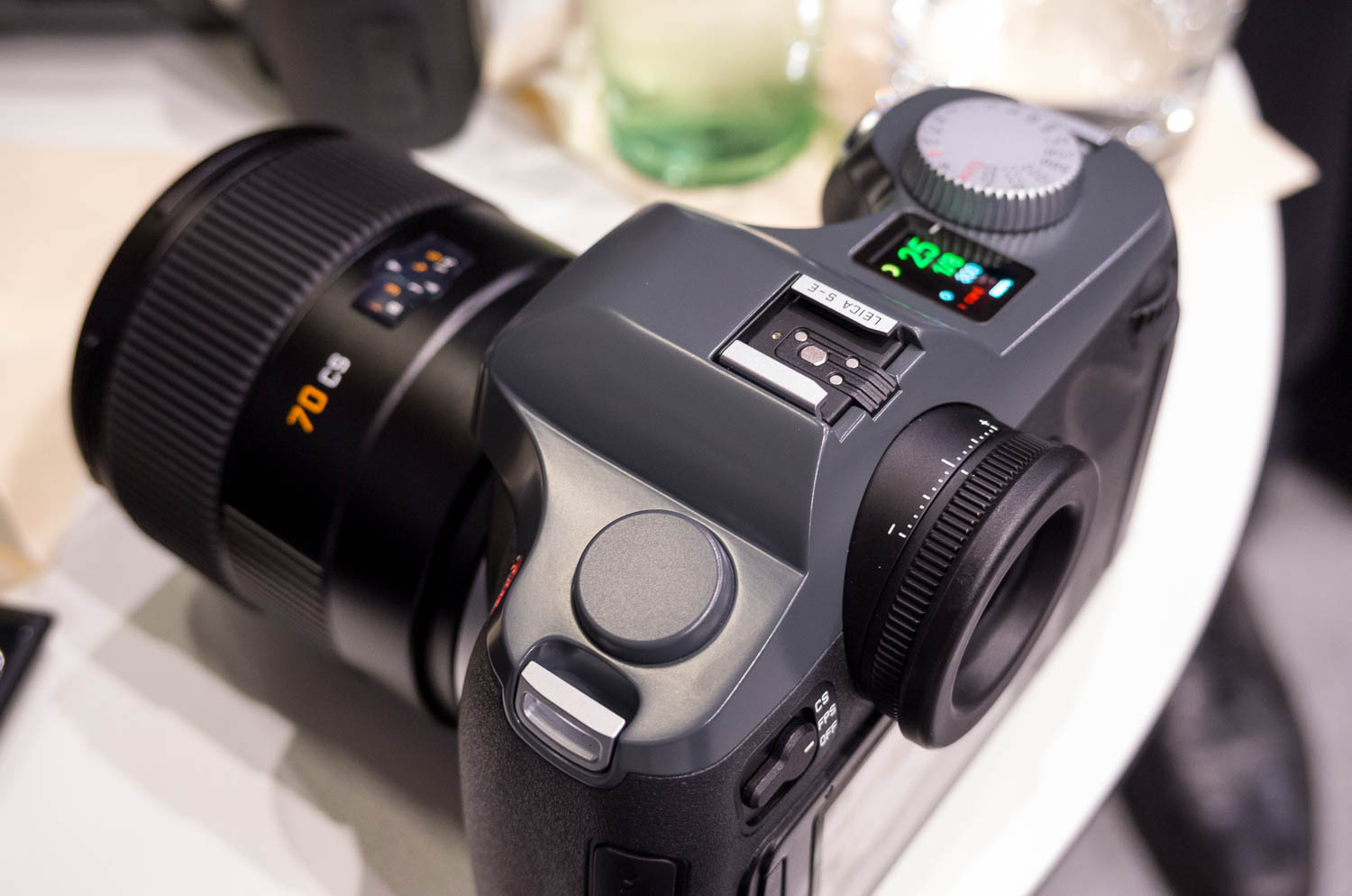
And, lastly, in keeping with the trend of taking the previous generation and rebranding it as an “essential” model, the S (Typ 006) will get a makeover and name change to the Leica S-E. Dressed up in anthracite gray with silver controls, the S-E is like an M-E on steroids. At about $10,000 less than the S (Typ 007), it can still serve the needs of those photographers not needing video, live view, fast frame rate or low light performance, while offering a more attractive price point.

Leica S-E
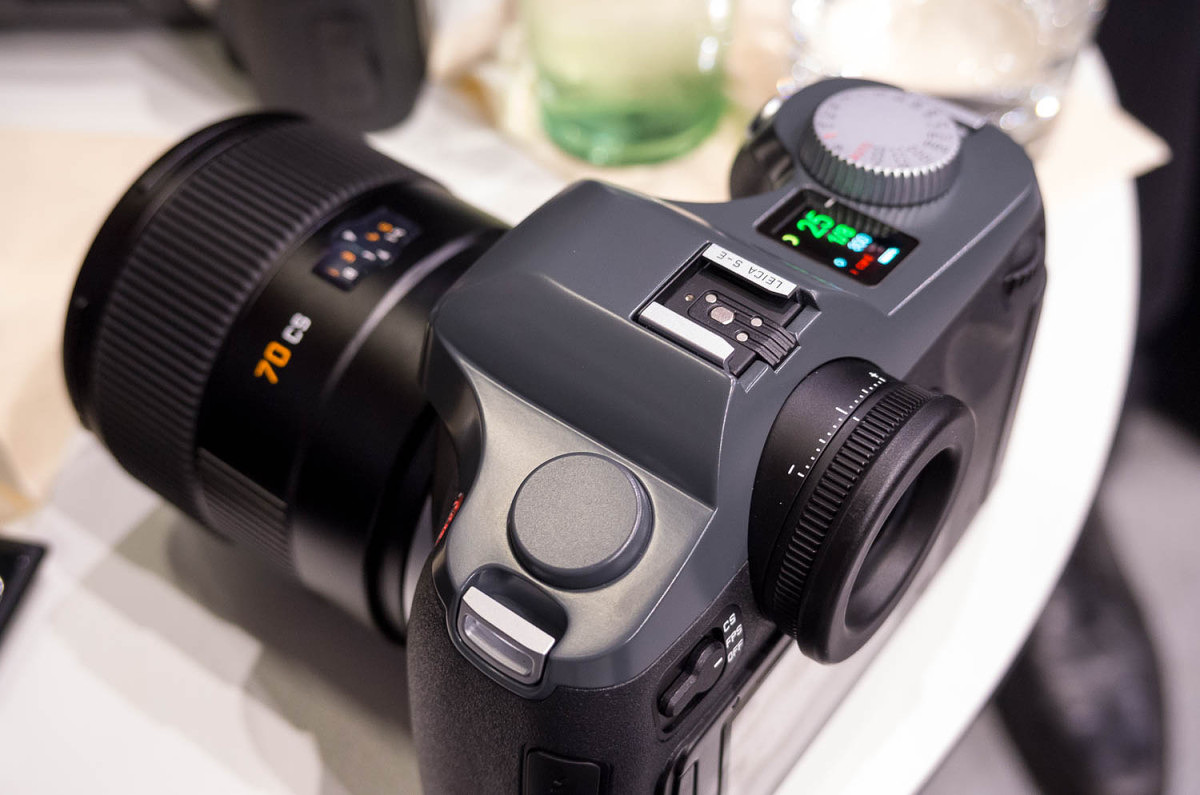
Leica S-E
The S System continues to mature and shows Leica’s long term commitment to constant improvement and continued support. The lenses continue to be among the best that Leica has produced for any system and now the upcoming camera offers medium format without compromise. It’s incredible that it’s only been six years since Leica first announced the S System and less than five years since it started shipping the S2. There has been so much improvement and a rapid build-up of lenses to meet most every need that the S is truly a flagship system for Leica.
Stay tuned for more Photokina updates! Don't forget, you can follow me on Instagram @leicastoremiami and on Twitter @reddotforum.
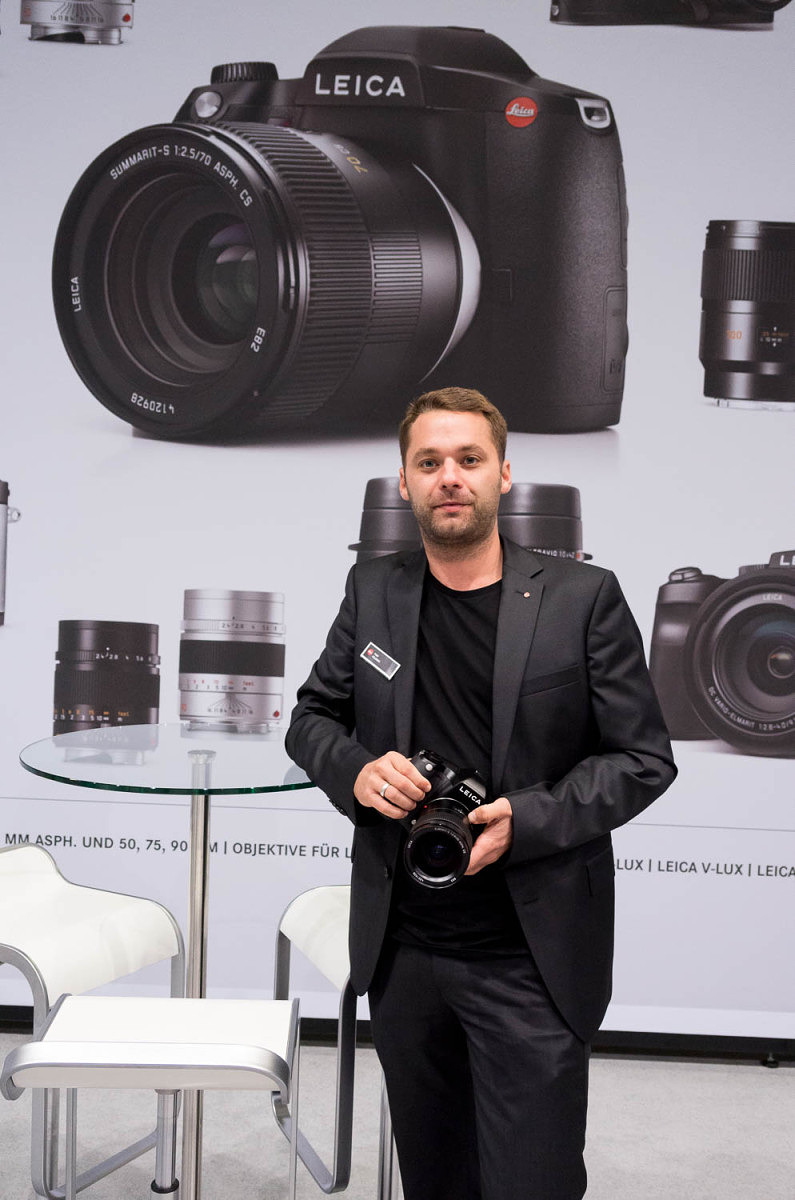
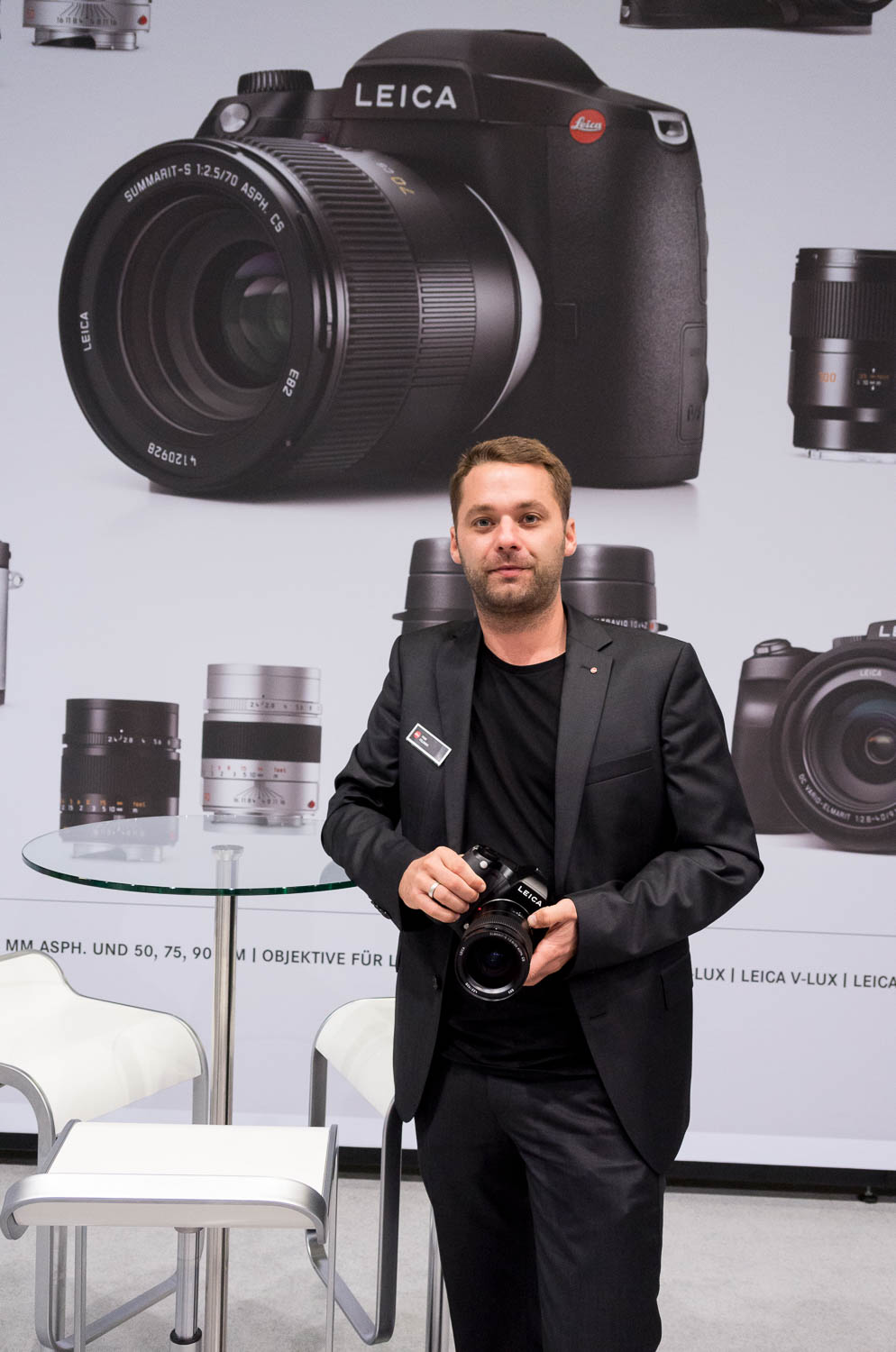
S Product Manager Toni Felsner
-
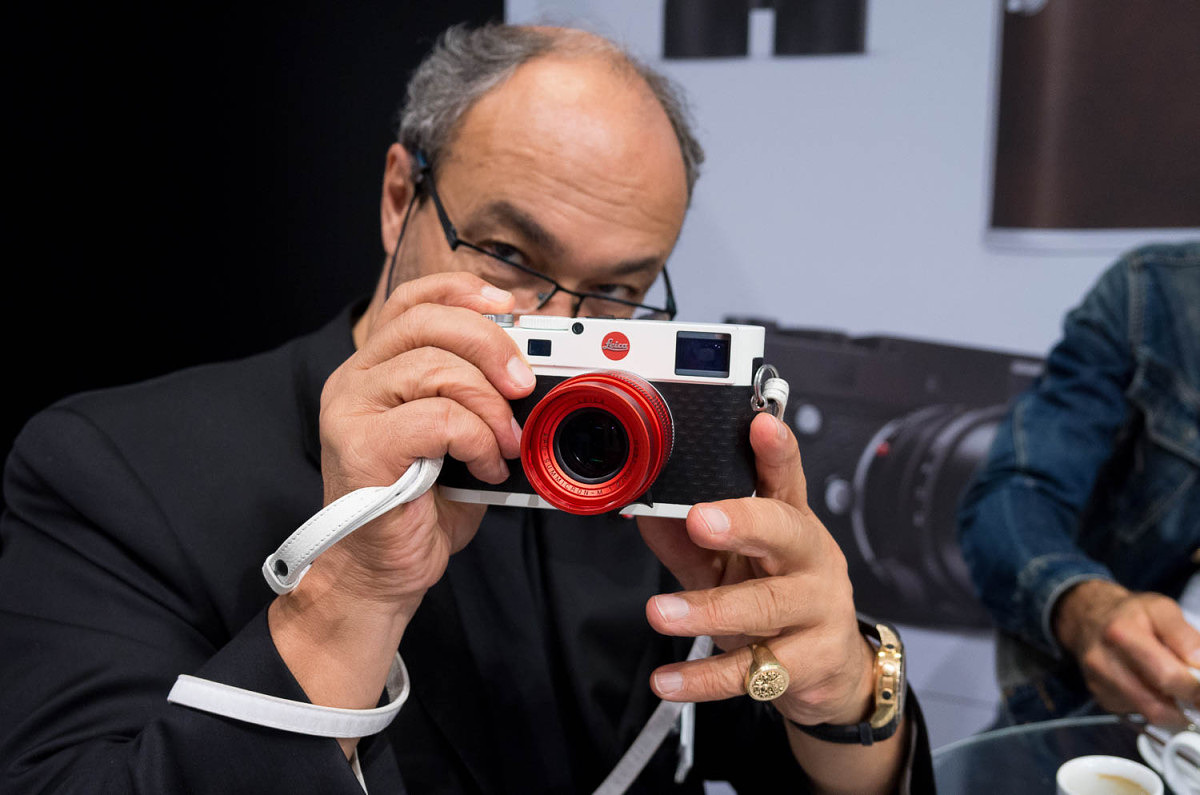
David Farkas wrote a new post, Dr. Andreas Kaufmann's one-of-a-kind M240 spotted at Photokina 2014 11 years, 3 months ago
So while I was waiting for an interview in the press area of the Leica booth earlier in the day, I noticed Dr. Kaufmann, the owner of Leica camera, sitting with a few people at one of the tall cocktail tables out […]
-
David Farkas commented on the post, Leica Announces S (Typ 007) Medium Format Digital SLR 11 years, 3 months ago
In reply to: Josh Lehrer wrote a new post, Leica Announces S (Typ 007) Medium Format Digital SLR Today, as part of their Photokina announcements, Leica has introduced the Leica S (Typ 007), the highly anticipated successor to the Leica S (Typ 006) medium format digital SLR camera. The S (Typ 007) features a 37.5 megapixel CMOS sensor with live view, focus peaking, HD video up to 4K, integrated Wi-Fi and GPS, and an ISO range from 200-6400. The official press release from Leica: With the Leica S (Type 007), Leica Camera AG, Wetzlar, presents the new top model of the Leica S-System. As a logical development of its predecessors, the new Leica S features a multitude of radically new components – like the Leica CMOS sensor and the Leica Maestro II image processor – and now opens up new dimensions in the field of medium-format photography. For the first time, the combination of the highest burst rate, extreme sensor sensitivity and comprehensive capture modes for still pictures – and now also video in exceptional quality – provides photographers with the opportunity to exploit the superior imaging capabilities of medium format for productions that demand maximum mobility and drive. The Leica S significantly accelerates and simplifies the photographic workflow with a multitude of features that are unique to medium-format photography – and some of them not only there. In addition to the new body, a new lens also expands the capabilities of the S-System. With regard to speed and imaging quality, the Leica Summicron-S 100 mm f/2 ASPH. telephoto portrait lens represents a new benchmark. New image sensor and new processor for increased quality and higher speed Amongst the most remarkable innovations in the Leica S are the new Leica CMOS sensor and Maestro II image processor. Thanks to these, it has been possible to enormously increase the speed and versatility of the S-System and raise it to a level that was previously unheard of in the medium-format segment. With a burst frequency of up to 3.5 frames per second, full-HD video in full-frame medium-format sensor size and 4K video recording, fast Live View mode and exceptional imaging quality at all ISO settings, the Leica S (Type 007) once again documents its status as the benchmark in the medium-format segment. The 2 GB buffer memory ensures smooth shooting of rapid sequences and, despite its more than doubled burst rate capability, the new focal plane shutter in the camera offers a further significantly increased service life of at least 150,000 cycles. Fast, predictive autofocus module for subjects in motion The revised autofocus system brings not only higher speed, but also more reliable and more precise focusing. To ensure optimum sharpness and precise tracking of moving subjects, the Leica S (Type 007) features a predictive autofocus mode: the camera registers the motion of the subject and determines the distance to it at the moment of exposure. In combination with its fascinating imaging quality and high burst rate, the Leica S sets entirely new standards for professional medium-format action photography. Integrated Wlan, GPS system and levelling aid for precision and uncomplicated workflows The Leica S is currently the only professional camera to feature an integrated GPS module that can record the geographical positioning data of the momentary location in the Exif data of the image file whenever needed, as well as automatically set the local system time. On the basis of the coordinates, appropriate software installed on a computer, for instance the Adobe Photoshop Lightroom package supplied with the camera, can display the precise location of each image on a map and register the corresponding place names as search keys for archived photos. The new dual-axis levelling aid (spirit level) displays the precise horizontal and vertical orientation of the camera in the viewfinder to allow photographers to align the subject with absolute precision and without any need for external aids. In combination with an app for smartphones and tablets, the camera’s integrated Wlan module enables remote control of the camera and remote image assessment in Live View mode to provide simpler and intuitive workflows. Optimised handling With a resolution of 921,600 pixels, a 3" diagonal, full sRGB colour space and increased contrast and brightness, the display allows optimum assessment of subjects and images in every situation. The glass plate protecting the monitor is manufactured from tough and scratch-resistant Corning Gorilla Glass. The panel on the top deck of the Leica S has been redesigned as a trans-reflective display with a larger area and optimised information content to ensure optimum legibility – even in bright sunlight. Two new control elements on the top deck enable direct selection of Live View mode and the activation of video recording. Lifespan Leica S-Cameras are designed and constructed for many years of daily use. The new stainless-steel bayonet guarantees even greater endurance under even the toughest conditions. The Leica S (Type 007) possesses all the proven quality characteristics of the S-System. These include the large 30 × 45 mm Leica Pro Format sensor and its micro-lens layer that guarantees consistently uniform brightness from corner to corner. The camera and S-Lenses are extremely ruggedly built and sealed against environmental influences like dust and rain. The system’s unique dual-shutter concept offers photographers the choice of using the camera’s fast focal plane shutter with speeds up to 1/4000 s or the electronically controlled central shutter of the CS lenses that allows flash sync at all shutter speeds up to 1/1000 s. The ten currently available Leica S-System lenses, six of which are also available with a central shutter, offer photographers all important focal lengths and a first-class tilt/shift lens. At the same time, numerous third-party medium-format lenses can be mounted on the Leica S with adapters: for instance the Leica S-Adapter H for Hasselblad H lenses and the Leica S-Adapter C for Contax 645 lenses, both of which provide full compatibility – including autofocus, central shutter control (Hasselblad) and automatic aperture control. The Leica S is uncompromisingly built for maximum dependability in use and also features details like cable connections with strain relief, separate slots for CompactFlash and SD memory cards, further optimised energy efficiency and a scratch-resistant display. The Leica S therefore stands alone as an ideal and extremely reliable tool for achieving maximum quality results in the studio and on location under even the most unfavourable conditions. The Leica S is supplied complete with the Leica Protection Plan. The LPP offers photographers an extended warranty for a period of three years, a replacement camera to cover repair times and numerous other benefits. The launch of the Leica S (Type 007) is planned for Spring 2015. This is a HUGE update for the S-System and is one of the most significant announcements at this Photokina. You can learn more about the S (Typ 007) at Leica Store Miami's website, or you can give us a call or email us anytime.View
I'm presently working on a write-up now. Getting pretty late/early here but so much information!
-
-
David Farkas commented on the post, Photokina 2014: Day 1 – Leica M System 11 years, 3 months ago
In reply to: David Farkas wrote a new post, Photokina 2014: Day 1 - Leica M System I arrived at the Koelmesse this morning, headed up the familiar steps of the South Entrance and made my way to Leica’s huge booth, again occupying the entirety of Hall 1.The place is enormous with areas for each s […] View
View
Daryl, this is an interesting idea. I'm happy to mention it tomorrow.
-
David Farkas commented on the post, Photokina 2014: Day 1 – Leica M System 11 years, 3 months ago
In reply to: David Farkas wrote a new post, Photokina 2014: Day 1 - Leica M System I arrived at the Koelmesse this morning, headed up the familiar steps of the South Entrance and made my way to Leica’s huge booth, again occupying the entirety of Hall 1.The place is enormous with areas for each s […] View
Thanks Albert. Working on it now. So much information! I spent about two hours with the product managers earlier today.
-
David Farkas commented on the post, Photokina 2014: Day 1 – Leica M System 11 years, 3 months ago
In reply to: David Farkas wrote a new post, Photokina 2014: Day 1 - Leica M System I arrived at the Koelmesse this morning, headed up the familiar steps of the South Entrance and made my way to Leica’s huge booth, again occupying the entirety of Hall 1.The place is enormous with areas for each s […] View
Peter is correct. I used the X Vario (Typ 107) for almost all of the images in the article except for a few really close-up shots where I used the D-Lux 6.
I'm pretty sure that the event images were all taken at ISO 1600.
Nice little camera, that X Vario….
-
david-farkas likes a reply on Night Street From Above 11 years, 3 months ago
-
David Farkas replied to the topic Leica 28mm Summilux-ASPH at Photokina 2014? in the forum M Lenses 11 years, 3 months ago
Roger,
Have no fear. According to both Jesko and Peter Karbe, the 28 Lux is coming. They just need to build tooling. I'd expect to see this lens in the coming months.
-
David Farkas commented on the post, Leica Announces S (Typ 007) Medium Format Digital SLR 11 years, 3 months ago
In reply to: Josh Lehrer wrote a new post, Leica Announces S (Typ 007) Medium Format Digital SLR Today, as part of their Photokina announcements, Leica has introduced the Leica S (Typ 007), the highly anticipated successor to the Leica S (Typ 006) medium format digital SLR camera. The S (Typ 007) features a 37.5 megapixel CMOS sensor with live view, focus peaking, HD video up to 4K, integrated Wi-Fi and GPS, and an ISO range from 200-6400. The official press release from Leica: With the Leica S (Type 007), Leica Camera AG, Wetzlar, presents the new top model of the Leica S-System. As a logical development of its predecessors, the new Leica S features a multitude of radically new components – like the Leica CMOS sensor and the Leica Maestro II image processor – and now opens up new dimensions in the field of medium-format photography. For the first time, the combination of the highest burst rate, extreme sensor sensitivity and comprehensive capture modes for still pictures – and now also video in exceptional quality – provides photographers with the opportunity to exploit the superior imaging capabilities of medium format for productions that demand maximum mobility and drive. The Leica S significantly accelerates and simplifies the photographic workflow with a multitude of features that are unique to medium-format photography – and some of them not only there. In addition to the new body, a new lens also expands the capabilities of the S-System. With regard to speed and imaging quality, the Leica Summicron-S 100 mm f/2 ASPH. telephoto portrait lens represents a new benchmark. New image sensor and new processor for increased quality and higher speed Amongst the most remarkable innovations in the Leica S are the new Leica CMOS sensor and Maestro II image processor. Thanks to these, it has been possible to enormously increase the speed and versatility of the S-System and raise it to a level that was previously unheard of in the medium-format segment. With a burst frequency of up to 3.5 frames per second, full-HD video in full-frame medium-format sensor size and 4K video recording, fast Live View mode and exceptional imaging quality at all ISO settings, the Leica S (Type 007) once again documents its status as the benchmark in the medium-format segment. The 2 GB buffer memory ensures smooth shooting of rapid sequences and, despite its more than doubled burst rate capability, the new focal plane shutter in the camera offers a further significantly increased service life of at least 150,000 cycles. Fast, predictive autofocus module for subjects in motion The revised autofocus system brings not only higher speed, but also more reliable and more precise focusing. To ensure optimum sharpness and precise tracking of moving subjects, the Leica S (Type 007) features a predictive autofocus mode: the camera registers the motion of the subject and determines the distance to it at the moment of exposure. In combination with its fascinating imaging quality and high burst rate, the Leica S sets entirely new standards for professional medium-format action photography. Integrated Wlan, GPS system and levelling aid for precision and uncomplicated workflows The Leica S is currently the only professional camera to feature an integrated GPS module that can record the geographical positioning data of the momentary location in the Exif data of the image file whenever needed, as well as automatically set the local system time. On the basis of the coordinates, appropriate software installed on a computer, for instance the Adobe Photoshop Lightroom package supplied with the camera, can display the precise location of each image on a map and register the corresponding place names as search keys for archived photos. The new dual-axis levelling aid (spirit level) displays the precise horizontal and vertical orientation of the camera in the viewfinder to allow photographers to align the subject with absolute precision and without any need for external aids. In combination with an app for smartphones and tablets, the camera’s integrated Wlan module enables remote control of the camera and remote image assessment in Live View mode to provide simpler and intuitive workflows. Optimised handling With a resolution of 921,600 pixels, a 3" diagonal, full sRGB colour space and increased contrast and brightness, the display allows optimum assessment of subjects and images in every situation. The glass plate protecting the monitor is manufactured from tough and scratch-resistant Corning Gorilla Glass. The panel on the top deck of the Leica S has been redesigned as a trans-reflective display with a larger area and optimised information content to ensure optimum legibility – even in bright sunlight. Two new control elements on the top deck enable direct selection of Live View mode and the activation of video recording. Lifespan Leica S-Cameras are designed and constructed for many years of daily use. The new stainless-steel bayonet guarantees even greater endurance under even the toughest conditions. The Leica S (Type 007) possesses all the proven quality characteristics of the S-System. These include the large 30 × 45 mm Leica Pro Format sensor and its micro-lens layer that guarantees consistently uniform brightness from corner to corner. The camera and S-Lenses are extremely ruggedly built and sealed against environmental influences like dust and rain. The system’s unique dual-shutter concept offers photographers the choice of using the camera’s fast focal plane shutter with speeds up to 1/4000 s or the electronically controlled central shutter of the CS lenses that allows flash sync at all shutter speeds up to 1/1000 s. The ten currently available Leica S-System lenses, six of which are also available with a central shutter, offer photographers all important focal lengths and a first-class tilt/shift lens. At the same time, numerous third-party medium-format lenses can be mounted on the Leica S with adapters: for instance the Leica S-Adapter H for Hasselblad H lenses and the Leica S-Adapter C for Contax 645 lenses, both of which provide full compatibility – including autofocus, central shutter control (Hasselblad) and automatic aperture control. The Leica S is uncompromisingly built for maximum dependability in use and also features details like cable connections with strain relief, separate slots for CompactFlash and SD memory cards, further optimised energy efficiency and a scratch-resistant display. The Leica S therefore stands alone as an ideal and extremely reliable tool for achieving maximum quality results in the studio and on location under even the most unfavourable conditions. The Leica S is supplied complete with the Leica Protection Plan. The LPP offers photographers an extended warranty for a period of three years, a replacement camera to cover repair times and numerous other benefits. The launch of the Leica S (Type 007) is planned for Spring 2015. This is a HUGE update for the S-System and is one of the most significant announcements at this Photokina. You can learn more about the S (Typ 007) at Leica Store Miami's website, or you can give us a call or email us anytime.View
I plan on doing a full S System write-up today or tomorrow. Stay tuned!
-
-
David Farkas wrote a new post, Photokina 2014: Day 1 – Leica M System 11 years, 3 months ago
I arrived at the Koelmesse this morning, headed up the familiar steps of the South Entrance and made my way to Leica’s huge booth, again occupying the entirety of Hall 1.The place is enormous with areas for each s […]
-
Great write-up David!! And the questions/answers also.
David, the part I find fascinating is the simplification of cameras comment, and the reason I love my M9. Could you ask if there is any push for simplification in the successor to the M240? Perhaps , my question is more request, so I am going to jump in with both feet. As features are added the complexity increases quickly, the M240 is feature rich and the complexity also followed. If anyone can simplify it is Leica, my frustration is the button pushing for playback with evf/screen firstly and the menu system secondly. A simplification could go something like this, attach the camera to a computer, allow choices of menu items visible/hidden. If I don't use a menu item I could then hide it and never have to deal with it, thus simplifying. Of course simplifying initially adds complexity by creating one more process but the field shooting would be simplified by less menu choices. I am sure Leica could come up with a better solution, perhaps in a firmware update?-
Daryl, this is an interesting idea. I'm happy to mention it tomorrow.
-
-

David,
Always nice to read your comments on this every two year show. No one else seems to capture the feelings, as well as the insight. The metal shades on the new lenses is most welcome, but I am having a difficult time understanding how the lens cap can fit over both the lens and the shade. I must be missing something? -
The great cub reporter is at it again!
Your screed is a pleasure to read and I look forward to your upcoming report on the Leica S (typ 007).
Albert-
Thanks Albert. Working on it now. So much information! I spent about two hours with the product managers earlier today.
-
-
David, thank you for the show report. Lots of stuff to cover. On a side note, which camera did you use for the photos of the event?
-

I'm guessing X Vario Mark 😉
-
Peter is correct. I used the X Vario (Typ 107) for almost all of the images in the article except for a few really close-up shots where I used the D-Lux 6.
I'm pretty sure that the event images were all taken at ISO 1600.
Nice little camera, that X Vario….
-
-
David…thanks for the well written and informative report. Enjoyed reading it and look forward to the next chapter.
-

Excellent write-up David!
Perhaps the new MM will be like the M 60, without the LCD.
And certainly agree with Mr. Jesko von Oeynhausen comment and I quote
“From a quality perspective, there is no need for improvement”.
-
-
David Farkas replied to the topic How is everyone liking the new site design? in the forum Annoucements and Site Matters 11 years, 3 months ago
Jack,
You're not exactly a New Member…. all of your previous posts and uploaded images are still here. And your post count remains. The site rating is based on a new points system which counts all involvement, not just forum posts. Pretty easy to accumulate points. Just visit the site, read some articles, post some comments, upload images or…[Read more]
-
David Farkas commented on the post, Leica Announces the Leica M-P (Typ 240) Camera 11 years, 3 months ago
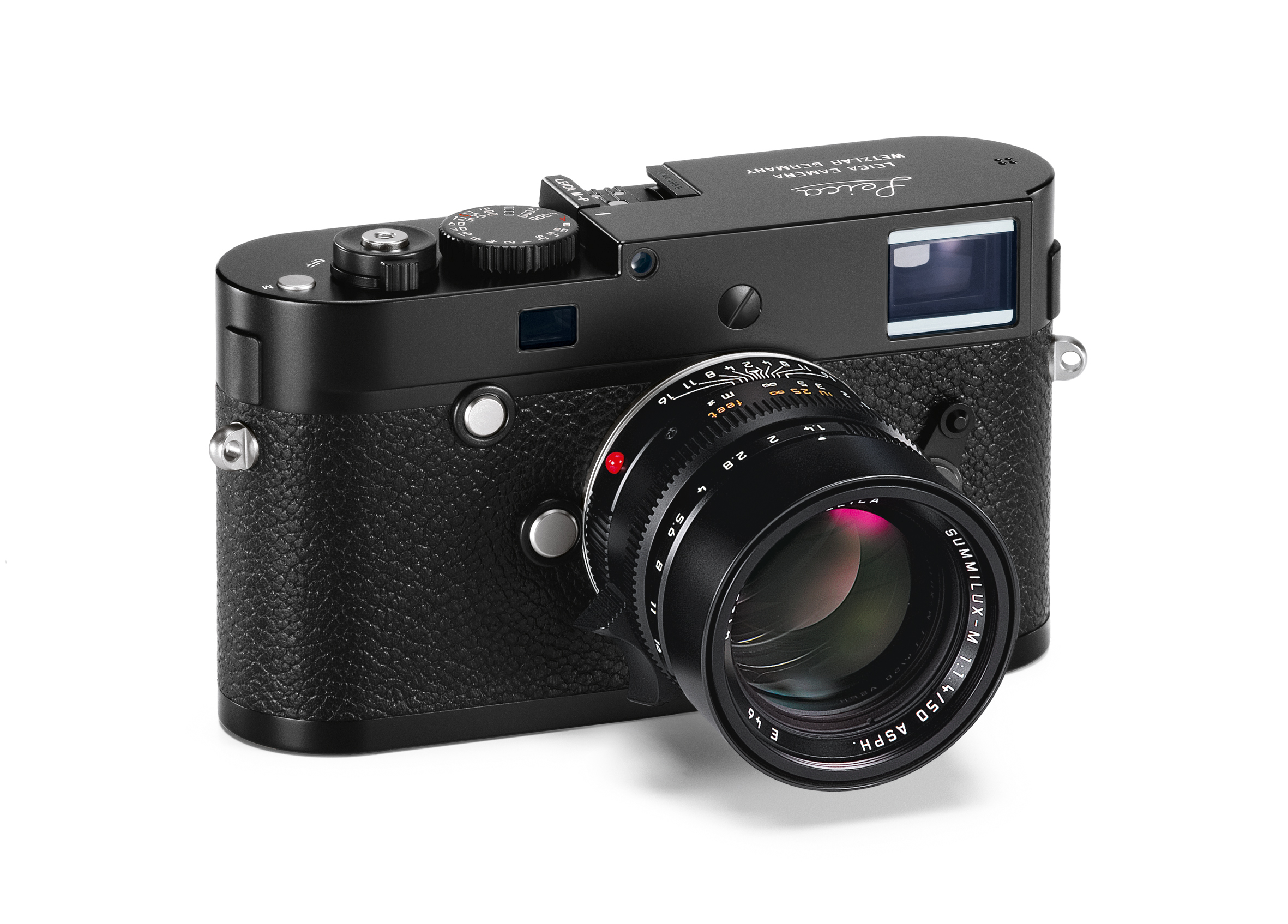
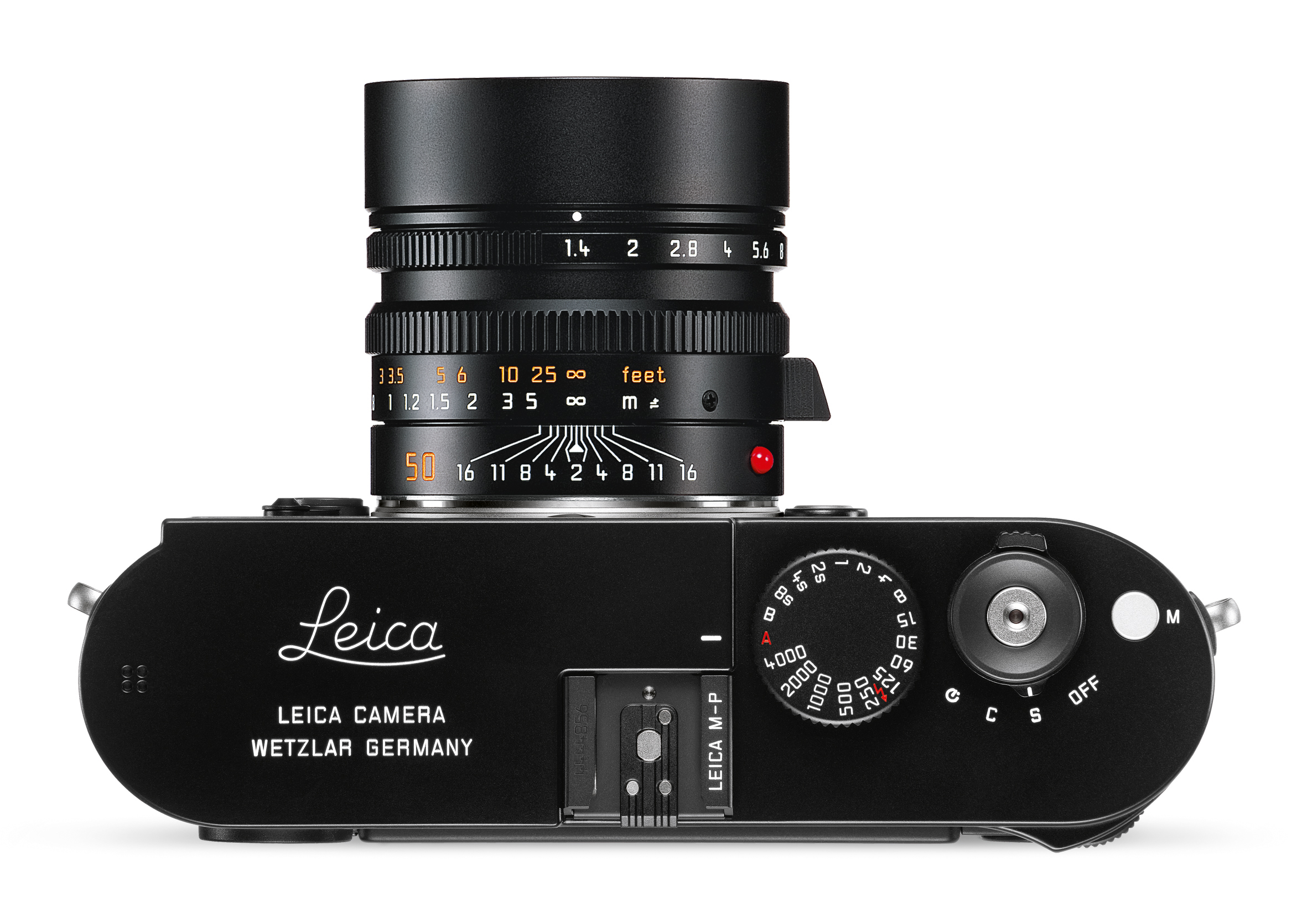
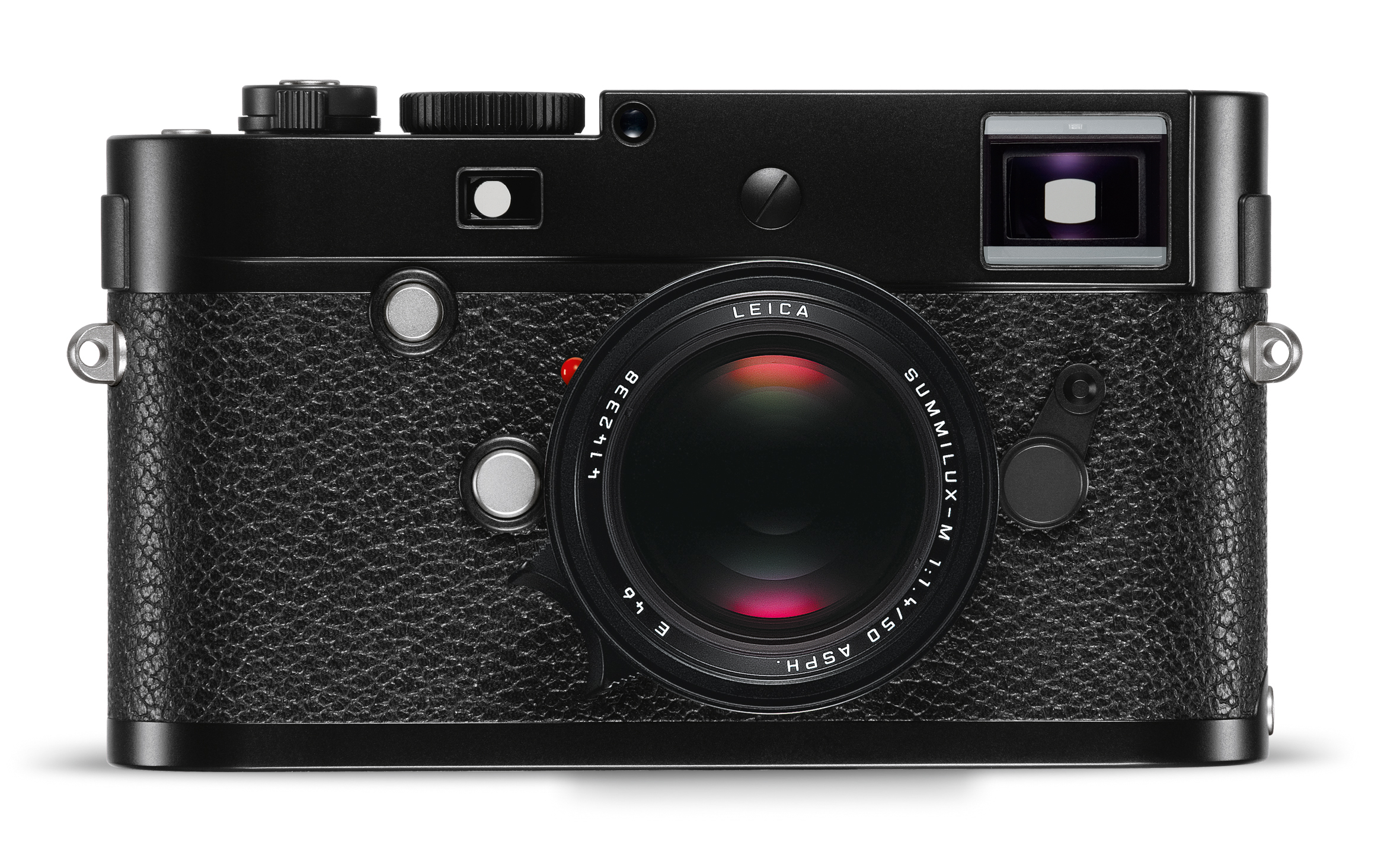
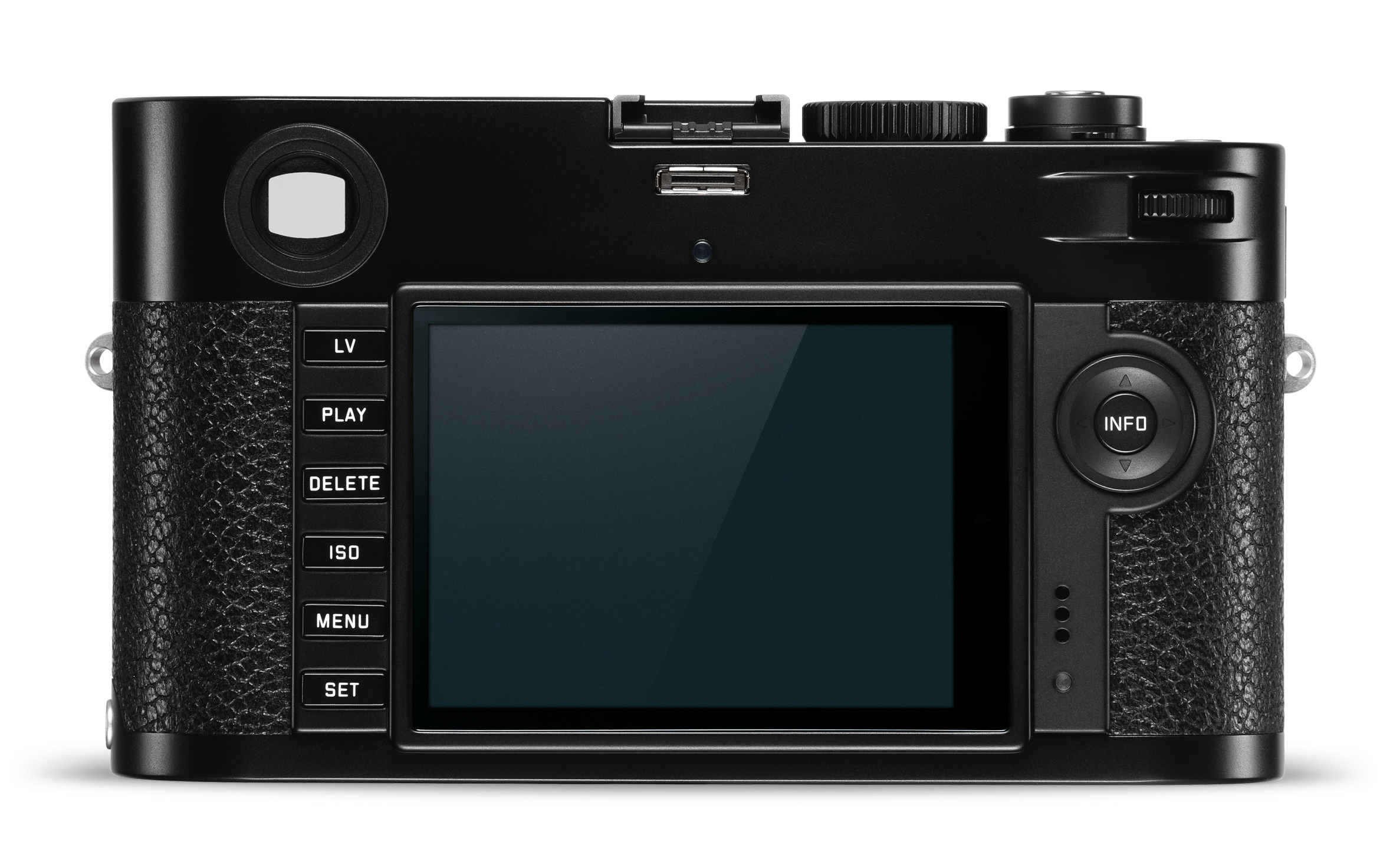
In reply to: Leica Store wrote a new post, Leica Announces the Leica M-P (Typ 240) Camera Today, Leica Camera has announced the new Leica M-P (Typ 240) camera in black paint and silver chrome. Similar in concept to the Leica M9-P and Leica M8.2, the Leica M-P (Typ 240) offers a number of new features and enhancements over the current Leica M (Typ 240). The new features include:- Rear LCD screen made from scratch-resistant sapphire glass
- Larger, 2GB image buffer for longer continuous shooting
- Classic Leica look with removal of red Leica dot and "M" logo
- Leica script writing on top plate
- Frame line selector lever has been added
- Info button, directional pad, and thumb wheel "blacked out" on black paint model
- Removal of "Leica Camera Made in Germany" from rear of top plate
- Scratch resistant display-cover made of sapphire glass
- Long-lasting readiness to capture due to a large double sized image buffer of 2GB
- Pure look without the Leica Logo and “M” lettering on the front side
- Manual viewfinder frame selection with the traditional ‘frame selector‘
View
Hmm. Perhaps you can try watching the video a different web browser. He actually speaks quite slowly and deliberately in order to be clear.
-
David Farkas commented on the post, Leica Announces S (Typ 007) Medium Format Digital SLR 11 years, 3 months ago
In reply to: Josh Lehrer wrote a new post, Leica Announces S (Typ 007) Medium Format Digital SLR Today, as part of their Photokina announcements, Leica has introduced the Leica S (Typ 007), the highly anticipated successor to the Leica S (Typ 006) medium format digital SLR camera. The S (Typ 007) features a 37.5 megapixel CMOS sensor with live view, focus peaking, HD video up to 4K, integrated Wi-Fi and GPS, and an ISO range from 200-6400. The official press release from Leica: With the Leica S (Type 007), Leica Camera AG, Wetzlar, presents the new top model of the Leica S-System. As a logical development of its predecessors, the new Leica S features a multitude of radically new components – like the Leica CMOS sensor and the Leica Maestro II image processor – and now opens up new dimensions in the field of medium-format photography. For the first time, the combination of the highest burst rate, extreme sensor sensitivity and comprehensive capture modes for still pictures – and now also video in exceptional quality – provides photographers with the opportunity to exploit the superior imaging capabilities of medium format for productions that demand maximum mobility and drive. The Leica S significantly accelerates and simplifies the photographic workflow with a multitude of features that are unique to medium-format photography – and some of them not only there. In addition to the new body, a new lens also expands the capabilities of the S-System. With regard to speed and imaging quality, the Leica Summicron-S 100 mm f/2 ASPH. telephoto portrait lens represents a new benchmark. New image sensor and new processor for increased quality and higher speed Amongst the most remarkable innovations in the Leica S are the new Leica CMOS sensor and Maestro II image processor. Thanks to these, it has been possible to enormously increase the speed and versatility of the S-System and raise it to a level that was previously unheard of in the medium-format segment. With a burst frequency of up to 3.5 frames per second, full-HD video in full-frame medium-format sensor size and 4K video recording, fast Live View mode and exceptional imaging quality at all ISO settings, the Leica S (Type 007) once again documents its status as the benchmark in the medium-format segment. The 2 GB buffer memory ensures smooth shooting of rapid sequences and, despite its more than doubled burst rate capability, the new focal plane shutter in the camera offers a further significantly increased service life of at least 150,000 cycles. Fast, predictive autofocus module for subjects in motion The revised autofocus system brings not only higher speed, but also more reliable and more precise focusing. To ensure optimum sharpness and precise tracking of moving subjects, the Leica S (Type 007) features a predictive autofocus mode: the camera registers the motion of the subject and determines the distance to it at the moment of exposure. In combination with its fascinating imaging quality and high burst rate, the Leica S sets entirely new standards for professional medium-format action photography. Integrated Wlan, GPS system and levelling aid for precision and uncomplicated workflows The Leica S is currently the only professional camera to feature an integrated GPS module that can record the geographical positioning data of the momentary location in the Exif data of the image file whenever needed, as well as automatically set the local system time. On the basis of the coordinates, appropriate software installed on a computer, for instance the Adobe Photoshop Lightroom package supplied with the camera, can display the precise location of each image on a map and register the corresponding place names as search keys for archived photos. The new dual-axis levelling aid (spirit level) displays the precise horizontal and vertical orientation of the camera in the viewfinder to allow photographers to align the subject with absolute precision and without any need for external aids. In combination with an app for smartphones and tablets, the camera’s integrated Wlan module enables remote control of the camera and remote image assessment in Live View mode to provide simpler and intuitive workflows. Optimised handling With a resolution of 921,600 pixels, a 3" diagonal, full sRGB colour space and increased contrast and brightness, the display allows optimum assessment of subjects and images in every situation. The glass plate protecting the monitor is manufactured from tough and scratch-resistant Corning Gorilla Glass. The panel on the top deck of the Leica S has been redesigned as a trans-reflective display with a larger area and optimised information content to ensure optimum legibility – even in bright sunlight. Two new control elements on the top deck enable direct selection of Live View mode and the activation of video recording. Lifespan Leica S-Cameras are designed and constructed for many years of daily use. The new stainless-steel bayonet guarantees even greater endurance under even the toughest conditions. The Leica S (Type 007) possesses all the proven quality characteristics of the S-System. These include the large 30 × 45 mm Leica Pro Format sensor and its micro-lens layer that guarantees consistently uniform brightness from corner to corner. The camera and S-Lenses are extremely ruggedly built and sealed against environmental influences like dust and rain. The system’s unique dual-shutter concept offers photographers the choice of using the camera’s fast focal plane shutter with speeds up to 1/4000 s or the electronically controlled central shutter of the CS lenses that allows flash sync at all shutter speeds up to 1/1000 s. The ten currently available Leica S-System lenses, six of which are also available with a central shutter, offer photographers all important focal lengths and a first-class tilt/shift lens. At the same time, numerous third-party medium-format lenses can be mounted on the Leica S with adapters: for instance the Leica S-Adapter H for Hasselblad H lenses and the Leica S-Adapter C for Contax 645 lenses, both of which provide full compatibility – including autofocus, central shutter control (Hasselblad) and automatic aperture control. The Leica S is uncompromisingly built for maximum dependability in use and also features details like cable connections with strain relief, separate slots for CompactFlash and SD memory cards, further optimised energy efficiency and a scratch-resistant display. The Leica S therefore stands alone as an ideal and extremely reliable tool for achieving maximum quality results in the studio and on location under even the most unfavourable conditions. The Leica S is supplied complete with the Leica Protection Plan. The LPP offers photographers an extended warranty for a period of three years, a replacement camera to cover repair times and numerous other benefits. The launch of the Leica S (Type 007) is planned for Spring 2015. This is a HUGE update for the S-System and is one of the most significant announcements at this Photokina. You can learn more about the S (Typ 007) at Leica Store Miami's website, or you can give us a call or email us anytime.View
The sensor is a Leica/CMOSIS chip, similar in architecture to the one used in the M (Typ 240), with a 6µ pixel pitch. I'm told that the with the second generation MAESTRO II processor, we might even see better high ISO performance in the S (Typ 007) than in the M.
-
-
David Farkas replied to the topic How is everyone liking the new site design? in the forum Annoucements and Site Matters 11 years, 3 months ago
Dale,
Yes, above all else, we needed to make sure that no data would be lost in the transition, so every post, every picture, etc. has been preserved and moved over.
As far as the design goes, we are certainly open to tweaking here and there, but we felt that the look and feel was much more modern than our previous site.
Be sure to check out…[Read more]
-
David Farkas posted a new activity comment 11 years, 3 months ago
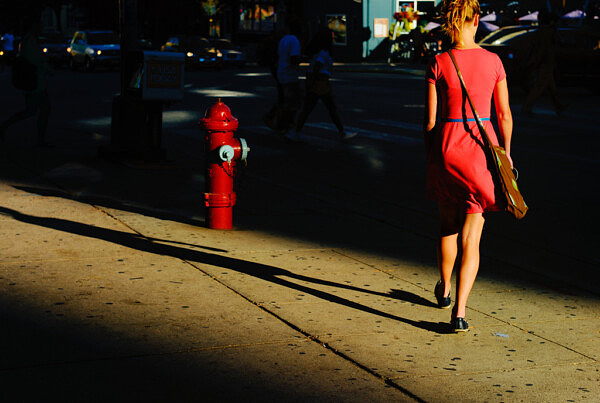
Great light and contrast. Love how her shadow is falling in the single column of light.
-
David Farkas started the topic How is everyone liking the new site design? in the forum Annoucements and Site Matters 11 years, 3 months ago
We put a lot of thought into how to make Red Dot Forum even better for our users and have incorporated new, fun ways to interact. I hope everyone is enjoying the re-design and new features.
Please let me know if you have any questions, comments or suggestions on we can continue to improve Red Dot Forum.
-
David Farkas posted a new activity comment 11 years, 3 months ago
Beautiful capture, Mark.
-
Peter Dooling and
David Farkas are now friends 11 years, 3 months ago - Load More



Nico,
For now, on the pre-production samples at the show, yes. There is the same 125 second limit. I specifically asked both product managers, as well as Dr. Volker Zimmer, head of R&D, if the exposure time could be longer. They absolutely want to offer longer exposures, but refuse to sacrifice any degradation in image quality. The repeated mantra at Leica, from everyone, is that delivering the highest quality level is the number one priority. Features will only be added if they meet internal criteria. So, the short answer is that, yes, hopefully we will see longer exposures by launch time, but Leica will not officially promise this.
Hope this helps.
I went to the Phase One IQ260 from the S because of the lack of long exposure times. If they could do 5 minutes then I would likely go back the the S. One of the things I hate about Phase One is that you must use their software when doing long exposure as LR will not handle the dark frame subtraction with their file format. I'll be interested to see what they do with the final release.
David-
What a series of improvements!
The Leica express continues to roll unimpeded through photoland!
I was gratified to hear about the hyperfocal solution and my question relates to the accuracy of using the infinity measure. Puts and others state that the bars on the M lenses as well as other camera lenses are not as accurate for digital as they were intended for the more forgiving analog. Has Leica tested and validated these measurements in the field….
Albert
Scott,
My understanding is that the live DOF readout will not be able to be added via firmware to the S 006 and will only be available on the new S 007. Of course, Leica was able to incorporate the new AF algorithms into the S 006 with the latest firmware, so there might be a way. We will have to see.