
Today, Leica has announced the Noctilux-M 35 f/1.2 ASPH, marking the first time the Noctilux moniker has graced a 35mm lens. Since the very first Noctilux debuted in 1966, these special lenses have represented the most ambitious optical designs Leica produces, prioritizing speed, character, and subject separation in ways that go beyond conventional performance metrics. Until now, that philosophy has been limited to 50mm and, more recently, 75mm lenses. With the Noctilux-M 35 f/1.2 ASPH, Leica brings that approach to its most widely used focal length.
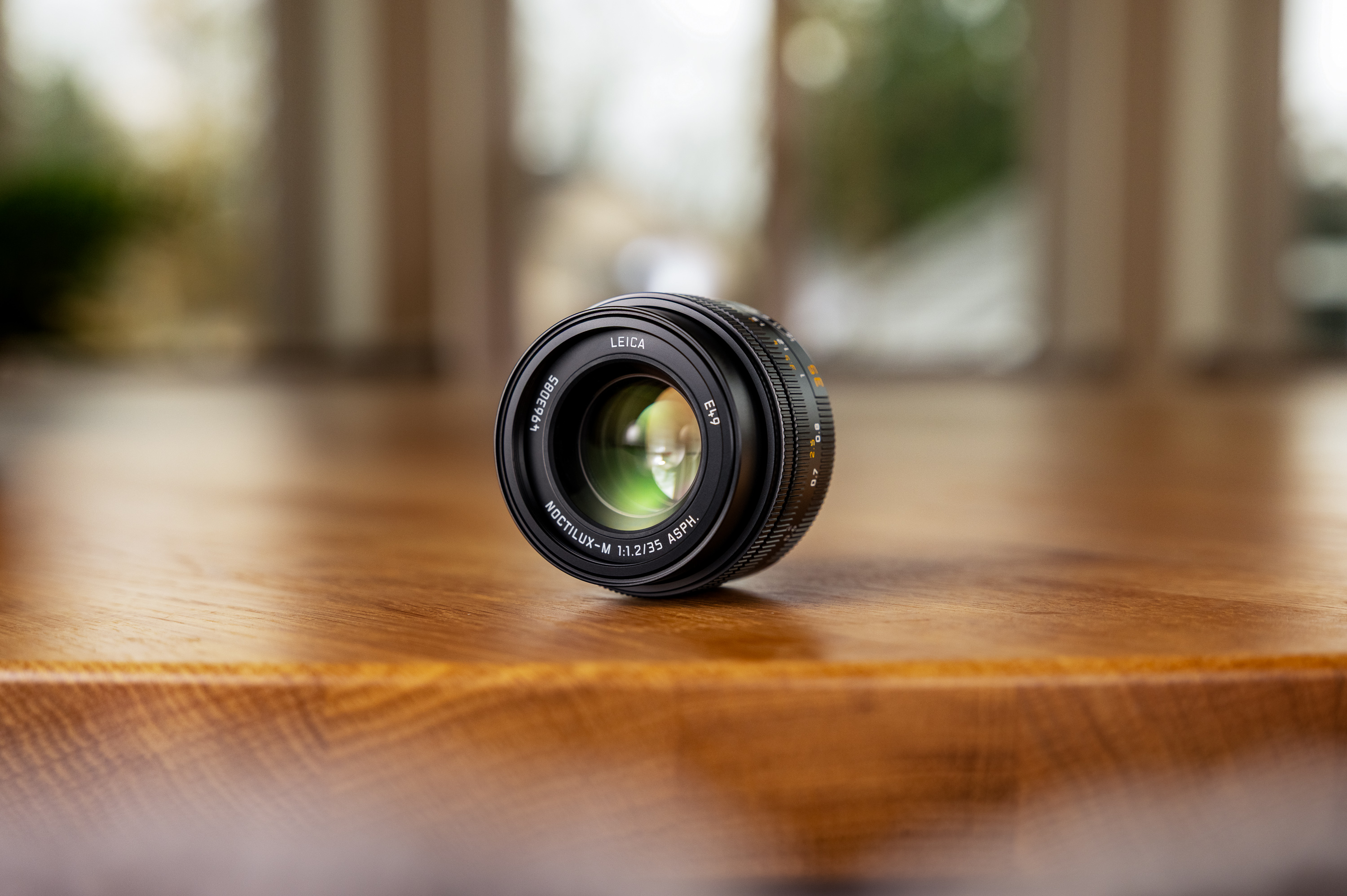
The 35mm focal length remains the most popular choice for M photographers, particularly for street, travel, reportage, and environmental portraiture. It offers a natural perspective with enough width to provide context while still allowing strong subject emphasis. A 35mm Noctilux has long been on many Leica photographers’ wish lists, but one that required careful execution to avoid excessive size, compromised handling, or diluted performance.
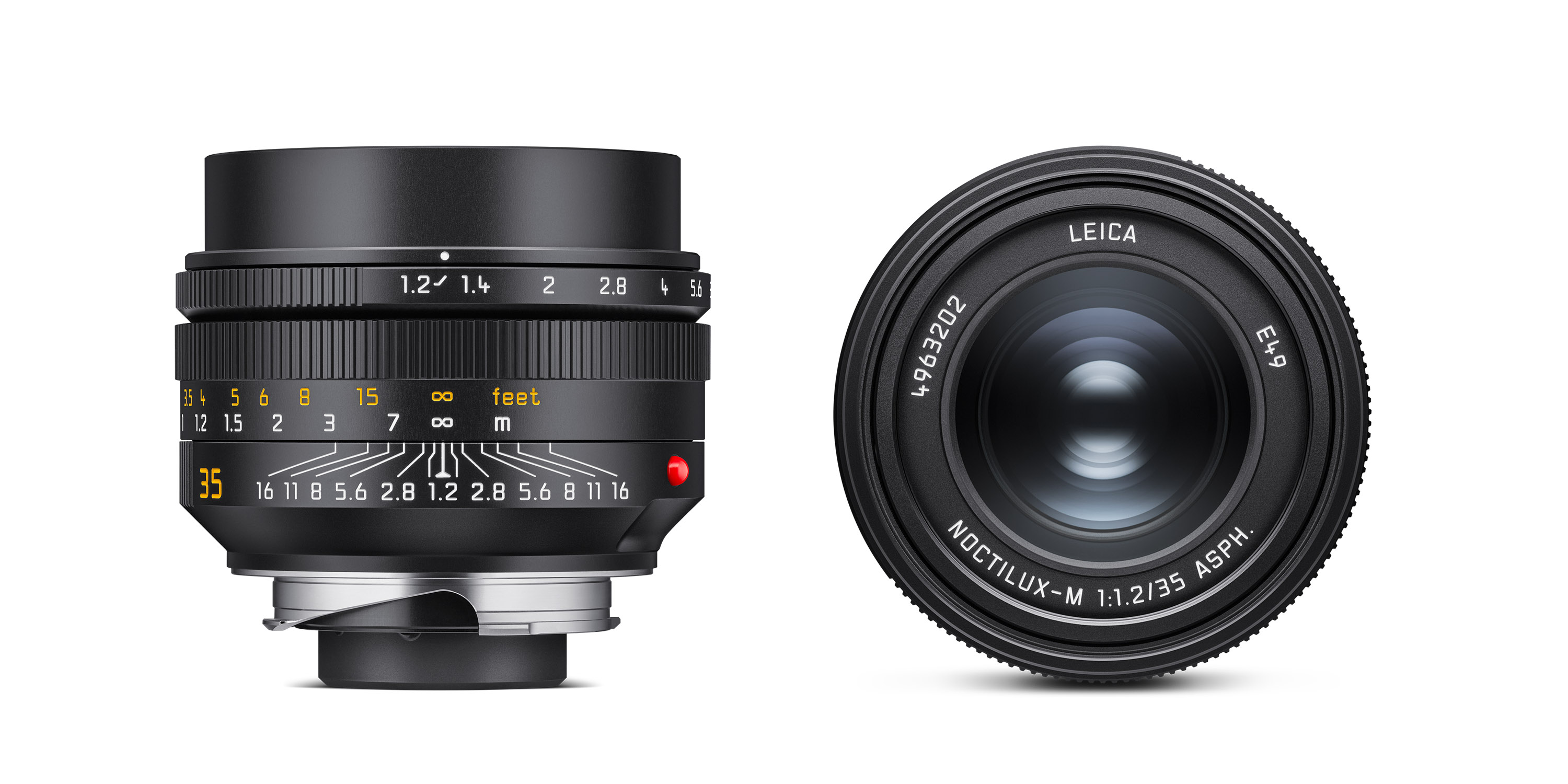
Leica has been working for the past three years on developing this benchmark lens, with significant effort dedicated to balancing optical performance, size, and usability. The result is a lens that delivers a meaningful performance improvement over the 35mm Summilux-M ASPH., while remaining only marginally larger.
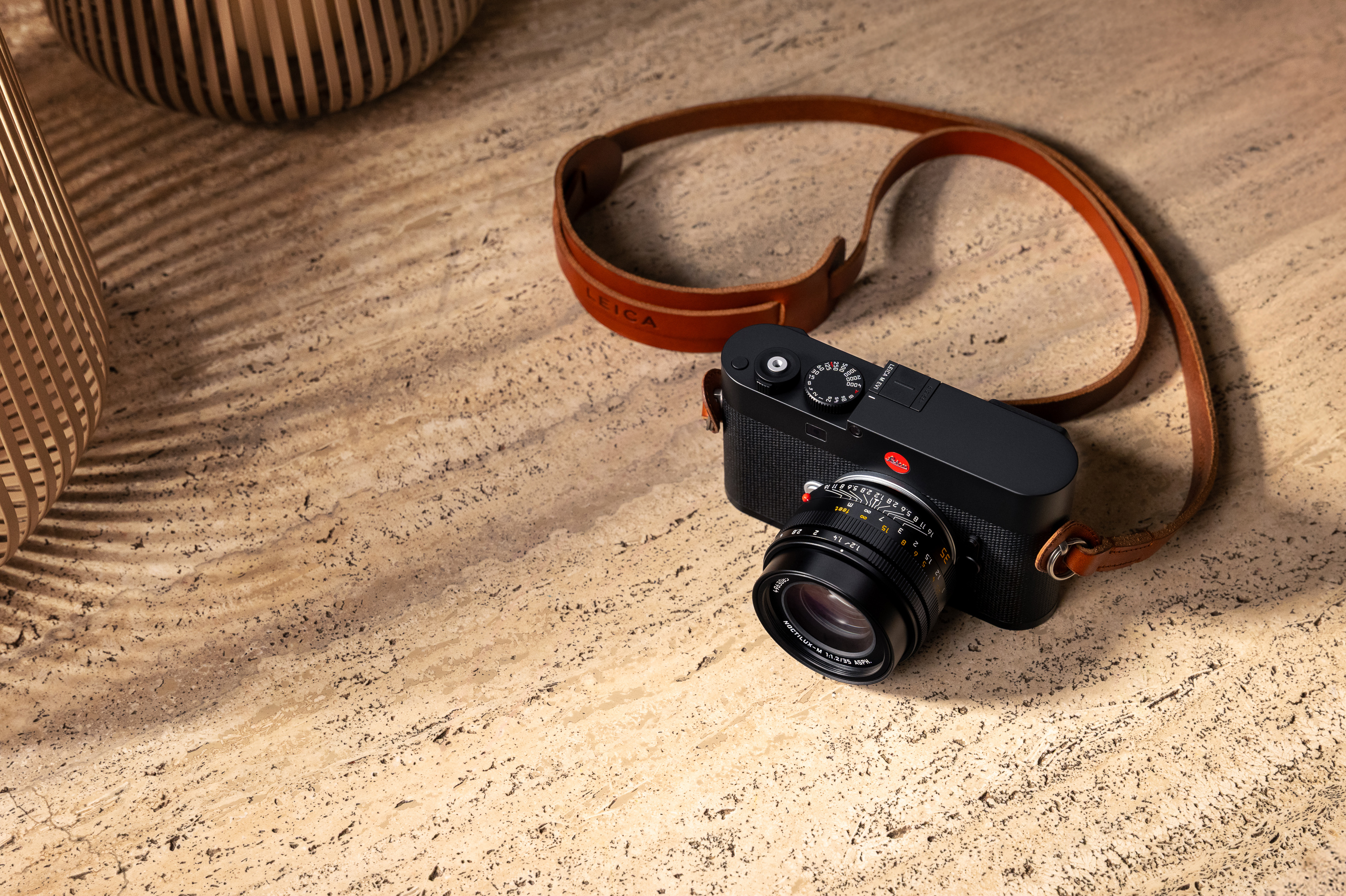
Despite its speed, the Noctilux-M 35 f/1.2 ASPH remains remarkably compact. Offering a form factor only slightly larger than the 35mm Summilux-M ASPH, the lens achieves this despite its faster maximum aperture and significantly more complex optical design. It features an integrated extendable hood, an E49 filter thread, and an 11-blade diaphragm. All in a package that weighs just 14.6 oz / 416 g, less than 10% heavier than the Lux.
Close Focus
The Noctilux-M 35mm f/1.2 ASPH is the first Noctilux lens to offer extended close focusing. While most M lenses are limited to a minimum focus distance of 0.7 meters, the physical limit of the optical rangefinder, the new 35mm Noctilux can decouple from the rangefinder and focus down to 0.5 meters.

This close-focus range is separated from the standard infinity to 0.7 meter rangefinder-coupled focusing by a light detent and is distinguished by subtle gray distance markings on the lens barrel. In this range, focusing is performed using live view rather than the optical rangefinder.
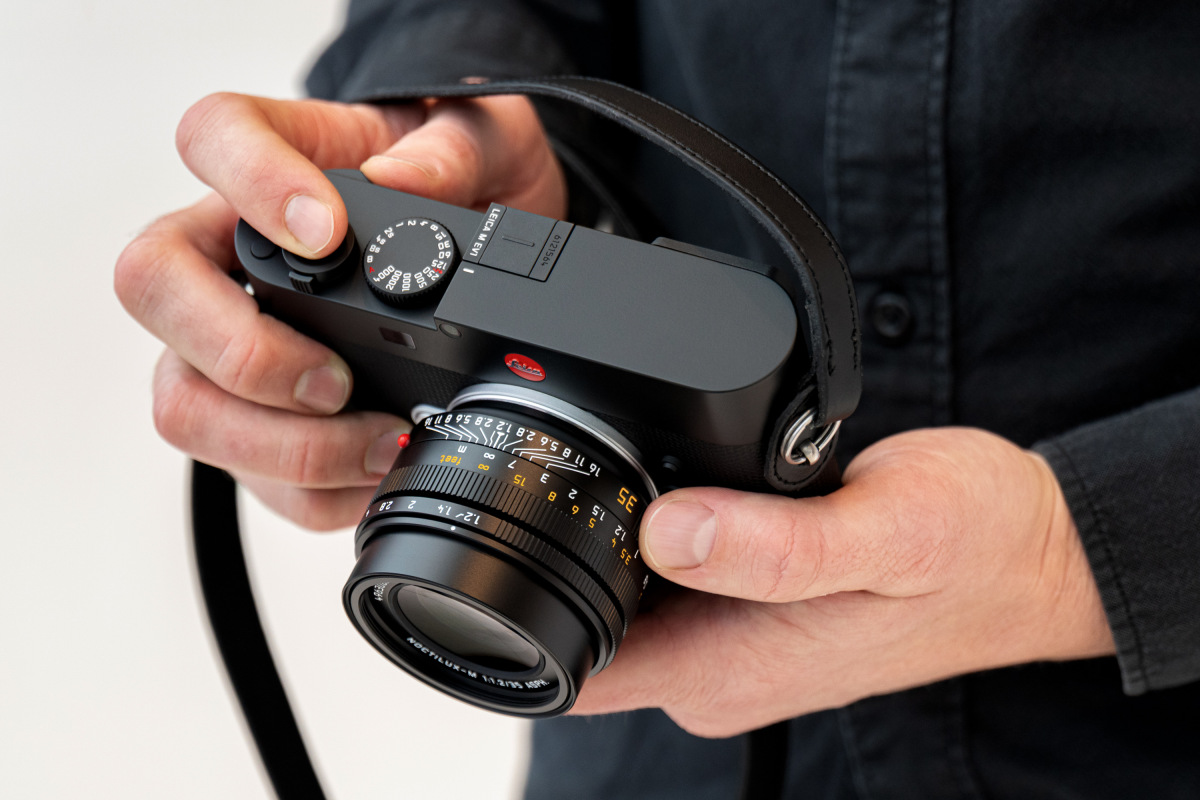
Any live view capable M camera, including the M240, M10, and M11 series, the new M EV1, as well as SL mirrorless bodies such as the SL2, SL2-S, SL3, and SL3-S, will support full close-focus functionality. Users of non-live view cameras, including models like the M9 or M7, can still use the Noctilux-M 35mm f/1.2 ASPH as a conventional M lens, with standard focusing down to 0.7 meters.
The extended close focusing capability opens up additional creative possibilities, particularly at wide apertures where subject separation becomes even more pronounced. Leica introduced this capability on the 35mm APO-Summicron and has since rolled it out on revised 35mm and 50mm Summiluxes.
Optical Design
Under the hood, the Noctilux-M 35mm f/1.2 ASPH features a floating element design in ten elements in five groups, including three aspherical elements. The floating element ensures consistent performance from the minimum focusing distance through infinity, an especially important consideration given the shallow depth of field at wide apertures and the close-focus range.
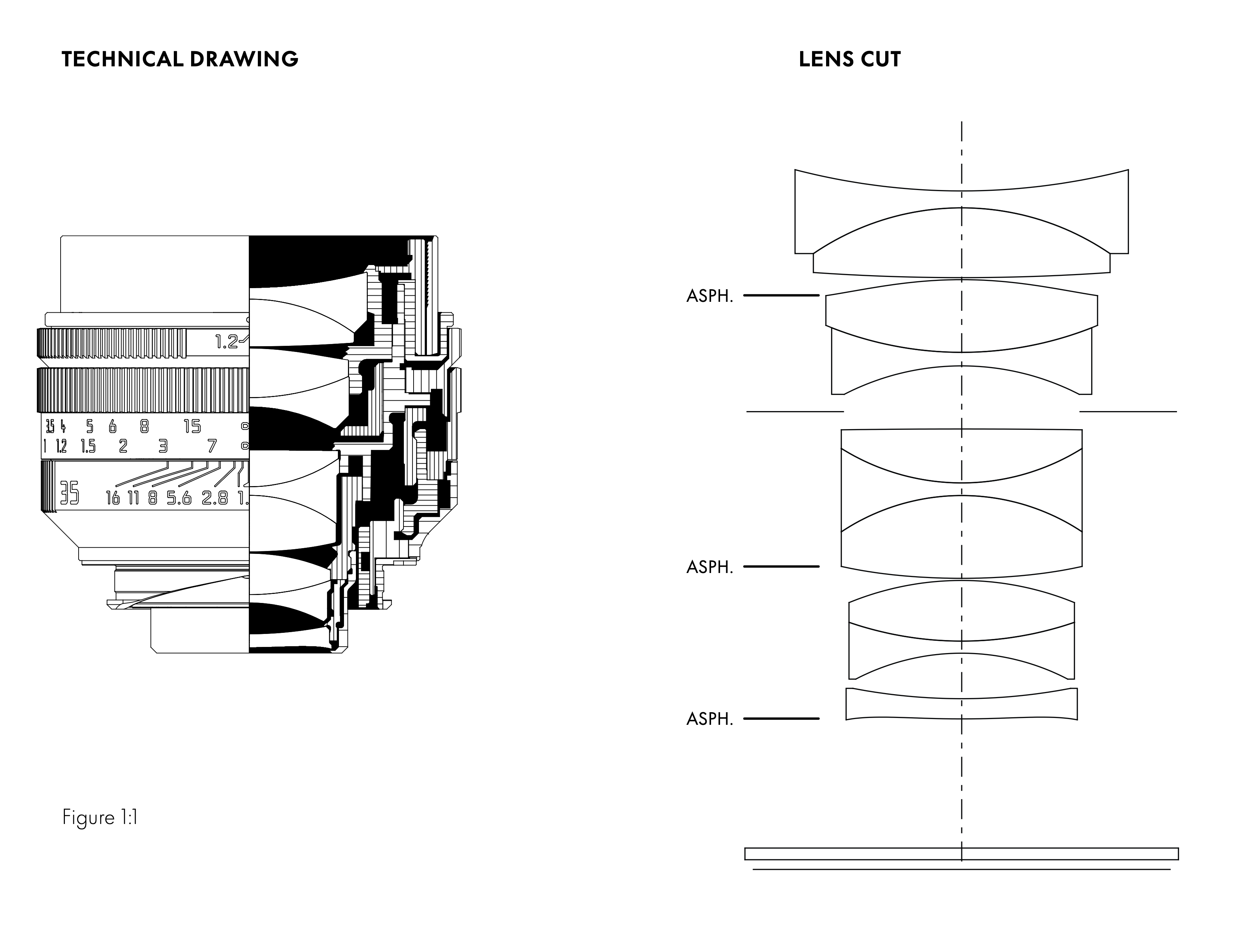
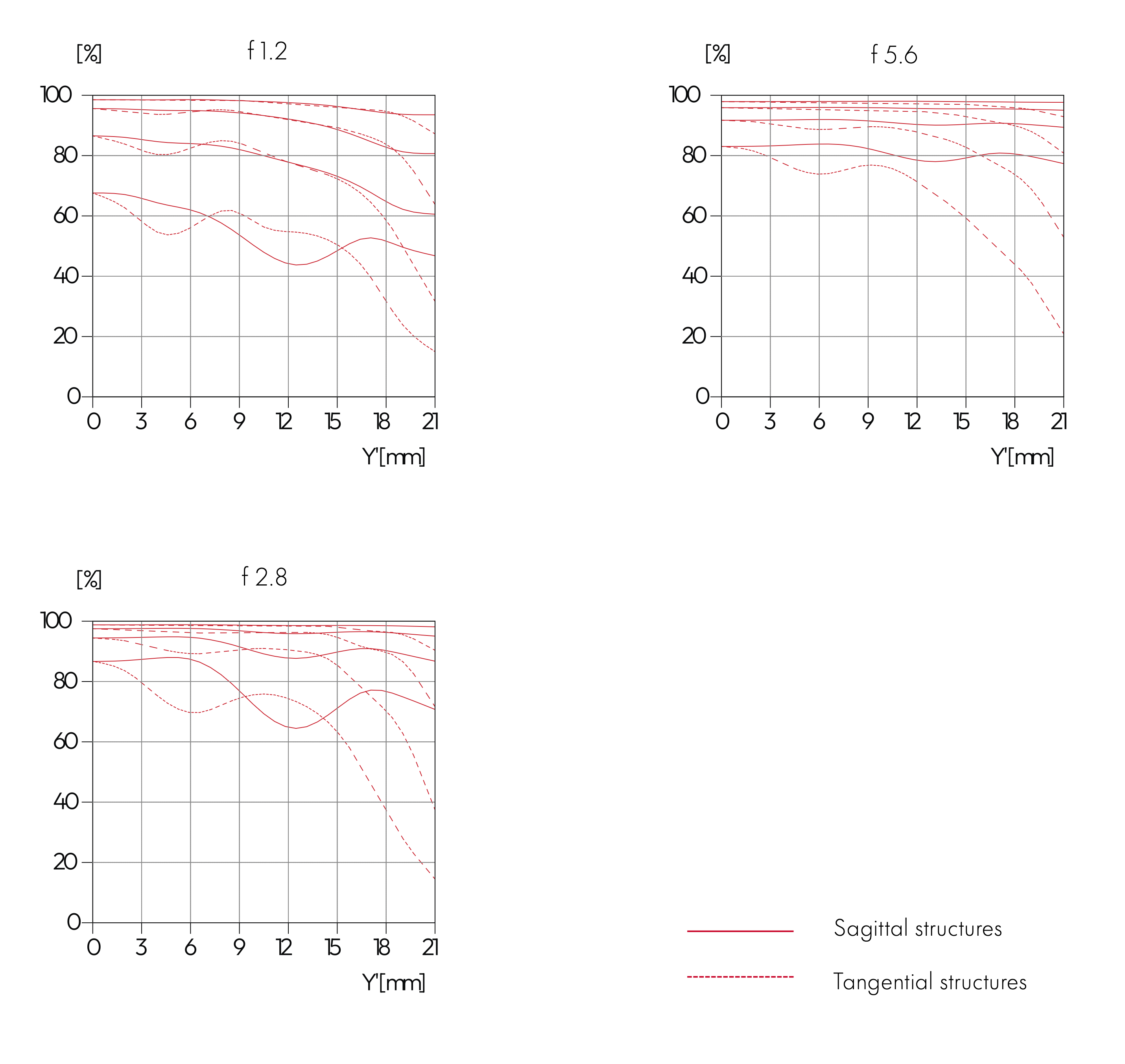
Despite the faster aperture, the Noctilux handily outperforms the 35mm Summilux-M ASPH in sharpness, light transmission and chromatic aberration control, while maintaining high contrast and resolution across the frame. The MTF charts bear this out, showing strong central performance wide open, with well-controlled sagittal and tangential separation. As expected for a lens of this type, contrast and resolution increase steadily as the lens is stopped down, with particularly strong performance at f/2.8 and f/5.6 across most of the image circle. Wide-open, the lens is already resolving around 70% contrast in the center for 40 lp/mm. By f/2.8, this jumps up to an impressive 90% contrast.
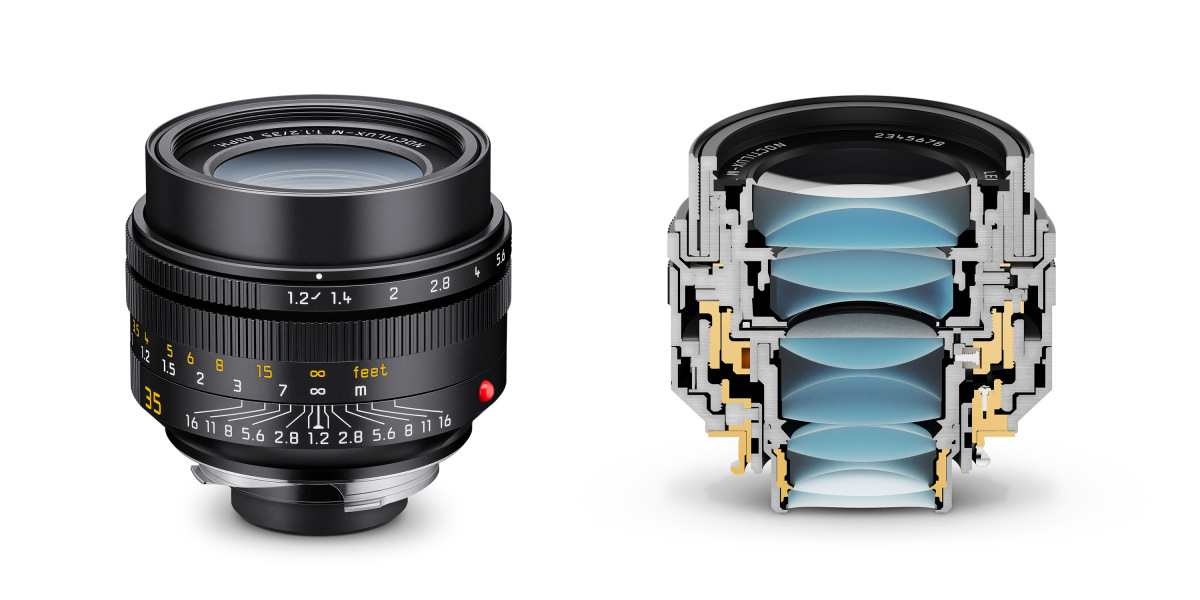
Importantly, the MTF behavior suggests that Leica did not prioritize absolute flat-field sharpness at the expense of rendering. Instead, the lens balances high micro-contrast and resolution with smoother transitions and controlled falloff, consistent with the Noctilux aesthetic.
MTF Charts
Position Within the Leica 35mm Lineup
With this release, Leica now offers two top-tier 35mm lenses that serve distinctly different purposes. The APO-Summicron-M 35mm f/2 ASPH stands as the reference lens for absolute optical performance, compactness, and close focusing, with a minimum focus distance of 0.3 meters. Leica designed it to prioritize neutrality, correction, and consistency above all else.
By contrast, the Noctilux-M 35mm f/1.2 ASPH pairs extremely high optical performance with the cinematic rendering and distinctive bokeh that define the Noctilux family. Rather than focusing solely on technical perfection, the lens actively shapes the image, emphasizing depth, atmosphere, and subject separation. Together, these lenses represent the pinnacle of Leica’s 35mm offerings, each catering to different priorities and shooting styles.
Why f/1.2 Matters
At first glance, the choice of f/1.2 instead of f/1 may seem conservative. In practice, it reflects a deliberate design decision. Pushing the lens to f/1 would have resulted in a significantly larger and heavier optic, with close focusing performance compromised in the process. By using f/1.2, Leica was able to maintain a compact form factor while preserving close focus capability and overall optical balance.

At f/1.2, the Noctilux-M 35mm becomes the fastest 35mm lens in Leica’s history. The wide aperture allows for pronounced subject separation rarely associated with this focal length, while still retaining enough depth and context to suit documentary and street photography. The difference between f/1.2 and f/1 in light gathering is marginal, but the difference in size, handling, and optical flexibility would not have been.
Precision Glass Molding
When Leica introduced the first Noctilux in 1966, it pushed technical boundaries by becoming the company’s first lens to incorporate aspherical elements. A similar story underpins the development of the Noctilux-M 35mm f/1.2 ASPH, which marks another significant step forward in Leica’s optical engineering.
The lens is the first to use Leica’s new Precision Glass Molding, or PGM, technology. This manufacturing process, which was developed entirely in-house, allows Leica to produce highly complex aspherical elements with extremely tight tolerances, with precision of just 3 nanometers per millimeter of diameter.
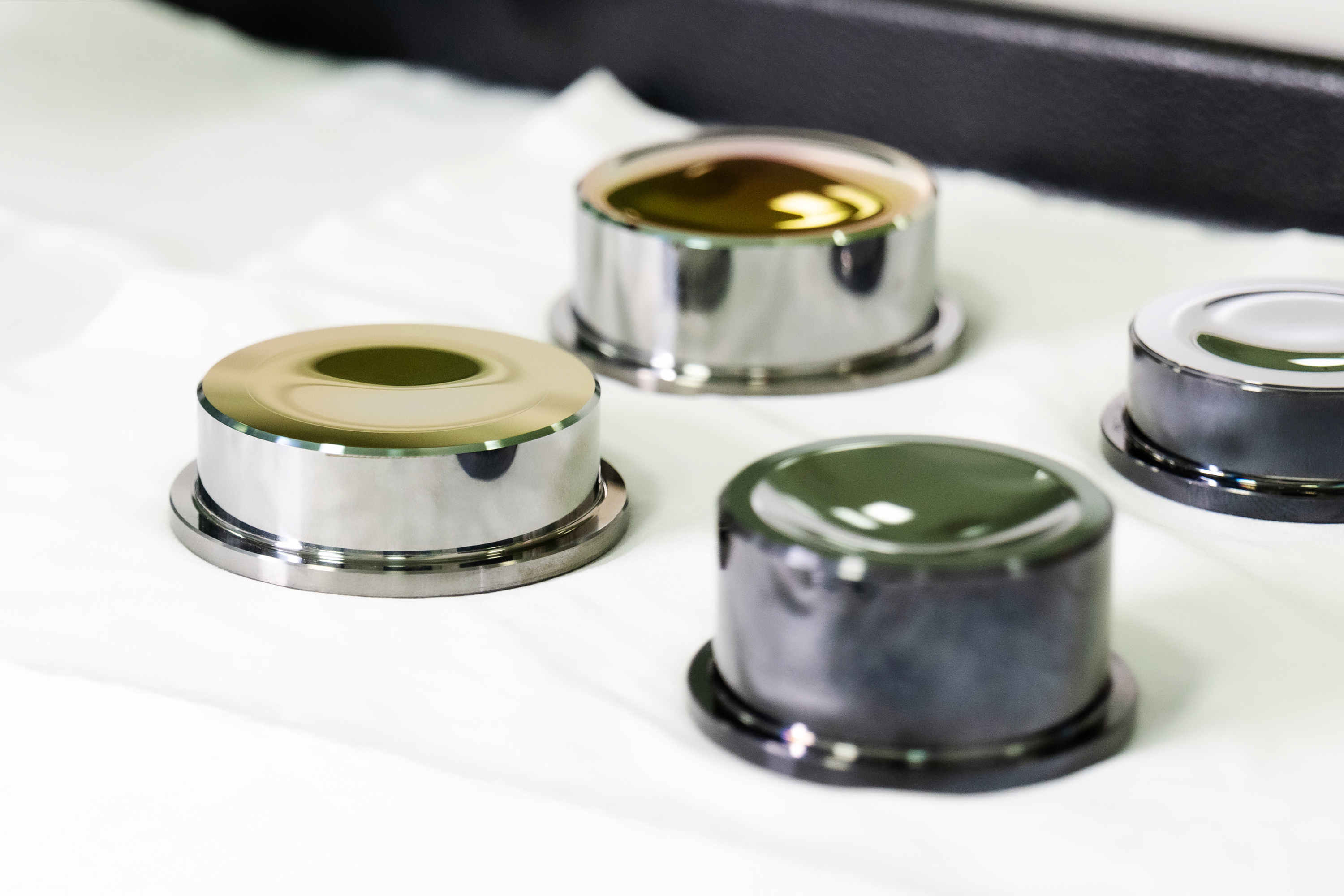
By retaining full control over optical design, toolmaking, glass pressing, and metrology, Leica gains far greater freedom in shaping aspherical surfaces and positioning them exactly where they deliver the most benefit. In practical terms, this approach improves aberration correction, increases micro-contrast, and produces smoother out-of-focus rendering, while also allowing Leica to keep the lens more compact than would otherwise be possible at this aperture. This level of end-to-end control represents a meaningful advance in Leica’s lens manufacturing capabilities and plays a central role in making a lens as advanced Noctilux-M 35mm f/1.2 ASPH possible.
A New Noctilux
Leica introduced the first Noctilux in 1966, creating the first ultra-high speed lens. Today, the modern Noctilux lineup includes the Noctilux-M 50mm f/0.95 ASPH and the Noctilux-M 75mm f/1.25 ASPH, both known for pairing extreme speed with the distinctive rendering characteristics that define the Noctilux aesthetic. In 2021, Leica brought back the original 1960s Noctilux optical design with the release of the Noctilux-M 50mm f/1.2 ASPH as part of the Classic Line.
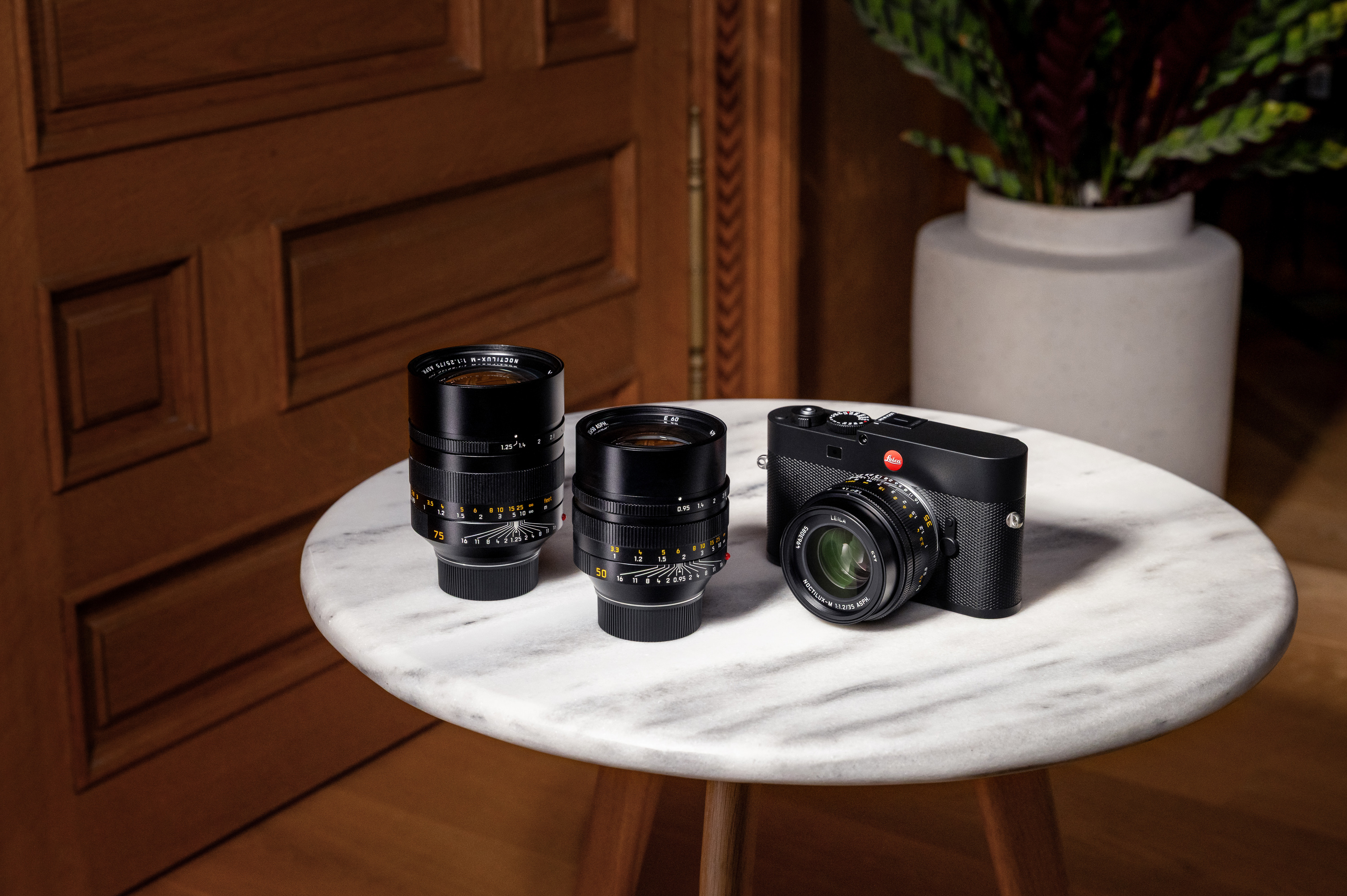
Now, the Noctilux-M 35mm f/1.2 ASPH joins this exclusive group, extending the Noctilux lineage to Leica’s most widely used focal length while offering a new interpretation of the concept that preserves the size, balance, and handling expectations of the M system.
Pricing and Availability
The Leica Noctilux-M 35 f/1.2 ASPH is available immediately, priced at $9,650. As with most Leica M lens launches, supply will be limited at launch. To purchase the Leica Noctilux-M 35mm f/1.2 ASPH, you can visit Leica Store Miami by clicking the button below, calling 305-921-4433, or sending an email to info@leicastoremiami.com. If you’re interested in trading in other Leica equipment toward this lens, please note it during the pre-order process.
Sample Images
While we haven't had a chance to shoot the new 35mm Noctilux yet, Leica has provided some samples images from photographers Huh John and Cam Mackey. Click on the images for a larger view.
















Tech Specs
| Lens | Leica Noctilux-M 35mm f/1.2 ASPH |
| Order Number | 11635 |
| Angle of view (diagonal/horizontal/vertical) | Full-frame (24 x 36 mm) 63.3°, 54.3°, 37.7° |
| Number of lenses/assemblies | 10/5 |
| Number of aspherical surfaces | 3 |
| Position of the entrance pupil before the bayonet | 24.5 mm |
| Focus range | 0.5 m to ∞ |
| Focusing | Combined scale meters (m)/feet (ft) |
| Smallest object field | Full-frame: 277 x 416 mm |
| Largest scale | 1:11.6 |
| Diaphragm Setting/Function | Click-stop diaphragm with half-increment lock settings |
| Smallest aperture | 16 |
| Number of diaphragm blades | 11 |
| Bayonet | Leica M bayonet with 6-bit encoding |
| Filter thread | E49 |
| Lens hood | Extendable |
| Length | Approx. 50.2 mm |
| Diameter | Approx. 64.6 mm |
| Weight | Approx. 416 g |
| Scope of Delivery | Noctilux-M 35 f/1.2 ASPH – Lens Cap – Rear Cover – Leather Case |
Press Release
Leica Camera AG presents the first Noctilux M lens with a focal length of 35 mm.
Teaneck, January 29, 2026 – Since its introduction in 1966, the name Noctilux has represented the pinnacle of optical craftsmanship at Leica. Derived from the Latin words noctu and lux, meaning “night” and “light,” the name refers to the exceptional speed of this lens series. With maximum apertures as wide as f/0.95, Noctilux lenses are considered the epitome of optical development, opening up creative possibilities beyond the ordinary and delivering images with a distinctive visual aesthetic.
With the new Noctilux-M 35 f/1.2 ASPH., Leica Camera AG presents the first Noctilux M lens in the company’s history with a 35 mm focal length.
Like all Noctilux lenses, this latest addition to the lineup impresses with exceptional speed and superior imaging performance. The compact Noctilux-M 35 f/1.2 ASPH. produces clear, high-contrast images characterized by a distinctive look. The shallow depth of field at wide apertures precisely separates subject and space, creating a velvety, soft bokeh and lending images tangible depth and a cinematic atmosphere. Stopping down the aperture allows photographers to selectively increase depth of field.
A floating element within the complex optical construction ensures consistent performance across the entire focusing range, from close focus to infinity.
Until now, Noctilux lenses have been available exclusively in 50 mm and 75 mm focal lengths. With the Noctilux-M 35 f/1.2 ASPH., Leica makes the revered Noctilux quality available for the versatile 35 mm focal length for the first time. The combination of wide aperture and natural perspective makes it ideal for portrait, reportage, available-light, and street photography. Subjects remain clearly separated while retaining their surrounding context through smooth transitions into the background.
This new lens is the first Noctilux to feature an extended close focusing distance down to 50 cm. When used with the Leica M EV1 electronic viewfinder, focusing is particularly convenient across the entire focusing range. M cameras using the optical rangefinder can focus down to 70 cm. In the close-up range between 70 cm and 50 cm, focusing is carried out via Live View on the rear LCD or through the electronic viewfinder. The large focusing angle of the Noctilux-M 35 supports precise and sensitive manual focusing.
The Noctilux-M 35 f/1.2 ASPH. has been optimized for M cameras with high-resolution image sensors and has been completely designed and handcrafted in Wetzlar, Germany. Decades of experience and state-of-the-art production technologies have gone into its development, including the processing of special glass materials and aspherical lens elements manufactured in Wetzlar using innovative Precision Glass Molding technology. This highly precise process achieves exceptional quality standards.
The optical design comprises ten elements in five groups, including three aspherical elements. The integrated lens hood reduces glare and reflections, ensuring high contrast and brilliant color rendering even in backlit situations.
Measuring approximately 1.9 inches in length, with a diameter of 2.5 inches, and weighing approximately 14.6 ounces, the lens also stands out for its compact dimensions given its maximum aperture.
Wow, the specs on the Noctilux-M 35mm f/1.2 are stunning! I still remember my first time shooting with a fast lens like that—it completely changed how I see light and depth. This is definitely a game-changer for low-light photography! top games