
Today, Leica Camera has announced two new special edition M cameras, the Leica M11-P Hammertone and Leica M-A Hammertone, bringing back a distinctive finish rarely seen throughout the company’s history. Drawing inspiration from classic Leica cameras and precision instruments dating back to the 1930s, the new models feature textured gray hammertone top and bottom plates, solid brass construction, silver-anodized controls and black leatherette coverings. The result is a striking combination of vintage industrial design and modern Leica craftsmanship.
While both cameras share the same distinctive aesthetic, they represent two very different approaches to photography. The M11-P Hammertone is built on Leica’s latest 60-megapixel digital imaging platform, while the M-A Hammertone offers a completely mechanical, fully analog experience. Both retain the technical specifications and functionality of their standard production counterparts, with the special editions focusing on materials, finishes and design details.
A Rare Finish with Deep Historical Roots
The hammertone finish has a long history in German industrial design, dating back to the 1930s. Commonly found on precision instruments, laboratory equipment and industrial machinery, the textured metallic coating was prized for its durability, practicality and distinctive appearance.
Unlike conventional smooth paint finishes, hammertone creates an irregular, subtly mottled surface resembling hammered metal. The effect results from a specialized paint formulation containing metallic pigments and additives that create variations in surface tension as the coating dries. The resulting texture gives the surface an almost three-dimensional appearance, with subtle variations in tone and reflectivity.
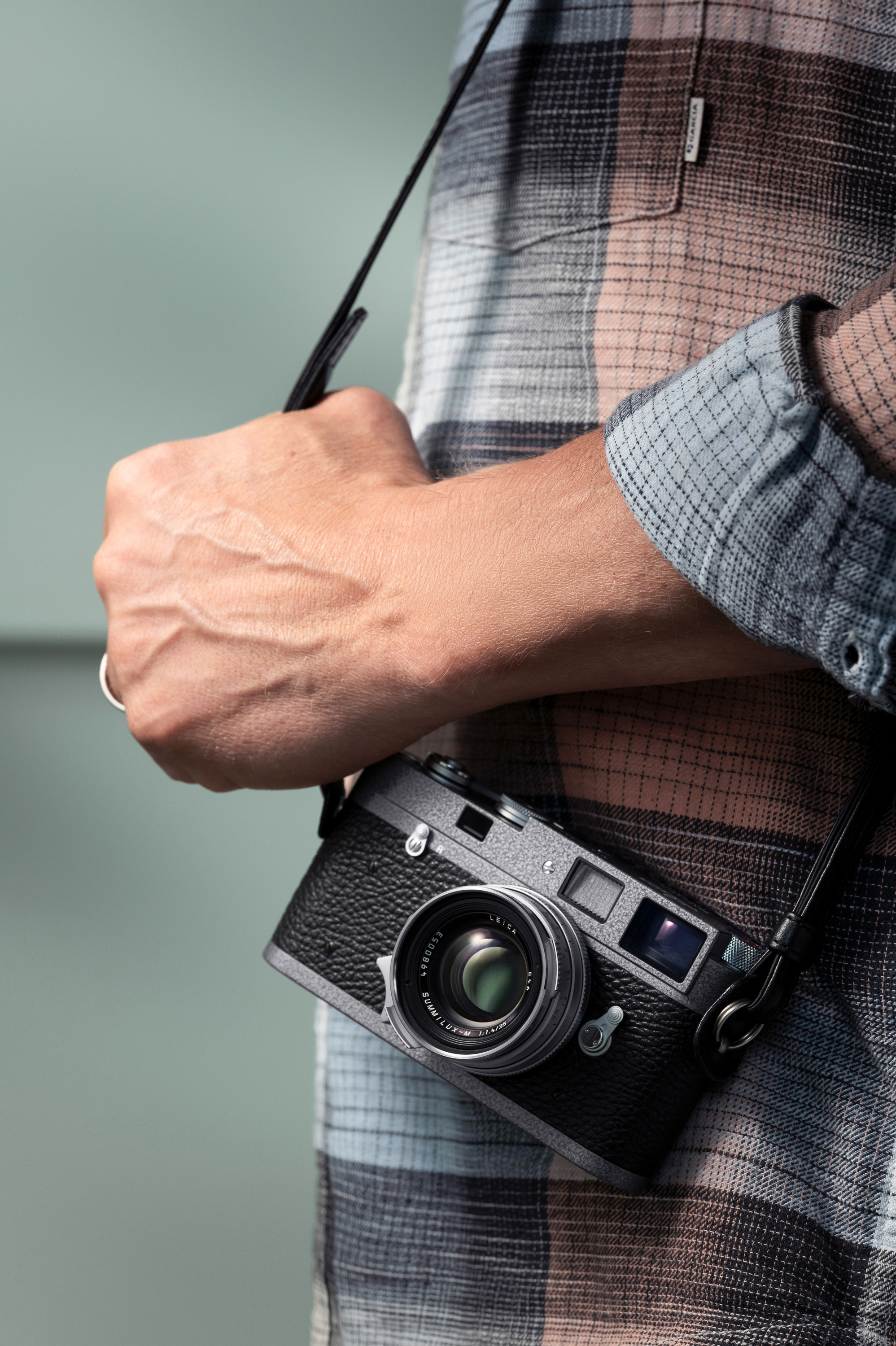
Although widely used in industrial applications for almost a century100, hammertone has appeared on relatively few Leica cameras over the decades. Notable examples include the Leica MD documentation camera used with the Leitz Reprovit system, the Leica MP LHSA from 2003, the Leica M9 Hammertone from 2011 and the Leica M-A Vienna Edition from 2016. The rarest of all is the Leica MD Hammertone, of which just ten examples were produced in 1964. These have become highly sought after by collectors recently, making the return of this unusual finish especially noteworthy.
For the new M11-P and M-A special editions, Leica has re-engineered the hammertone application process at its Wetzlar facotry. Achieving a consistent overall appearance while preserving the finish’s characteristic irregular texture requires considerable skill and attention to detail. And because the pattern forms naturally during the drying process, no two cameras have exactly the same finish.
Distinctive Design Details
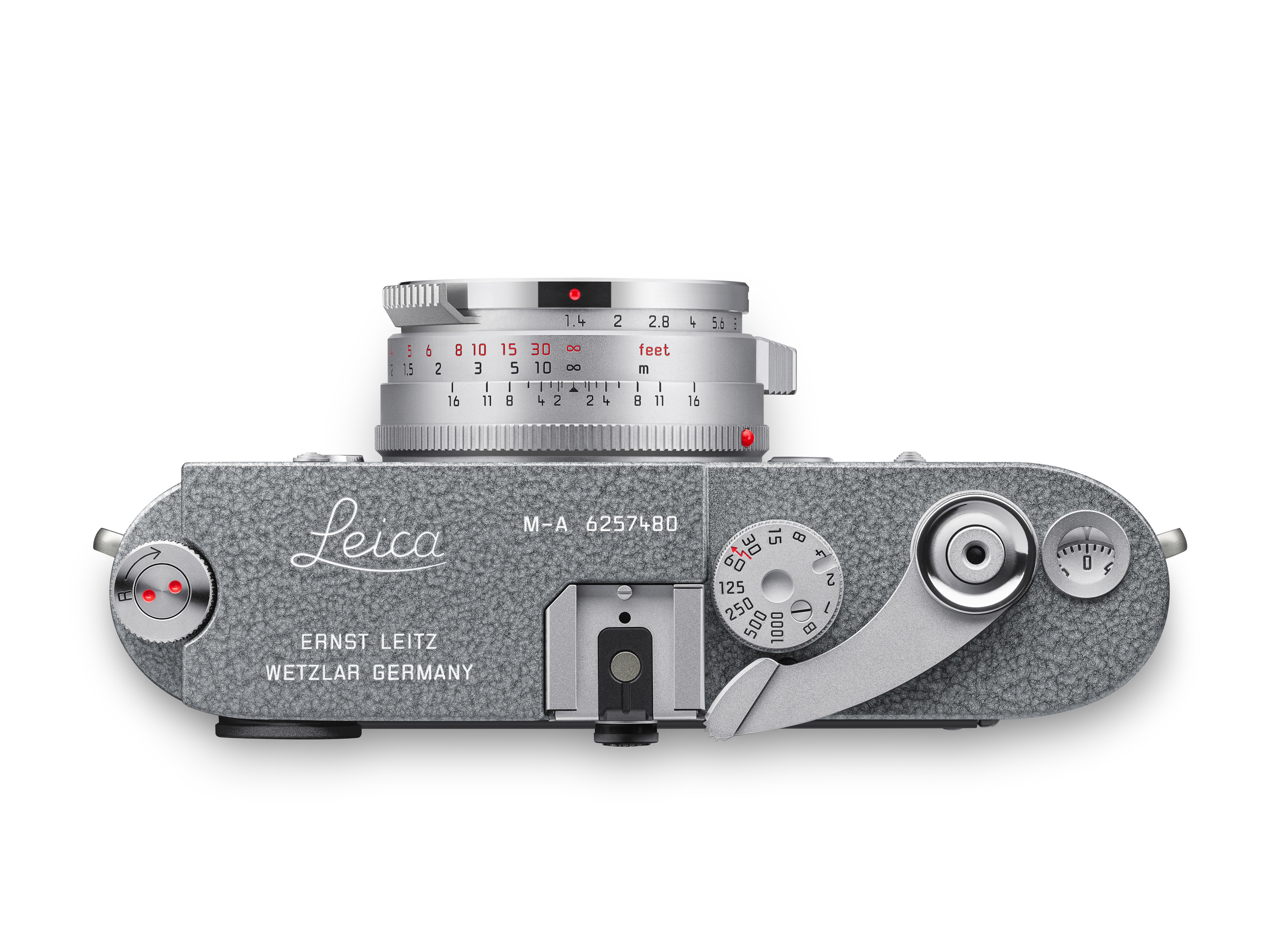
Beyond the hammertone coating itself, Leica has incorporated several classic design elements that distinguish these special editions from the standard production cameras. Both models feature solid brass top and bottom plates finished in textured gray hammertone paint, complemented by black vulcanite leatherette body coverings. The controls feature traditional cross knurling, silver-anodized accents, a polished shutter-release and white engravings, resulting in the vintage-inspired appearance of classic Leica cameras and precision instruments from the mid-20th century.
The M11-P Hammertone also receives some additional design changes. Unlike the standard M11-P, the special edition features newly rounded edges on the top and bottom plates, giving the camera a more classically styled profile. Leica has also redesigned the screw on the front of the camera with a silver-chrome finish, further reinforcing the traditional appearance. The BP-SCL7 rechargeable lithium-ion battery also has a hammertone finish to match the camera body.
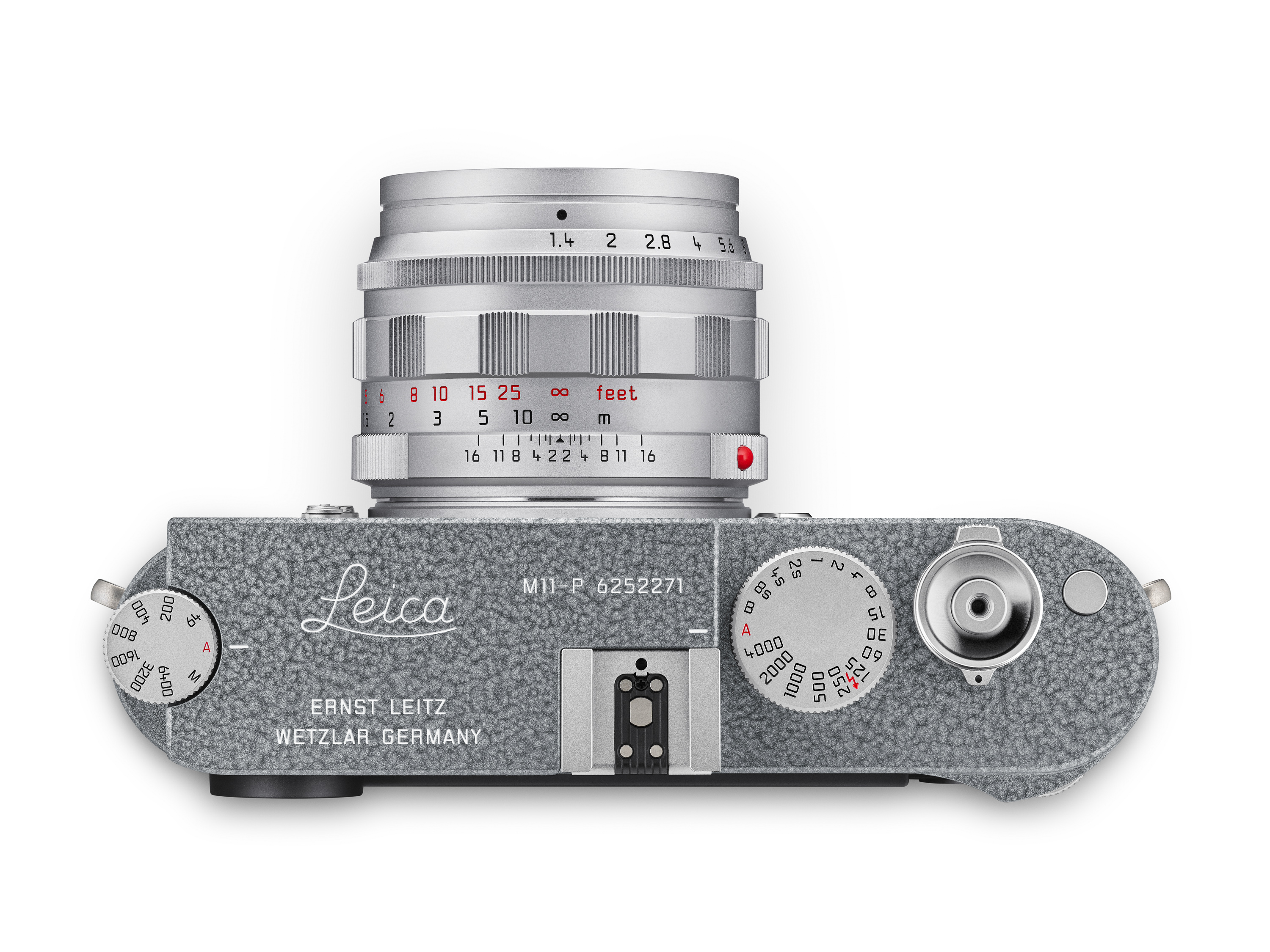
Leica M11-P Hammertone
The Leica M11-P Hammertone brings this historical finish to Leica’s falgship digital rangefinder platform. Underneath the classic exterior, the camera retains all the capabilities of the standard M11-P, including the 60-megapixel full frame BSI CMOS sensor with 15+ stops of dynamic range, Maestro III image processor, 256GB of internal storage, hardware encryption for Leica Content Credentials, scratch-resistant sapphire glass touchscreen, fast Wi-Fi and Bluetooth LE connectivity, and USB-C charging.
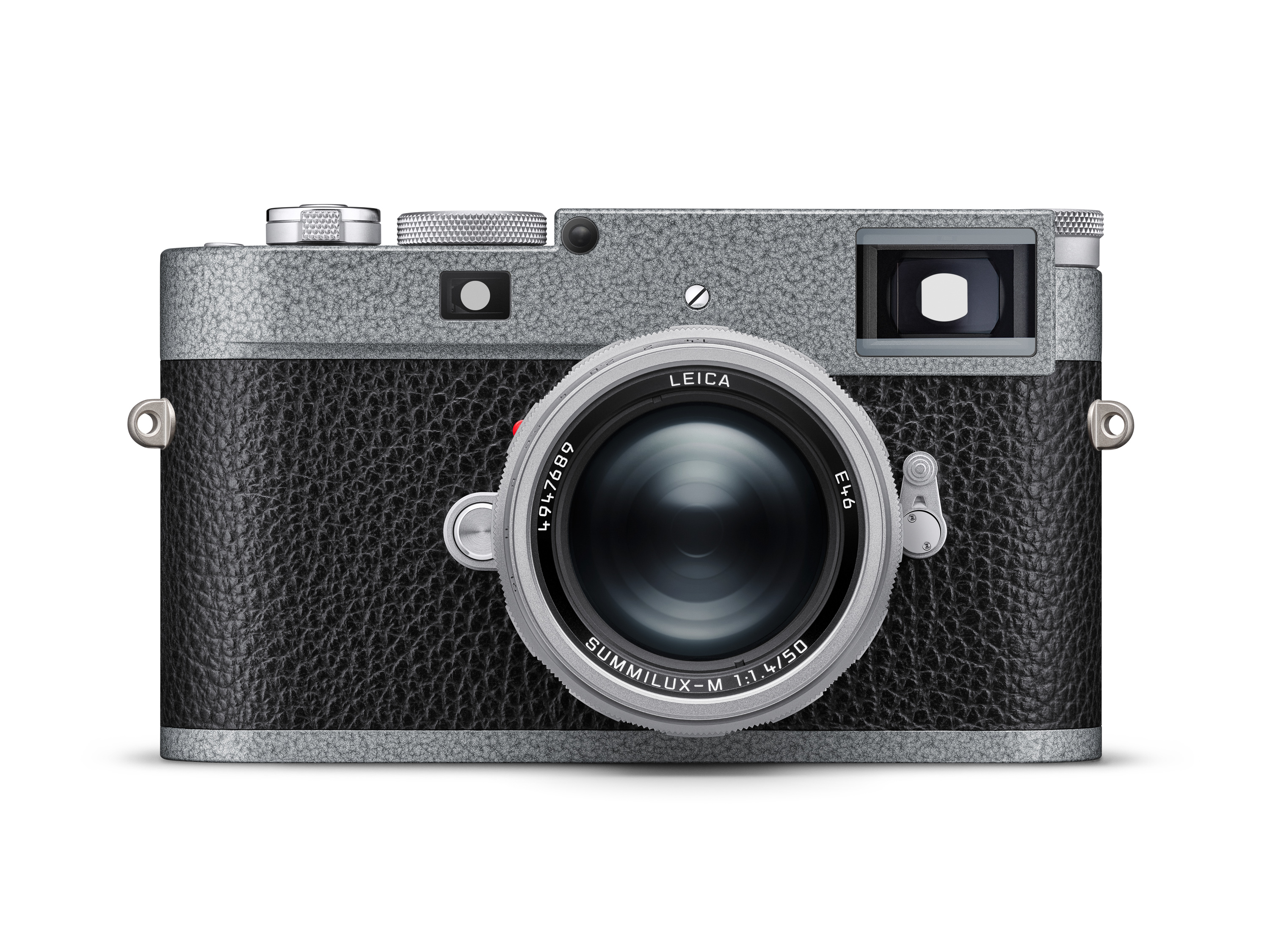
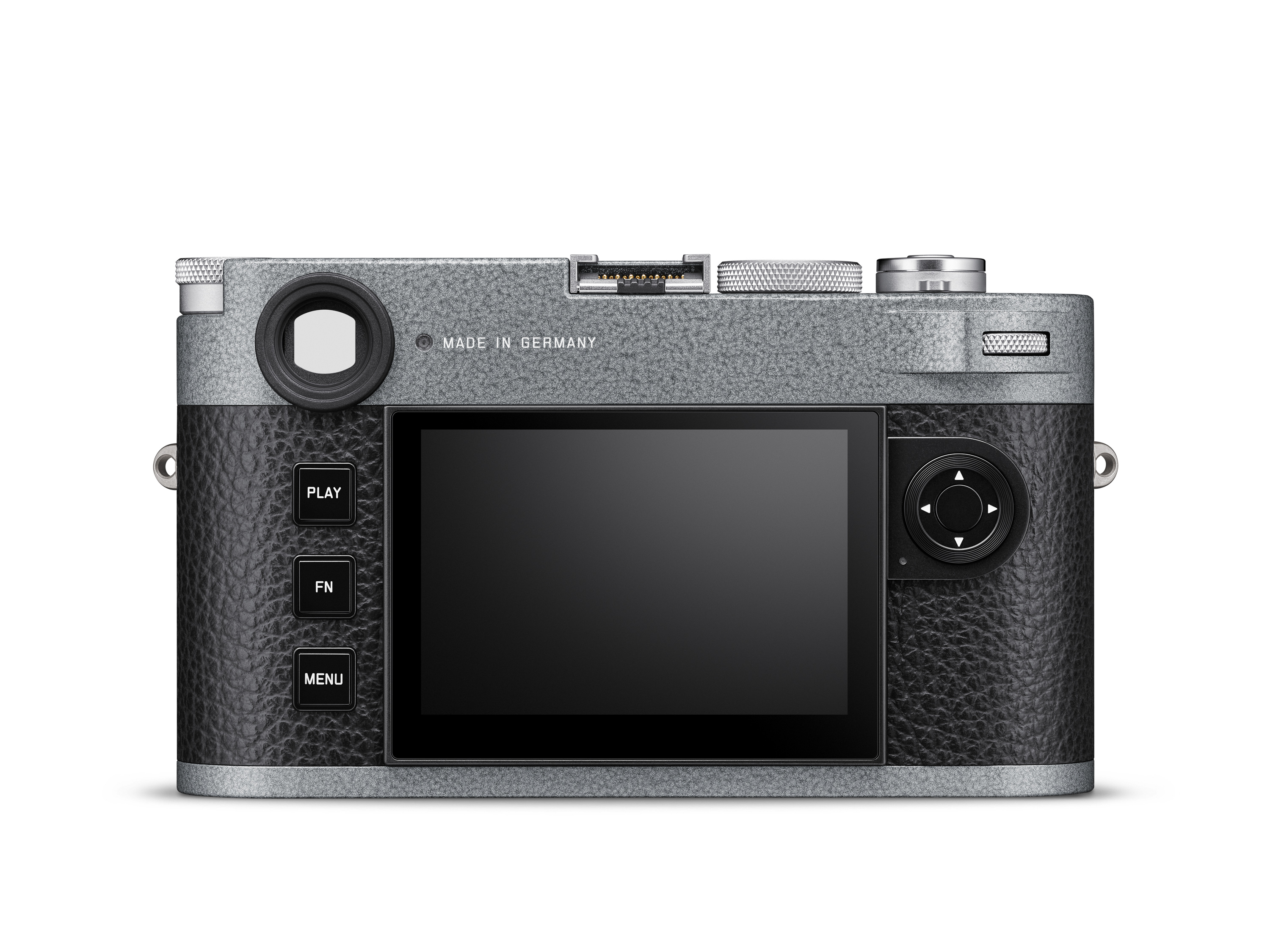
Leica M11-P Hammertone Key Features
- Distinctive gray hammertone finish on solid brass top and bottom plates
- Newly rounded, classically styled top and bottom plate edges
- Silver-chrome front screw and traditional cross-knurled controls
- Black vulcanite-style leatherette covering with white engravings
- 60.3 MP full-frame BSI CMOS sensor
- Triple Resolution Technology with 60, 36 and 18 MP capture modes
- Maestro III image processor
- 256 GB internal memory and SD card slot
- Leica Content Credentials technology
- Sapphire glass touchscreen with anti-reflective coating
- Mechanical shutter up to 1/4000 second and electronic shutter up to 1/16000 second
- Matching hammertone BP-SCL7 battery included
- Wi-Fi, Bluetooth and USB-C connectivity
Leica M-A Hammertone
For photographers who prefer a completely analog experience, the Leica M-A Hammertone brings the same distinctive design to Leica’s purely mechanical 35mm film camera. Introduced in 2014, the M-A represents one of the purest expressions of traditional Leica photography. With no light meter, no electronic exposure controls and no battery, the camera relies entirely on its precision mechanical shutter and optical rangefinder.
Like the digital M11-P Hammertone, the film camera receives solid brass top and bottom plates with the distinctive textured gray finish, complemented by silver-colored controls, traditional cross knurling, white engravings and black vulcanite-style leatherette.
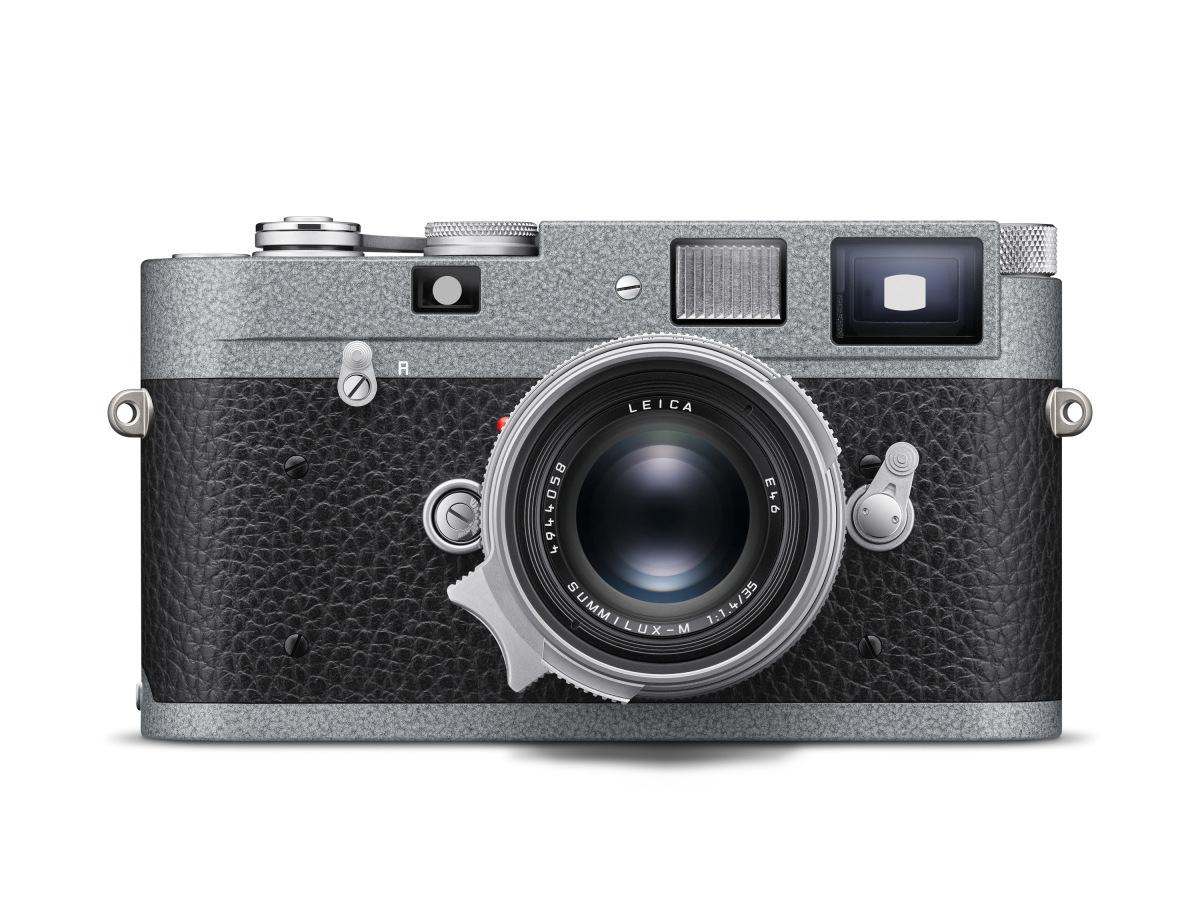
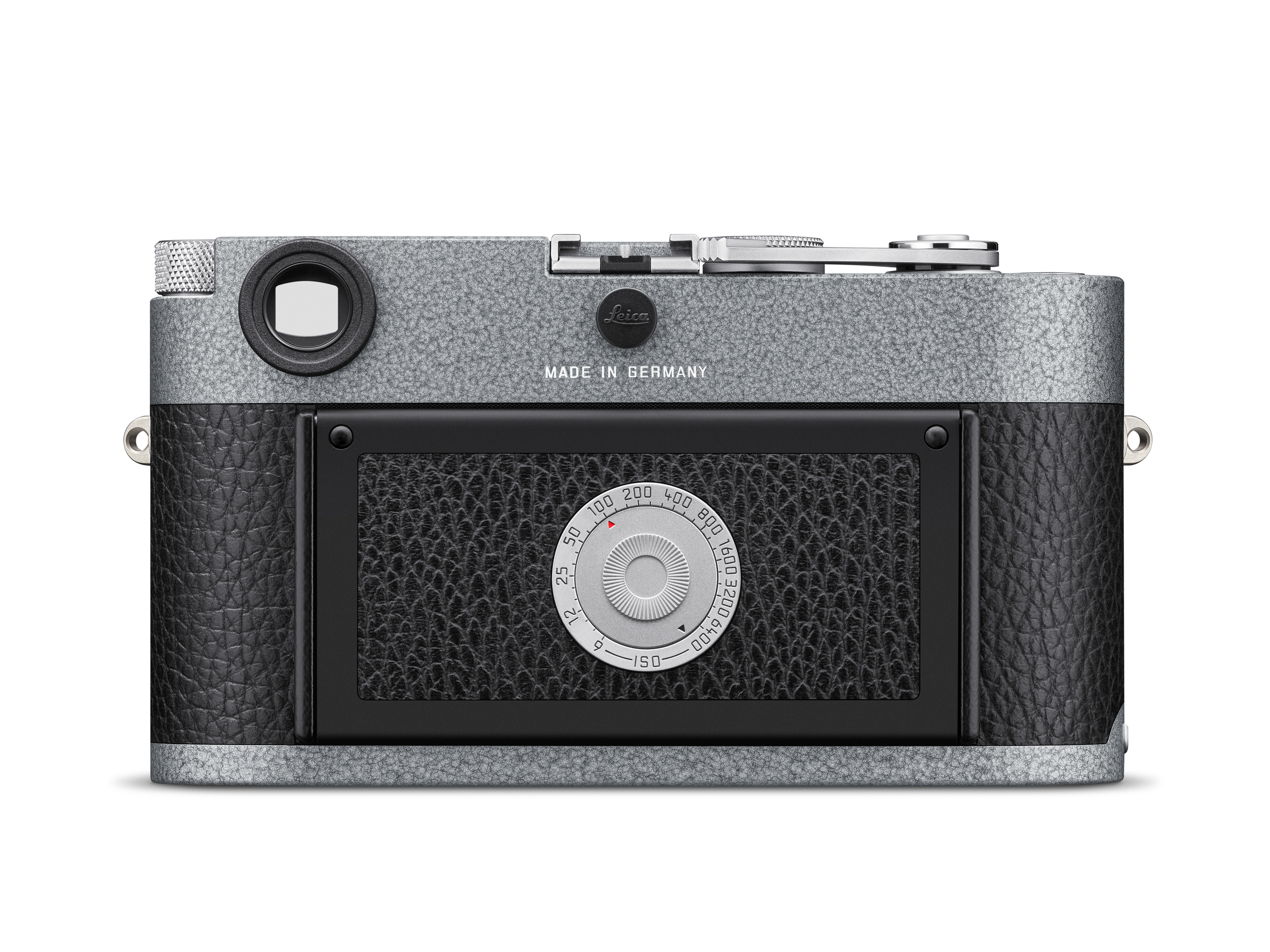
Mechanically, the camera remains identical to the standard M-A, featuring a 0.72x optical rangefinder and a horizontal cloth focal-plane shutter offering speeds from 1 second to 1/1000 second, plus Bulb. The camera uses the traditional removable baseplate for film loading and incorporates the familiar M-System frameline pairs for 28/90mm, 35/135mm and 50/75mm lenses.
A roll of Kodak Tri-X 400 black-and-white film is included in the box.
Leica M-A Hammertone Key Features
- Distinctive gray hammertone finish on solid brass top and bottom plates
- Black vulcanite-style leatherette covering
- Traditional cross-knurled controls and silver-colored shutter release
- White engravings
- Fully mechanical 35mm film rangefinder camera
- No battery or electronic operation required
- 0.72x optical viewfinder with automatic parallax compensation
- Mechanical cloth focal-plane shutter
- Shutter speeds from 1 second to 1/1000 second, plus Bulb
- Manual film advance and rewind
- Leica M bayonet lens mount
- Kodak Tri-X 400 film included
A Return to Classic Leica Design
While Leica has produced numerous special edition cameras throughout its history, the hammertone finish occupies a particularly interesting place in the company’s design heritage. Rather than relying on precious materials, elaborate engravings or bold colors, the new Hammertone models take inspiration from the understated functionality of historical precision instruments. The textured gray finish, solid brass construction and traditional silver controls create a distinctly industrial aesthetic that feels equally at home on a classic mechanical film camera or a modern digital rangefinder.
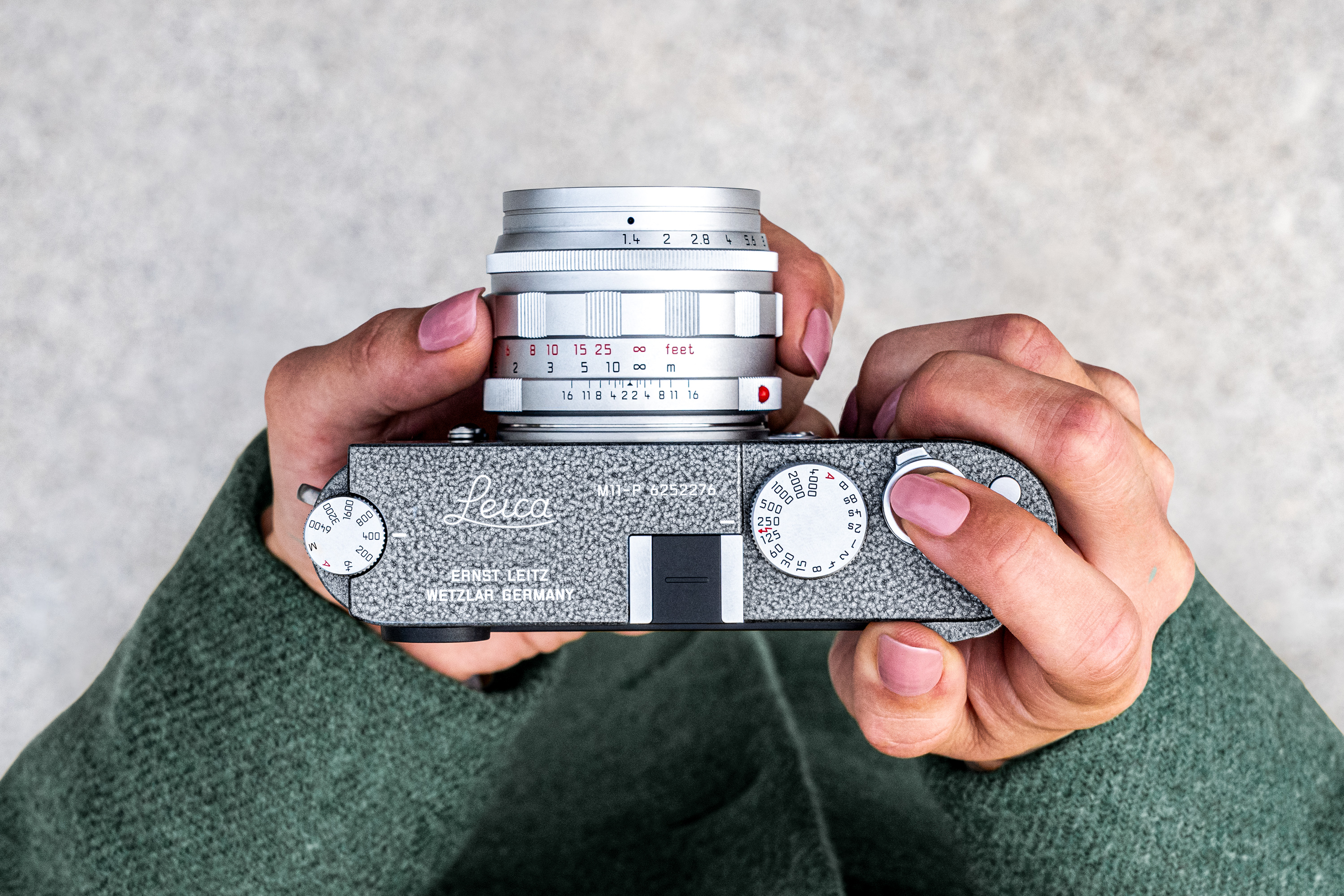
By introducing the finish on both the M-A and M11-P, Leica offers two interpretations of the same design philosophy, spanning more than a century of photographic tradition and technology. And with each camera displaying its own unique hammertone pattern, even examples of the same model will be subtly different. For photographers and collectors who appreciate Leica’s industrial design heritage, these special editions offer a compelling combination of historical inspiration, distinctive craftsmanship and proven M-System functionality.
Pricing and Availability
The Leica M11-P Hammertone and Leica M-A Hammertone are available beginning today, November 12, 2026.
Both camera models can be ordered through Leica Store Miami. For questions, availability or assistance placing an order, contact the store at 305-921-4433 or info@leicastoremiami.com.
Pricing and Availability
The Leica M11-P Hammertone and Leica M-A Hammertone are available starting today, priced at $10,950 and $8,000 respectively. Alongside the cameras, Leica is also releasing a matching BP-SCL7 battery with hammertone finish. To purchase the new Hammertone cameras, you can visit Leica Store Miami by clicking the buttons below, calling 305-921-4433, or sending an email to info@leicastoremiami.com. Note that while the Leica M11-P Hammertone and Leica M-A Hammertone are special edition cameras, they are not individually numbered editions. Availability is expected to be limited.
Tech Specs – M-A Hammertone
| Camera type | Leica M-A (type 127) compact 35 mm rangefinder system camera with a mechanically controlled shutter |
| Edition | Hammertone special edition; technically based on the standard Leica M-A |
| Finish | Hammertone finish on top plate and base plate; each camera unique due to its distinct surface finish |
| Design details | Solid brass top and base plates; classic cross knurling on control elements; shiny silver shutter-release plate; white engravings; black vulcanite-style leatherette covering |
| Lens mount | Leica M-Bayonet |
| Lens system | Leica M-Lenses, 16–135 mm |
| Exposure control | Manual setting of shutter speed and aperture with values from an external exposure meter or by estimation |
| Flash connection | Hot shoe (accessory shoe with center contact) |
| Flash synchronization | On first shutter curtain |
| Flash exposure control | Computer control by the flash unit, or guide number calculation and manual setting of the required aperture value |
| Viewfinder principle | Large, bright, combined bright-line viewfinder with automatic parallax compensation |
| Eyepiece | Adjusted to –0.5 diopters; correction lenses available for –3 to +3 diopters |
| Image field framing | Projected pairs of bright-line frames for 28 and 90 mm, 35 and 135 mm, 50 and 75 mm lenses; corresponding frames displayed automatically when lenses are locked into the bayonet mount |
| Frame selector | Lever enabling alternative frame pairs to be displayed without changing lenses (e.g. for framing comparisons) |
| Parallax compensation | Horizontal and vertical differences between viewfinder and lens axes automatically compensated in relation to focusing distance |
| Viewfinder/film image concordance | Bright-line frame size corresponds to an image size of approx. 23 × 35 mm at the minimum focusing distance for all focal lengths; focused at infinity, approx. 9% (28 mm) to 23% (135 mm) more is captured on film than shown in the frame, depending on focal length |
| Magnification | 0.72× (for all lenses) |
| Rangefinder | Long-base coincident and superimposed image rangefinder, shown as a bright field at the center of the viewfinder image |
| Effective rangefinder base | 49.9 mm (mechanical rangefinder base 69.25 mm × viewfinder magnification 0.72×) |
| Shutter | Horizontal rubberized-cloth focal plane shutter; extremely low noise; mechanically controlled |
| Shutter speeds | 1 s to 1/1000 s in one-stop increments; B for exposures of arbitrary length |
| Shutter release | Standard internal thread for remote-release cables |
| Film loading | Manual loading after removal of the base and opening the rear flap |
| Film advance | Manual with rapid wind lever or Leicavit M; motorized with Leica Motor-M, Leica Winder-M, Leica Winder M4-P, or Leica Winder M4-2 (from article number 10 350) |
| Rewinding | Manual, pull-out rewind knob after disconnecting the advance mechanism with the R-lever on the front of the camera |
| Frame counter | On top plate; automatically reset when baseplate is removed |
| Body material | One-piece full-metal body with rear flap; top deck and baseplate in brass (hammertone finish on this edition) |
| Tripod bush | Thread A 1/4, DIN 4503 (1/4″) |
| Rear flap | Reminder dial for film sensitivity |
| Dimensions (L × D × H) | Approx. 138 × 38 × 77 mm |
| Weight | Approx. 578 g (net weight 20.39 oz) |
| Mfr part # | 10380 |
Tech Specs – M11-P Hammertone
| Designation | Leica M11-P Hammertone |
| Camera type | Digital system camera with rangefinder |
| Type No. | 2416 |
| Mfr part # | 20254 |
| Edition finish | Hammertone finish on top plate and base plate; each camera unique due to its distinct surface finish |
| Material / design | Solid brass top and base plates; classic cross knurling on control elements; shiny silver shutter-release plate; black vulcanite-style leatherette covering; white engravings; newly rounded, classically styled top and base plate edges; silver-chrome front screw |
| Image authentication | Leica Content Credentials: digitally signs each image with a CAI-compliant certificate (proof of authorship, image attributes and editing steps) |
| Sensor | BSI CMOS full-frame sensor, pixel pitch 3.76 µm, 35 mm: 9528 x 6328 pixels (60.3 MP), Triple Resolution Technology |
| Processor | Leica Maestro series (Maestro III) |
| Filter | RGB color filter, UV/IR filter, no low-pass filter |
| File formats | DNG (raw data, loss-free compression), DNG + JPG, JPG (DCF, Exif 2.30) |
| Image resolution, DNG | L-DNG 60.3 MP (9528 x 6328 px); M-DNG 36.5 MP (7416 x 4928 px); S-DNG 18.4 MP (5272 x 3498 px) |
| Image resolution, JPG | L-JPG 60.1 MP (9504 x 6320 px); M-JPG 36.2 MP (7392 x 4896 px); S-JPG 18.2 MP (5248 x 3472 px) |
| Sensor use | The entire sensor surface is always used irrespective of format and resolution |
| Digital zoom | 1.3x and 1.8x (always based on L-DNG or L-JPG) |
| File size, DNG | L-DNG approx. 70–120 MB; M-DNG approx. 40–70 MB; S-DNG approx. 20–40 MB |
| File size, JPG | L-JPG approx. 15–30 MB; M-JPG approx. 9–18 MB; S-JPG approx. 5–9 MB (depending on resolution and image content) |
| Color depth | DNG: 14 bit; JPG: 8 bit |
| Color space | sRGB |
| Buffer memory | 3 GB; DNG: 15 shots; JPG: > 100 shots |
| Storage medium | UHS-II (recommended), UHS-I, SD/SDHC/SDXC memory card (SDXC up to 2 TB); internal memory: 256 GB |
| Lens mount | Leica M bayonet with additional sensor for 6-bit encoding |
| Viewfinder | Large, bright-line rangefinder with automatic parallax compensation, suitable for -0.5 dpt; optional corrective lenses -3 to +3 dpt |
| Viewfinder display | Four-digit digital display with items shown on the top and bottom |
| Bright-line frames | Two lit frames: 35 mm + 135 mm, 28 mm + 90 mm, 50 mm + 75 mm (automatic switchover when lens is attached) |
| Parallax compensation | Horizontal and vertical difference between viewfinder and lens compensated automatically in line with focus setting. Bright-line frame matches: at 2 m, exact sensor size of approx. 23.9 x 35.8 mm; at infinity, approx. 7.3% (28 mm) to 18% (135 mm) depending on focal length; less than 2 m, less than sensor size |
| Viewfinder magnification | 0.73x (all lenses) |
| Large-base rangefinder | Split or superimposed image rangefinder shown as a bright field at the center of the viewfinder image |
| LCD panel | 2.95″ Active Matrix TFT, sapphire glass (scratch-resistant, anti-reflective coating), 2,332,800 dots, 3:2 format, touch control |
| Shutter type | Electronically controlled focal plane shutter and electronic shutter function |
| Shutter speeds | Mechanical shutter: 60 min to 1/4000 s; electronic shutter function: 60 s to 1/16000 s; flash sync up to 1/180 s; optional noise reduction via additional black picture (can be disabled) |
| Shutter button | Two-stage (Step 1: activation of camera electronics incl. exposure metering and exposure lock; Step 2: release) |
| Self-timer | Delay time: 2 s or 12 s |
| Drive modes | Single; Continuous Low Speed (3 fps); Continuous High Speed (4.5 fps); Interval shooting; Exposure Bracketing |
| Focus range | 70 cm to ∞ |
| Focus mode | Manual (focus assist: Magnification and Focus Peaking) |
| Exposure metering | TTL (through the lens), with working aperture; metering by the image sensor for all methods (Live View and rangefinder mode) |
| Metering methods | Spot, Center-Weighted, Multi-Field, Highlight-Weighted |
| Exposure modes | Aperture priority (A): automatic shutter speed with manual aperture preselection; Manual (M) |
| Exposure compensation | ±3 EV in 1/3 EV increments |
| Automatic bracketing | 3 or 5 frames, graduations up to 3 EV in 1/3 EV increments, additional optional exposure compensation up to ±3 EV |
| ISO range | Auto ISO: ISO 64 (native) to ISO 50,000, also available in flash mode; Manual: ISO 64 to ISO 50,000 |
| White balance | Auto; presets: Daylight 5200 K, Cloudy 6100 K, Shadow 6600 K, Tungsten 2950 K, HMI 5700 K, Fluorescent (warm) 3650 K, Fluorescent (cool) 5800 K, Flash 6600 K; manual metering (gray card); manual color temperature 2000 K to 11,500 K |
| Flash unit connector | Via the accessory shoe |
| Flash metering principle | Flash exposure metering by the image sensor for all metering methods (Live View and rangefinder mode) |
| Flash sync time | 1/180 s, slower shutter speeds available; automatic switchover to TTL linear flash mode with HSS-compatible Leica system flash units if sync time is undercut |
| Flash exposure metering | Center-weighted TTL pre-flash metering with Leica flash units (SF 26, SF 40, SF 58, SF 60, SF 64) or system-compatible flash units; remote controlled flash SF C1 |
| Flash exposure compensation | SF 40: ±2 EV in 1/2 EV increments; SF 60: ±2 EV in 1/3 EV increments; others: ±3 EV in 1/3 EV increments |
| Flash displays (viewfinder only) | Flash icon: connection of an external flash unit |
| Interfaces | ISO accessory shoe with additional control contacts for Leica flash units and Leica Visoflex 2 viewfinder (optional accessory); USB 3.1 Gen1 Type-C |
| Tripod thread | A 1/4 DIN 4503 (1/4″) with stainless steel in the base |
| WLAN | 2.4 GHz/5 GHz dual band IEEE 802.11 a/b/g/n/ac Wave2; WPA/WPA2 encryption; infrastructure mode; Leica FOTOS app required |
| Wi-Fi channels (EU/US/CN) | 5 GHz 11a/n/ac: channel 149–165 (5745–5825 MHz); 2.4 GHz 11b/g/n: channel 1–11 (2412–2462 MHz) |
| Bluetooth | Bluetooth v4.2 BR/EDR/LE, BR/EDR channel 1–79, LE channel 0–39 (2402–2480 MHz) |
| GPS | Geotagging via Leica FOTOS app using Bluetooth |
| Menu languages | English, German, French, Italian, Spanish, Portuguese, Russian, Japanese, Traditional Chinese, Simplified Chinese, Korean |
| Battery (Leica BP-SCL7) | Li-Ion (Lithium-Polymer), 7.4 V / 1800 mAh; charging DC 1000 mAh, 7.4 V; operating +10°C to +35°C (charging) / 0°C to +40°C (discharging); included battery in hammertone finish |
| Battery life | Approx. 700 shots (CIPA standard, rangefinder mode); up to approx. 1700 shots (Leica adapted shooting cycle) |
| Charger (Leica BC-SCL7) | Input: USB-C DC 5 V, 2 A; output: DC 8.4 V, 1 A; operating +10°C to +35°C |
| Switching adapter (Leica ACA-SCL7) | Input: AC 110–240 V ~ 50/60 Hz, 0.3 A; output: DC 5 V, 2 A; operating +10°C to +35°C |
| USB power supply | Standby or Off: USB charging; On: USB power supply and intermittent charging |
| Operating conditions | 0°C to +40°C |
| Dimensions | Approx. 138.8 mm wide (147.2 mm incl. strap lugs) x 80.3 mm high x 38.45 mm deep |
| Net weight | 19.93 oz (565 grams) without battery |
Press Release
New: Leica M-A Hammertone and Leica M11-P Hammertone
Two special editions bring classic product design into the modern era of M photography
Teaneck, November 12th, 2026 – Leica Camera AG is introducing two new product variants, the Leica M-A Hammertone and the Leica M11-P Hammertone, which bring a classic design, rarely used by Leica, into the modern era of M photography. The distinctive texture and aesthetics of both cameras come courtesy of their striking hammertone finish. Combined with the Leica M’s minimalist design language, the result is two exceptional camera models whose character is deeply rooted in the brand’s history.
Since the 1930s, the hammertone finish has symbolized the combination of durability and technical aesthetics. This distinctive texture is formed during the drying process when metal pigments and special additives create subtle variations in surface tension. In industrial design, particularly in Germany, this finish has come to symbolize functionality and reliability. On Leica cameras, however, it remained a rarity and is still particularly sought-after to this day. Historical references range from the Leica MD documentation camera for the Leitz Reprovit system to an exceptionally rare Leica MD, of which only ten were produced in 1964. Leica has reworked the process for the new special editions. Achieving a uniform finish across this distinctive texture requires the meticulous care and craftsmanship of the experienced specialists making up the Leica Manufacture team at the company’s Wetzlar site.
Both variants have a hammertone finish on the top plate and base plate. Crafted from solid brass with classic cross knurling on the control elements and a shiny silver shutter-release plate, they feature a black leatherette covering in a vulcanite style with white engravings, embodying a clear, minimalist design language. The Leica M11-P Hammertone also has newly rounded, classically styled edges on the top plate and base plate, as well as a new version of the screw on the front featuring a silver-chrome finish. Each camera is unique due to its distinct surface finish.
The Leica M-A Hammertone is based on the standard model’s specifications and is aimed at photographers wanting to experience analog photography in its purest form. As a completely mechanical M-Camera, it is entirely dedicated to manual operation: the aperture, ISO sensitivity of the film used, and shutter speed are all controlled manually. The exterior is just as timeless as the precision-engineered mechanisms inside this analog camera.
The Leica M11-P Hammertone brings these aesthetics into the Leica M-System’s digital realm. In terms of technical specifications, it corresponds to the standard Leica M11-P model. Its features include pioneering Leica Content Credentials technology, which provides images with verifiable proof of authorship, image attributes and editing steps. The camera also has 256 GB of internal memory, a scratch-resistant and anti-reflective sapphire-crystal screen, a BSI CMOS full-frame sensor with Triple Resolution Technology offering 60, 36, or 18 megapixels and seamless connectivity with the Leica FOTOS App via Bluetooth, Wi-Fi, or cable. The package also includes a BP-SCL7 battery with a hammertone finish.
With their distinctive finish, both variants draw inspiration from rare Leica special editions, including the 1964 Leica MD Hammertone, the 2003 MP LHSA, the 2011 Leica M9 Hammertone, and the 2016 Leica M-A Vienna Edition. The new Leica M-A Hammertone and the new Leica M11-P Hammertone continue this lineage in their own unique way, thereby adding two exceptional, valuable variants to the Leica M portfolio.
The Leica M-A Hammertone and the Leica M11-P Hammertone will be available worldwide starting on November 12th, 2026, from Leica Stores, the Leica Online Store, and authorized dealers. The retail price for the Leica M-A Hammertone is $8,000. The retail price for the Leica M11-P Hammertone is $10,950.
Leave a Reply